
Maintaining Top Home Gym Equipment Brands for Strength Gyms
Learn how to configure and maintain top home gym equipment brands for strength training. Expert tips on rust prevention, lubrication, and bolt torque.

Configuring and Preserving Your Strength Training Sanctuary
Building a dedicated space for heavy lifting requires more than simply purchasing a power rack and a set of bumper plates. A proper home gym configuration for strength training demands strategic spatial planning, precise equipment pairing, and an unwavering commitment to maintenance. When comparing leading home gym equipment brands like Rogue Fitness, Titan Fitness, and Rep Fitness, you will quickly discover that differences in manufacturing tolerances, metal coatings, and hardware grades dictate entirely different longevity protocols.
As of 2026, the home fitness market has matured, offering commercial-grade strength configurations at accessible price points. However, a $1,200 Rogue RM-3F-6 Monster Rack and a $500 Titan T-3 Series rack will experience vastly different wear patterns if maintained identically. This guide breaks down the exact configuration strategies and maintenance routines required to maximize the lifespan of your strength training equipment, ensuring your investment survives decades of heavy squats, deadlifts, and bench presses.
The Core Configuration: Racks, Benches, and Hardware Tolerances
The foundation of any strength-focused configuration is the power rack or squat stand. How you assemble and torque the hardware during the initial build directly impacts the structural longevity of the rig. Leading home gym equipment brands utilize different hardware grades and hole-spacing patterns, which require specific maintenance schedules.
Hardware Torque and Re-Tensioning
Vibration from dropped barbells and heavy re-racking causes microscopic bolt loosening over time. If left unchecked, this leads to cross-threading and structural wobble.
- Rogue Monster Series (1-Inch Hardware): Requires a torque wrench set to 110 ft-lbs. The 1-inch zinc-plated bolts are incredibly robust but can seize if exposed to high humidity without periodic anti-seize compound application.
- Titan T-3 and Rep PR-4000 (5/8-Inch Hardware): Requires a torque setting of 70 ft-lbs. Over-torquing 5/8-inch bolts can strip the threads on the uprights, a common failure mode in budget configurations.
Barbell Care Matrix: Navigating Shaft Coatings
The barbell is the most tactile piece of equipment in your strength configuration. According to BarBend's comprehensive barbell maintenance guide, the oxidation rate of a barbell shaft is entirely dependent on its protective coating. When selecting from various home gym equipment brands, you must align your maintenance bandwidth with the coating type you choose.
| Coating Type | Brand / Model Example | Maintenance Routine | Primary Vulnerability |
|---|---|---|---|
| Cerakote | Rogue Ohio Power Bar (Cerakote) | Wipe with damp microfiber. No oil needed. | Chipping from metal-on-metal contact. |
| Stainless Steel | Rep Fitness Excalibur Bar | Brush knurling weekly with nylon brush. | Surface staining from chalk buildup. |
| Black Oxide | Titan Performance Power Bar | Apply 3-in-One oil monthly; wipe down post-workout. | Rapid oxidation in humidity above 50%. |
| Bare Steel | Custom / Vintage Powerlifting Bars | Daily wire brushing and mineral oil application. | Severe rust within 48 hours if neglected. |
The Knurling Deep-Clean Protocol
Dead skin, chalk, and sweat pack into the knurling of your barbell, creating a moisture trap that accelerates corrosion from the inside out. Once a month, apply a few drops of mineral oil or a specialized cleaner like Barbell Axis to the shaft. Scrub vigorously with a stiff nylon brush—never use brass or steel wire brushes on stainless steel or Cerakote, as this will permanently ruin the finish. Wipe away the dissolved chalk and oil residue with a clean microfiber towel.
Cable and Pulley Systems: Managing Friction and Wear
Integrating a cable crossover or functional trainer into your strength configuration drastically expands your exercise library, but it introduces complex moving parts that require meticulous care. The pulley systems found on units like the Rep Fitness Athena or Rogue Monster Cable Crossover rely on precise alignment and lubrication.
Guide Rod Lubrication
If your configuration includes a selectorized weight stack, the guide rods are the most critical friction point. As the stack moves, microscopic metal shavings and ambient dust cling to the rods, creating an abrasive paste that destroys the linear bearings.
- Wipe Down: Use a dry microfiber cloth to remove all visible dust from the guide rods weekly.
- Lubricate: Apply a PTFE (Teflon) based dry lubricant. Never use wet silicone sprays or standard WD-40, as these attract dust and form a grinding sludge.
- Cycle: Move the weight stack up and down 10 times to distribute the PTFE evenly across the linear bearings.
Inspecting Aircraft Cables
Cable snapping is a rare but dangerous failure mode. Every 90 days, run a gloved hand along the entire length of the aircraft cables. If you feel any "snags" or notice individual steel wires fraying (known as "fish-hooking"), the cable must be replaced immediately. Most premium home gym equipment brands use 3/16-inch or 1/4-inch nylon-coated aircraft cables rated for 1,000+ lbs of tension, but they degrade if the pulley wheels become misaligned and chew into the cable sheath.
Environmental Configuration: Flooring and Climate Control
Equipment longevity is inextricably linked to the environment in which it sits. A garage gym in Florida faces entirely different threats than a basement gym in Michigan. Proper environmental configuration is the unsung hero of equipment maintenance.
Subfloor and Matting Strategy
For heavy strength training, standard 1/4-inch interlocking foam tiles are entirely inadequate. They compress unevenly, causing your power rack to sit out of plumb, which places lateral stress on the rack's welds. Instead, configure your lifting platform using 3/4-inch thick vulcanized horse stall mats (typically $50 to $80 per 4x6 sheet). Place a layer of 3/4-inch plywood underneath the mats where the rack uprights sit to distribute the load evenly across the concrete slab.
Humidity and Oxidation Control
According to metallurgical guidelines referenced by Garage Gym Reviews, keeping your gym's relative humidity (RH) between 40% and 50% is the single most effective way to prevent black oxide and zinc coatings from blooming with white rust. If your gym is in a garage or basement, investing in a 50-pint Energy Star-rated dehumidifier is non-negotiable. Set the humidistat to 45% and ensure the drain hose is routed to a floor drain or sump pump to prevent overflow.
"The biggest mistake home gym owners make is treating their equipment like commercial gym gear. Commercial gyms have 24/7 HVAC systems and dedicated maintenance staff. In a home gym, you are the facility manager. Climate control is just as important as the steel itself."
Troubleshooting Common Strength Equipment Failures
Even with rigorous maintenance, heavy strength training configurations will experience wear. Recognizing the early signs of failure allows you to intervene before catastrophic damage occurs.
- Squeaky Barbell Bushings: If your Olympic barbell squeaks during the spin, the bronze bushings inside the sleeve are likely dry or contaminated. Remove the C-clip or snap ring on the end of the sleeve, slide the sleeve off, and clean the shaft with isopropyl alcohol. Apply a lightweight synthetic grease (like Mobilux EP2) to the bushings before reassembling. Do not use liquid oil, as it will leak out during use.
- UHMW Plastic J-Cup Wear: High-density plastic liners on J-cups protect your barbell's knurling, but they gouge easily if you drop the bar onto them from a height. Inspect these liners bi-annually. If the gouges exceed 2mm in depth, the exposed steel will begin shaving your barbell. Replacement liners cost roughly $15 to $25 per pair from most major brands.
- Bench Pad Vinyl Cracking: UV exposure from garage windows and sweat acidity will degrade vinyl bench pads. Wipe down your bench with a mild, non-bleach antibacterial wipe after every session, and apply a UV-protectant vinyl conditioner (like 303 Aerospace Protectant) every three months to prevent the seams from splitting under heavy loads.
Final Thoughts on Long-Term Strength Configurations
Configuring a home gym for serious strength training is a significant financial and spatial commitment. By understanding the specific maintenance requirements of the home gym equipment brands you choose—from the torque specs on your power rack to the PTFE lubrication on your cable stacks—you ensure that your setup remains safe, precise, and visually pristine. Establish a strict monthly maintenance calendar, control your ambient humidity, and treat your equipment with the same respect you apply to your training program. Your sanctuary will easily outlast your lifting career.
More gear to consider
All reviews
Maximizing Your Weider Platinum Plus Home Gym Setup & Care

Centr 3 Home Gym Review: Smart All-In-One vs Beginner Starter Kit

Where to Donate Fitness Equipment: A Research-Backed Channel Guide
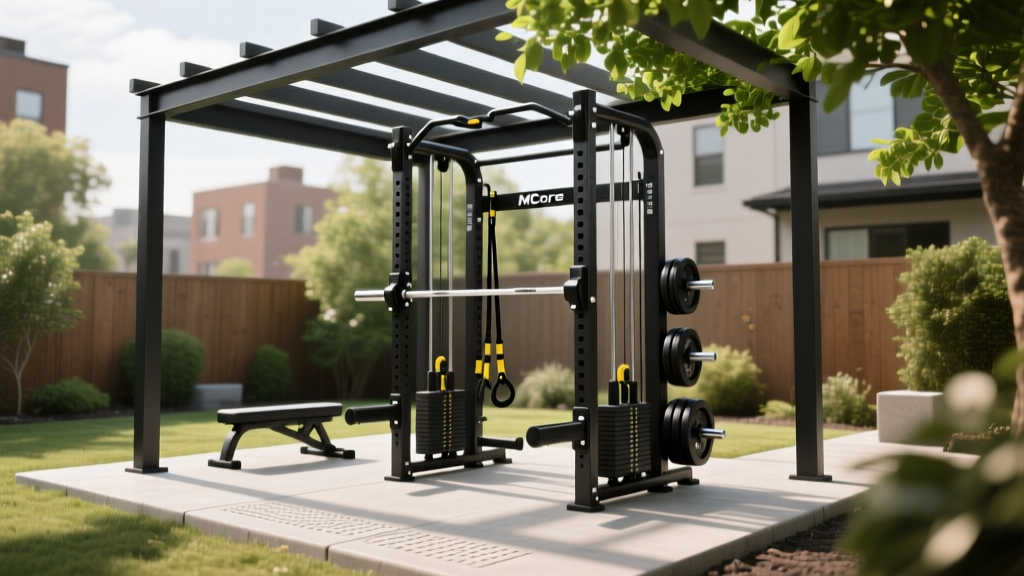
Weatherproofing Your MCore Home Gym: Outdoor Setup

Swedish Ladder Home Gym vs. Budget Setup Under $500 in 2026
