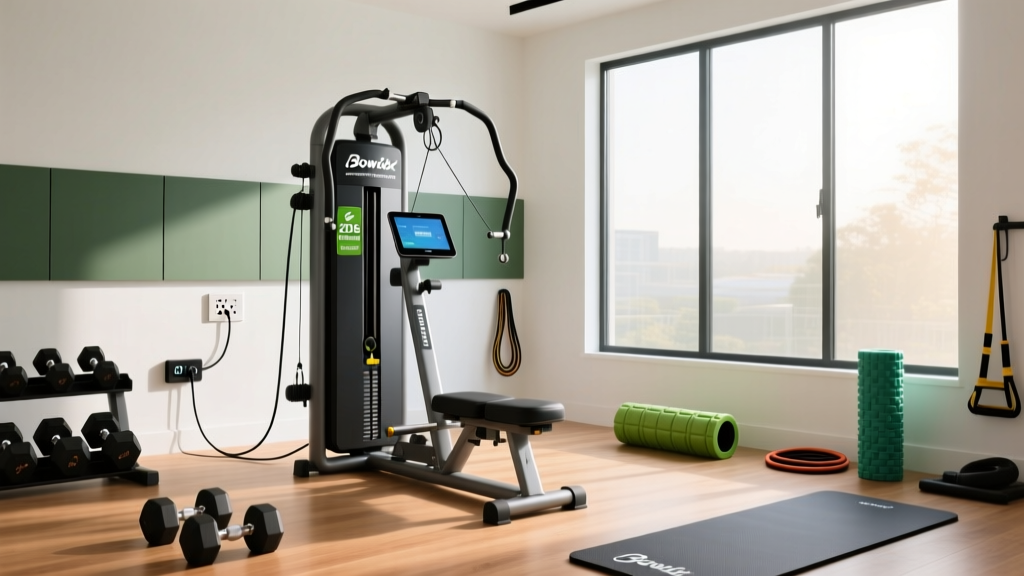
2026 Electrical Safety for Bowflex Home Gym Exercises
Discover 2026 electrical and safety requirements to power your smart fitness gear and optimize Bowflex home gym exercises safely.

The 2026 Smart Gym Power Shift: Why Electrical Safety Matters
The landscape of home fitness has fundamentally transformed. While the mechanical reliability of cable machines remains a staple, the way we execute bowflex home gym exercises in 2026 is deeply integrated with digital ecosystems. Users are no longer just pulling cables; they are streaming AI-driven adaptive coaching via Bowflex JRNY, syncing biometric wearables, and operating adjacent smart recovery tech like infrared panels and pneumatic compression boots.
This convergence of high-intensity physical exertion and sophisticated electronics creates unique electrical and spatial safety hazards. Sweat, elevated ambient humidity, and heavy equipment vibration can compromise standard residential electrical setups. According to the U.S. Consumer Product Safety Commission (CPSC), improper equipment placement and overloaded circuits remain leading causes of home gym incidents. To safely power your fitness ecosystem and protect your hardware investment, a dedicated electrical and safety audit is non-negotiable.
2026 Market Trend Alert: Smart fitness subscriptions and IoT-connected gym equipment now account for over 40% of the home fitness market. These devices draw continuous 'phantom loads' even when idle, necessitating advanced surge protection and dedicated circuit planning that older home gym setups simply did not require.Circuit Requirements for High-Intensity Bowflex Ecosystems
When planning your space for rigorous bowflex home gym exercises, you must calculate the peak wattage of your entire room, not just the primary machine. A mechanical Bowflex PR1000 draws zero electricity, but the accompanying 32-inch smart display, smart thermostat, and adjacent motorized treadmill can easily trip a standard 15-amp bedroom circuit.
Load Calculation and Wire Gauge Matrix
Residential circuits are typically 15-amp or 20-amp. The National Electrical Code (NEC) dictates that continuous loads should not exceed 80% of a circuit's capacity. Below is a breakdown of common 2026 home gym equipment and their electrical requirements.
| Equipment Type | Peak Wattage | Min. Circuit Requirement | Wire Gauge (AWG) |
|---|---|---|---|
| Smart Treadmill (e.g., Bowflex Series 10) | 1,800W - 2,200W | 20-Amp Dedicated | 12 AWG |
| Smart Bike / VeloCore | 250W - 400W | 15-Amp Shared | 14 AWG |
| Infrared Sauna Panel (1-2 Person) | 1,500W - 1,800W | 20-Amp Dedicated | 12 AWG |
| Smart Display / JRNY Tablet / Audio | 100W - 250W | 15-Amp Shared | 14 AWG |
| Recovery Tech (Normatec / Theragun Dock) | 150W - 300W | 15-Amp Shared | 14 AWG |
Critical Warning: Never plug a motorized treadmill or infrared sauna into a power strip or extension cord. These devices require a direct wall receptacle on a dedicated 20-amp circuit to prevent thermal melting of the plug prongs and potential fire hazards.
NEC Compliance: GFCI and Garage/Basement Safety
Many home gyms are located in garages, unfinished basements, or outbuildings. The National Fire Protection Association (NFPA) mandates strict adherence to the National Electrical Code (NEC) for these damp or semi-exposed environments.
- GFCI Protection: All 125-volt, single-phase, 15- and 20-ampere receptacles in garages and unfinished basements must have Ground Fault Circuit Interrupter (GFCI) protection. This is critical in a gym setting where sweat drips onto floors and equipment, creating a path to ground that could result in severe electrical shock.
- AFCI Breakers: If your gym is in a finished bedroom or living space, Arc Fault Circuit Interrupter (AFCI) breakers are required to detect dangerous electrical arcing caused by frayed cords or loose connections behind heavy equipment.
- Receptacle Height: In garage gyms, install outlets at least 18 inches above the floor to protect them from minor flooding, spilled water bottles, and rolling heavy dumbbells.
Spatial Safety & Clearance for Cable Machines
Electrical safety is only half the equation; spatial safety dictates how freely you can perform bowflex home gym exercises without striking walls, mirrors, or electrical outlets. Cable machines require significant operational clearance due to the dynamic range of motion involved in lat pulldowns, cable crossovers, and squat attachments.
Minimum Clearance Dimensions (2026 Standards)
| Machine Model | Footprint (L x W) | Required Operational Space | Ceiling Height Minimum |
|---|---|---|---|
| Bowflex PR1000 | 100' x 78' | 116' W x 100' L (with lat tower) | 84' (7 feet) |
| Bowflex Xtreme 2 SE | 56' x 49' | 72' W x 84' L (full extension) | 84' (7 feet) |
| Functional Trainer (Dual Stack) | 60' x 36' | 96' W x 72' L (crossover zone) | 92' (7.6 feet) |
Pro-Tip for Outlet Placement: Never place an electrical outlet directly behind the moving weight stack or pulley tower of a Bowflex machine. Vibration can loosen the plug over time, and accessing the outlet for maintenance becomes impossible without dismantling the rig.
Surge Protection for Digital Fitness Ecosystems
Modern smart screens and adaptive AI servers are highly sensitive to voltage spikes. A standard $15 power strip offers zero protection against lightning strikes or grid fluctuations. To protect your digital fitness investment, you must deploy a true surge protector.
What to Look For in a 2026 Surge Protector
- Joule Rating: Minimum 2,500 Joules for a smart gym setup. This indicates the total energy the device can absorb before failing.
- Clamping Voltage: Look for a rating of 400V or lower. This is the voltage at which the protector begins to divert excess energy away from your equipment.
- Response Time: Less than 1 nanosecond to ensure the microprocessors in your smart displays are not damaged by transient spikes.
- Equipment Protection Warranty: Reputable brands offer warranties that cover connected equipment if the surge protector fails during a massive spike.
Insulation and Flooring: The Hidden Safety Layer
Flooring in a home gym serves a dual purpose: impact absorption and electrical insulation. When performing heavy bowflex home gym exercises, dropped dumbbells or kettlebells can easily crack standard concrete or tile, potentially severing sub-floor electrical conduits or radiant heating wires.
For 2026 setups, the industry standard is 8mm (5/16-inch) vulcanized rubber flooring. This density provides sufficient shock absorption to protect both your equipment and your subfloor, while also acting as a secondary dielectric barrier against ground faults. Ensure that rubber mats do not overlap or bunch up near electrical receptacles, as this can create a tripping hazard and trap moisture against the wall.
The 2026 Home Gym Electrical Audit Checklist
Before finalizing your equipment layout, run through this essential safety audit:
- Verify Circuit Amperage: Check your breaker panel to confirm whether your gym outlets are on 15A or 20A circuits. Do not guess based on outlet shape alone.
- Test GFCI Outlets: Press the 'Test' and 'Reset' buttons on all garage and basement outlets to ensure the internal trip mechanism is functional.
- Inspect Cord Integrity: Check all machine power cords for micro-abrasions caused by friction against metal frames or rubber mats.
- Measure Clearances: Use a laser measure to verify you have the required 24-inch lateral clearance on all sides of your Bowflex machine for safe cable routing and emergency dismounts.
- Upgrade Surge Protection: Replace any power strips older than 3 years, as the metal oxide varistors (MOVs) inside degrade over time and with each minor surge.
By treating your home gym not just as a workout space, but as a high-load electrical environment, you ensure that your fitness journey remains safe, uninterrupted, and optimized for the cutting-edge technology of 2026.
More gear to consider
All reviews
Space-Saving Home Gym Design Layout: Essential Beginner Starter Kit

Total Gym XLS Home Gym Layout: A Beginner's Design Guide
Home Gym Shed Conversion: Rigid Foam vs. Spray Foam Insulation

Best Exercise Posters for Home Gyms: 2026 Remodel Guide

Beyond the Garage: Practical Space Alternatives for Home Gym Setup When Square Footage Is Limited
