
How to Transfer Your Planet Fitness Routine to a Home Gym
Learn how to transfer your Planet Fitness routine to a home gym with expert layout tips, space optimization, and hands-on equipment reviews for 2026.

Why Transfer Your Planet Fitness Routine to a Home Gym?
For millions of lifters, Planet Fitness is the gateway to strength training. But as you progress, the limitations of the 'Judgement Free Zone' become glaringly obvious: the 75-pound dumbbell ceiling, the absence of free Olympic barbells, and the reliance on Smith machines for heavy compound movements. In 2026, the trend to transfer your Planet Fitness routine to a home gym is accelerating as residential equipment becomes more space-efficient and cost-effective.
Replicating—and ultimately upgrading—your commercial gym experience requires strategic layout optimization. You aren't just buying gear; you are engineering a footprint that accommodates the machines you love while eliminating the bottlenecks you hate. Below is our expert, hands-on guide to designing a home gym layout that perfectly bridges the gap between commercial convenience and residential freedom.
Space Planning: Replicating the PF Footprint
Planet Fitness layouts are sprawling, utilizing isolated machines that require massive square footage. A home gym demands multi-functional zones. According to American Council on Exercise (ACE) guidelines, proper clearance is non-negotiable for safety and biomechanical efficiency.
The 3-Zone Layout Blueprint
- Zone 1: The Primary Rack (48' x 48' footprint + 36' clearance) - This replaces the Smith Machine and leg press. You need a minimum of 84 inches of ceiling height for pull-ups and overhead presses.
- Zone 2: The Dumbbell & Cable Array (60' x 30' footprint) - Replaces the 15-pair dumbbell rack and Matrix cable crossovers. Placed adjacent to the rack for seamless supersets.
- Zone 3: Cardio & HIIT (36' x 72' footprint) - Replaces the commercial treadmill rows. Positioned near windows or ventilation sources.
Hands-On Review: Top Equipment Picks to Replace PF Staples
To successfully transition your workouts, you need gear that mimics the ergonomics of commercial Hammer Strength and Matrix machines while fitting into a 10x12 residential space. Here are our top tested picks for 2026.
1. Replacing the Smith Machine: REP Fitness PR-4000V2 Power Rack
Planet Fitness relies heavily on Smith machines because they are self-spotting and safe for untrained users. However, the fixed 7-degree bar path limits natural biomechanics. The REP Fitness PR-4000V2 (starting at $649) is our top pick for the free-weight transfer. Its 3x3 11-gauge steel uprights and UHMW plastic-lined J-cups eliminate the metal-on-metal clang, preserving the quiet, 'no lunk alarm' ethos of your old gym. Pair it with a Smith Machine Attachment ($399) if you absolutely miss the guided bar path for hack squats and incline presses.
2. Replacing the 75-lb Dumbbell Rack: Nuobell 80 lb Adjustables
The most common complaint from intermediate lifters transferring from Planet Fitness is the 75-pound dumbbell cap. Buying a full commercial rack of fixed hex dumbbells costs upwards of $2,500 and requires 8 feet of wall space. The Nuobell 80 lb Adjustable Dumbbells ($399/pair) solve this instantly. They adjust in 5-pound increments up to 80 lbs, mimic the exact feel and knurling of commercial urethane dumbbells, and occupy a mere 16 x 8-inch footprint on your floor.
3. Replacing the Cable Crossover: Bells of Steel Functional Trainer
Planet Fitness utilizes massive dual-pulley cable crossovers for chest flyes and lat pulldowns. The Bells of Steel Functional Trainer V2 ($1,299) features dual 200-lb weight stacks and a 2:1 cable ratio, providing the exact same resistance profile as commercial Matrix units but in a footprint less than 4 feet wide. The included tricep ropes and D-handles replicate 90% of the isolation movements you relied on commercially.
Planet Fitness vs. Home Gym: Equipment Matrix
| Workout Element | Planet Fitness Standard | Home Gym Equivalent (2026) | Space Saved | Estimated Cost |
|---|---|---|---|---|
| Heavy Pressing | Angled Smith Machine | REP PR-4000V2 + Safety Straps | 12 sq ft | $649 - $1,048 |
| Dumbbell Press | Matrix 5-75 lb Rack | Nuobell 80 lb Adjustables | 20 sq ft | $399 |
| Cable Isolation | Dual-Stack Crossover | Bells of Steel Functional Trainer | 35 sq ft | $1,299 |
| Cardio | Commercial Treadmill | Concept2 RowErg | 15 sq ft | $990 |
Layout Optimization: Flooring, Mirrors, and Ambiance
One of the most underrated aspects of transferring your gym experience is replicating the commercial aesthetic and safety standards. Consumer Reports consistently highlights flooring and environmental controls as the primary failure points in home gym setups.
Flooring: Beyond Interlocking Foam
Planet Fitness uses thick, poured rubber or high-density interlocking tiles to absorb shock and protect equipment. Do not use cheap EVA foam tiles; they compress under heavy loads and destabilize your bench press. Invest in 3/4-inch vulcanized rubber horse stall mats (approx. $55-$90 per 4x6 ft mat). For a premium, low-odor alternative, Rogue Fitness RM Mats offer a tighter manufacturing tolerance, preventing the seams from separating when you drop deadlifts.
Mirror Placement for Form Correction
Without trainers on the floor, mirrors are your primary form-check tool. Mount a continuous 6x8 foot shatterproof acrylic mirror wall directly in front of your primary rack and dumbbell zone. Position the bottom edge 18 inches off the floor so you can check your squat depth and deadlift spinal alignment without the mirror being obscured by your equipment base.
Ventilation and Climate Control
Commercial gyms use massive HVAC systems to cycle air. A 12x12 garage or basement gym will quickly exceed 85°F and 70% humidity during a heavy session, degrading your equipment's steel and rubber components over time. Install a high-velocity directional fan (like the Vornado 660) and a smart dehumidifier set to maintain 45-50% ambient humidity. This prevents rust on your barbell sleeves and rack uprights, a common edge case in uninsulated garage setups.
Expert Verdict: Is the Transfer Worth It?
Transferring your Planet Fitness routine to a home gym requires an upfront capital investment of roughly $3,000 to $4,500 for a premium, space-optimized layout. However, when you factor in the elimination of monthly fees, the removal of the 75-pound dumbbell bottleneck, and the ability to perform true free-barbell squats and deadlifts, the ROI is undeniable. By prioritizing a multi-functional power rack, adjustable heavy dumbbells, and proper 3/4-inch rubber flooring, you will build a residential space that vastly outperforms the commercial 'Judgement Free Zone' in both capability and convenience.
For more detailed blueprints on residential weight room safety and structural load limits, refer to the CDC's physical activity and environment guidelines before finalizing your equipment footprint.
More gear to consider
All reviews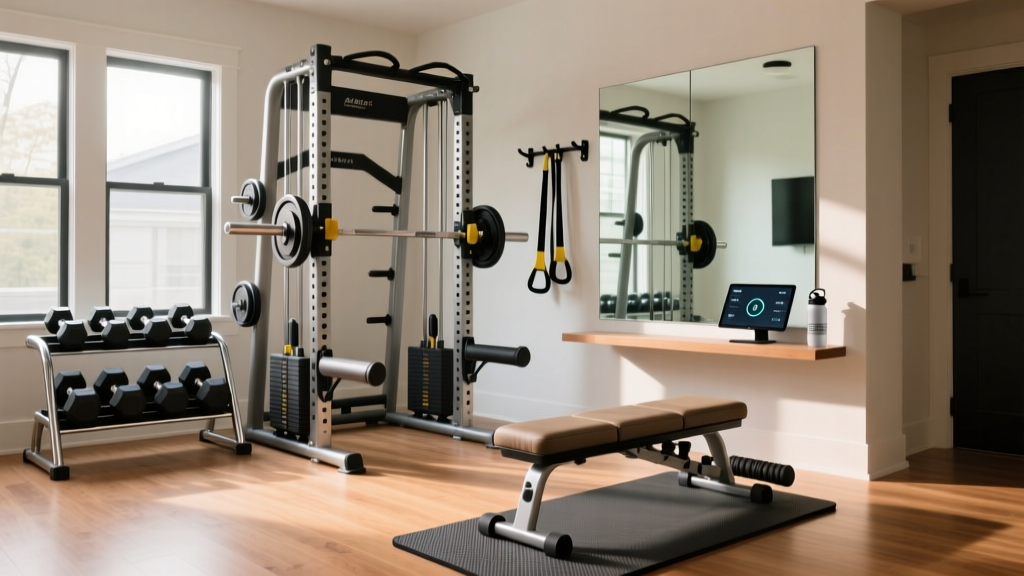
Home Gym Equipment for Abs and Strength Training: Full Setup Walkthrough

Vectra 1850 Home Gym: Weight Selection & Space Layout

Total Sports America Home Gym: Best Mirrors & Lighting 2026

Can You Use HSA for Home Gym Equipment? Build a $500 Setup

Maintaining Top Home Gym Equipment Brands for Strength Gyms
