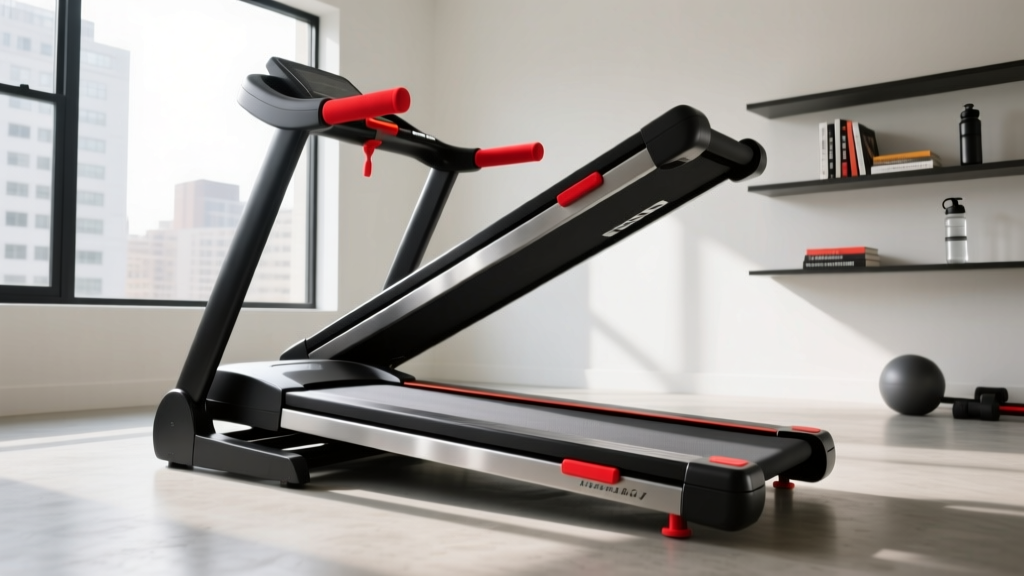
Echelon Treadmill vs. Stationary Bike Types: Space Guide
Compare the spatial footprint of an Echelon treadmill against upright, recumbent, and spin bikes to optimize your 2026 home gym layout and safety clearances.

The Spatial Dilemma: Cardio Footprints in the Modern Home Gym
Designing a home gym in 2026 requires a meticulous balance between cardiovascular performance and architectural reality. Whether you are converting a spare bedroom, a section of the garage, or a narrow basement alcove, the physical footprint of your equipment dictates the functionality of the space. The most common debate we encounter at FitGearPulse centers on the spatial trade-offs between walking or running machines and cycling equipment. Specifically, how does a folding Echelon treadmill compare against the three primary stationary bike types—upright, recumbent, and spin (indoor cycle)—when square footage is at a premium?
To answer this, we must move beyond basic length-by-width measurements and evaluate dynamic spatial requirements. This includes mounting clearance, user biomechanics, ceiling height restrictions, and long-term layout flow. According to the American College of Sports Medicine (ACSM), proper equipment spacing is not just about aesthetics; it is a critical safety parameter to prevent entrapment and ensure adequate ventilation during high-output cardio sessions.
📐 The Golden Rules of Cardio Clearance
- Lateral Clearance: Minimum 20 inches on both sides of any moving cardio machine to allow for safe mounting, dismounting, and emergency egress.
- Rear Clearance (Treadmills): Minimum 30 inches (preferably 48 inches) behind the deck to prevent severe friction burns in the event of a fall.
- Ceiling Height Formula: Deck Height + User Height + 15 Inches (for headroom and arm swing) = Minimum Ceiling Requirement.
Footprint Breakdown: Upright, Recumbent, and Spin Bikes
When evaluating an Echelon treadmill (such as the popular Stride folding model) against stationary bikes, we are comparing a vertical, high-impact machine against horizontal, low-impact alternatives. Each bike category interacts with your floor plan differently.
Spin Bikes (Indoor Cycles): The Vertical Space Winners
Spin bikes, like the Echelon EX-5s or the Concept2 BikeErg, are the undisputed champions of small-footprint cardio. A standard indoor cycle measures roughly 42 inches long by 24 inches wide. However, the true spatial advantage lies in the stored footprint. Many modern spin bikes feature transport wheels and a narrow profile, allowing them to be tucked into corners or closets when not in use.
The Edge Case: While the physical footprint is small, spin bikes require significant lateral dynamic space. Riders frequently transition between seated climbs and out-of-the-saddle sprints. If you place a spin bike flush against a wall, your handlebars and elbows will strike the drywall during aggressive riding. You must allocate at least 30 inches of lateral clearance on the dominant side of the bike.
Upright Bikes: The Narrow-Profile Compromise
Upright bikes, such as the Schwinn 230 or NordicTrack Commercial S15i, mimic the geometry of a traditional road bike but with a wider, more stable base. They typically measure 57 inches long by 23 inches wide. Upright bikes are ideal for narrow galley-style rooms or hallways where width is restricted, but length is available.
From a layout perspective, upright bikes are static. Unlike spin bikes, riders rarely stand or shift their weight aggressively. This means you can safely reduce the lateral clearance to the standard 20 inches, making them highly predictable for strict grid-based gym layouts.
Recumbent Bikes: Managing the Horizontal Sprawl
Recumbent bikes are the spatial outliers. Models like the Schwinn 270 or Horizon Comfort R boast a massive footprint, often exceeding 64 inches in length and 28 inches in width. As noted by experts at the Cleveland Clinic, recumbent bikes offer superior lumbar support and reduce joint stress, making them essential for rehabilitation or older demographics. However, their sprawling design makes them notoriously difficult to integrate into compact rooms.
Layout Strategy: Never place a recumbent bike in the center of a room or in a primary traffic pathway. Because the user's legs extend horizontally, the machine creates a tripping hazard. Anchor recumbent bikes against a wall or in a dedicated corner, ensuring the extended pedal arc does not intersect with doors that swing inward.
Dimension & Clearance Matrix: 2026 Equipment Showdown
To visualize the spatial demands, we have mapped the exact dimensions and required clearances for top-tier models in each category. This matrix assumes a user height of 5'10".
| Equipment Type & Model | Physical Footprint (L x W) | Folded / Stored Footprint | Min. Ceiling Height | Total Safety Zone Required |
|---|---|---|---|---|
| Echelon Stride (Folding Treadmill) | 69" x 31" | 31" x 31" | 96" (8 ft) | 129" x 71" |
| Echelon EX-5s (Spin Bike) | 42" x 24" | 42" x 24" (Wheeled) | 84" (7 ft) | 82" x 84" |
| Schwinn 230 (Upright Bike) | 57" x 23" | N/A (Static) | 84" (7 ft) | 97" x 63" |
| Schwinn 270 (Recumbent Bike) | 64" x 28" | N/A (Static) | 72" (6 ft) | 104" x 68" |
Layout Framework: Zoning Your Home Gym
Integrating an Echelon treadmill alongside stationary bikes requires a strategic zoning approach. In 2026, the most effective home gym layouts utilize the "Anchor and Orbit" methodology.
- Identify the Anchor (The Treadmill): Treadmills are heavy, generate significant low-frequency vibration, and require the most rigorous safety clearances. Place your Echelon treadmill against a load-bearing exterior wall. This minimizes acoustic transfer to the rest of the house and provides the necessary 48-inch rear safety zone without eating into the center of the room.
- Establish the Orbit (The Bikes): Stationary bikes are relatively quiet and have smaller safety envelopes. Position your spin or upright bikes facing the center of the room or a window. This prevents the "claustrophobia effect" of staring at a wall while cycling and allows you to utilize the treadmill's rear clearance zone as shared traffic space when the treadmill is not in use.
- Manage the Recumbent Sprawl: If your layout must include a recumbent bike, place it in the "dead space" of the room—typically the corner diagonally opposite the door swing. Because users sit low to the ground, recumbent bikes do not block sightlines or natural light from windows, making them perfect for under-window placements.
The Hidden Spatial Factor: Flooring and Acoustics
Space optimization is not strictly visual; it is also acoustic. A major failure mode in home gym design is ignoring the impact of flooring thickness on equipment stability and room acoustics.
Treadmills generate rhythmic, high-impact forces. If you place an Echelon treadmill on a standard carpet or thin foam mat, the vibration will travel through the floor joists, creating a structural nuisance. Treadmills require 3/8-inch to 1/2-inch high-density vulcanized rubber mats. This thickness raises the deck height slightly (which must be factored into your ceiling height math) but is non-negotiable for multi-story homes.
Conversely, stationary bikes (upright, recumbent, and spin) produce zero vertical impact. The primary flooring concern for bikes is sweat corrosion and minor scuffing. A simple 1/4-inch PVC or interlocking foam tile is sufficient. By using thinner flooring in the cycling zone and thicker rubber in the treadmill zone, you can create a subtle, functional visual boundary in your gym without building physical walls.
Frequently Asked Questions (FAQ)
Can I fold my Echelon treadmill and place a spin bike in front of it?
While technically possible, this is a severe layout error. When folded, the treadmill deck acts as a heavy, unstable monolith. If a user on the spin bike loses balance or drops a heavy water bottle, it could strike the folded treadmill's locking mechanism, potentially causing the deck to collapse. Always maintain a minimum 30-inch buffer between stored folding equipment and active workout zones.
Which bike type is best for a room with a slanted ceiling (attic gym)?
Recumbent and upright bikes are the only viable options for slanted ceilings. Because the user remains seated at a fixed height (usually under 48 inches from the floor), the sloped roof will not interfere with the workout. Spin bikes require out-of-the-saddle riding, which will result in head strikes in rooms with low or sloped eaves.
How do I measure for treadmill ceiling height if I use a thick mat?
Always measure from the top of the flooring mat, not the bare subfloor. A 1/2-inch rubber mat combined with a 10-inch treadmill deck means the user is starting 10.5 inches off the ground. For a 6-foot-tall user, the math is: 10.5" (deck) + 72" (user) + 15" (clearance) = 97.5 inches. You will need a ceiling height of at least 8 feet 2 inches to run safely.
More gear to consider
All reviews
Elliptical vs Treadmill Space: 14 Gauge Extension Cord for Treadmill

Under Desk Treadmill Review: Budget & Treadmill Safety Lock Truths

Rowing Guide: Concept2 vs RW900 & Your iFIT Treadmill Subscription

2026 Market Trends: Translating Treadmill Speed km h Metrics to Stationary Bike Types

AlterG Treadmill Cost vs. Assault Air Bike Maintenance Guide