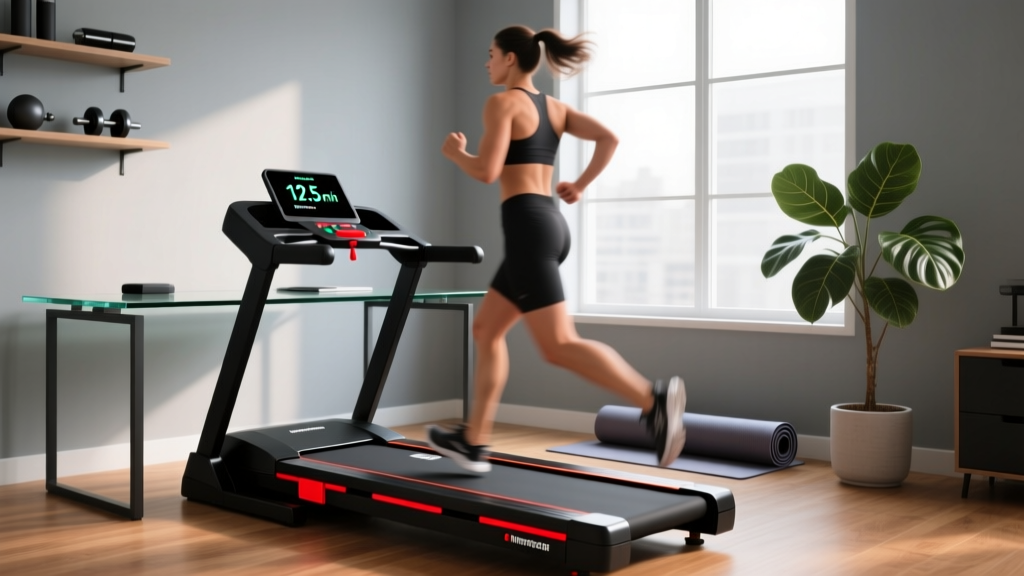
Stepper or Treadmill? 2026 Home Stair Climber Guide
Deciding between a stepper or treadmill for your home gym? Our 2026 guide compares stair climbers and treadmills on joint impact, space, and cost.

The Biomechanical Divide: Ground Reaction Forces
When configuring a home gym, the debate over whether to invest in a stepper or treadmill ultimately comes down to biomechanics, spatial constraints, and your specific cardiovascular goals. While both machines elevate your heart rate and improve VO2 max, the way they interact with your musculoskeletal system is fundamentally different. Treadmills simulate horizontal locomotion, subjecting your joints to ground reaction forces (GRF) equivalent to 1.5 to 3 times your body weight with each footstrike. Conversely, stair climbers and vertical steppers utilize a closed-chain kinetic movement pattern that drastically reduces peak GRF, making them a superior choice for users managing patellofemoral pain syndrome or lower back compression issues.
Quick Verdict: Choose a treadmill if your primary goal is Zone 2 steady-state walking, marathon training, or gait mechanics. Choose a stair climber/stepper if you want maximum caloric yield per minute, lower joint impact, and a smaller physical footprint.According to comprehensive metabolic data published by Harvard Health, a 155-pound individual walking on a treadmill at a moderate 3.5 mph pace burns approximately 133 calories in 30 minutes. That same individual using a stair stepper at a moderate pace will burn upwards of 223 calories in the exact same timeframe. This massive discrepancy is due to the vertical work required to lift your center of mass against gravity with every single step.
Head-to-Head: 2026 Flagship Model Comparison
To move beyond theoretical physics, we need to look at actual hardware. Below is a direct comparison between the current market leaders in both categories for home use.
| Feature | NordicTrack Commercial 1750 (Treadmill) | Bowflex Max Trainer M9 (Stepper/Climber) |
|---|---|---|
| 2026 Retail Price | $1,999 | $2,299 |
| Footprint (L x W) | 80' x 38' | 49' x 30' |
| Machine Weight | 310 lbs | 145 lbs |
| Motor / Resistance | 3.0 CHP Continuous Duty Motor | Electromagnetic with 20 levels |
| Max User Weight | 300 lbs | 300 lbs |
| Warranty (Frame/Parts) | Lifetime / 1 Year | 2 Years / 1 Year |
Treadmill Contender: NordicTrack Commercial 1750
The 1750 remains the gold standard for home treadmills in 2026. Its 22-inch pivoting HD touchscreen and -3% to 15% incline/decline capabilities make it unparalleled for simulating outdoor terrain. However, its massive 80-inch length and 310-pound weight make it a permanent fixture. It is best suited for dedicated basement gyms or large spare bedrooms where the machine will not need to be moved.
Stair Climber Contender: Bowflex Max Trainer M9
The M9 bridges the gap between an elliptical and a vertical stair climber. By combining an upper-body ergometer with a steep, low-impact stepping motion, it engages up to 80% of the body's muscle mass. Its compact 49-by-30-inch footprint allows it to slide into the corner of a living room or home office, making it the undisputed champion of space-constrained environments.
Spatial & Electrical Realities for Home Use
One of the most frequent failure points in home gym planning is ignoring ceiling height and electrical load limits. When deciding between a stepper or treadmill, you must measure your space accurately.
- Ceiling Clearance Math: A standard home ceiling is 8 feet (96 inches). If you are 6 feet tall (72 inches), a treadmill with a 10-inch deck height leaves you with exactly 14 inches of headroom—plenty for walking or running. However, vertical stair climbers require you to extend your arms overhead. If a stepper's pedals sit 15 inches off the ground, and you add your height plus 15 inches for arm extension, a 6-foot user requires a minimum 9-foot ceiling to use a vertical climber safely without punching the drywall.
- Electrical Circuit Load: Motorized treadmills like the NordicTrack 1750 draw significant amperage, especially during startup or heavy incline shifts. They require a dedicated 15-amp or 20-amp circuit. Plugging a 3.0 CHP treadmill into a shared bedroom circuit alongside a space heater or window AC unit will inevitably trip the breaker and risk frying the motor control board (MCB). Conversely, magnetic resistance steppers like the Bowflex M9 draw less than 2 amps and can be safely plugged into any standard household outlet without electrical upgrades.
Maintenance & Failure Modes: What Actually Breaks?
Every piece of cardio equipment has a specific mechanical lifespan. Understanding these failure modes will dictate your long-term cost of ownership.
Treadmill Failure Points
The most common cause of treadmill death is deck friction. If you fail to apply 100% silicone lubricant under the belt every 150 miles (or every 3 months), the friction generates excessive heat. This forces the drive motor to pull more amps to maintain speed, which eventually burns out the motor control board. Replacing an MCB costs between $200 and $350. Additionally, the walking belt will naturally stretch over time; you must use an Allen wrench to adjust the rear roller bolts to maintain exactly 2 inches of belt deflection in the center.
Stepper and Climber Failure Points
Cheap hydraulic mini-steppers (under $100) rely on fluid-filled cylinders. Under heavy daily use, the internal rubber O-rings degrade, leading to fluid leaks and a complete loss of resistance within 6 to 9 months. High-end electromagnetic steppers like the Bowflex Max series avoid this by using eddy-current magnetic braking, which is virtually frictionless and maintenance-free. However, vertical climbers that utilize drive belts and pulleys may experience belt stretching after 1,000+ hours of use, requiring manual tensioning via the rear access panel.
Expert Warning: Never use WD-40 or petroleum-based lubricants on a treadmill deck. These chemicals will dissolve the wax coating on the MDF deck and permanently ruin the belt, voiding your warranty instantly.
The FitGearPulse Decision Matrix
Still torn on the stepper or treadmill dilemma? Use this 4-step diagnostic framework to make your final purchase decision:
- Assess Joint History: If you suffer from plantar fasciitis, shin splints, or herniated lumbar discs, the repetitive striking motion of a treadmill will exacerbate your condition. The American College of Sports Medicine and the Mayo Clinic consistently recommend low-impact, closed-chain machines like steppers for joint preservation.
- Define Your Cardio Zone: If your physician has prescribed Zone 2 LISS (Low-Intensity Steady State) cardio for 45-60 minutes a day to improve mitochondrial density, a treadmill is superior. It allows for passive walking while watching TV or working on a laptop. Stair climbers demand active engagement and elevate the heart rate too quickly for comfortable, long-duration passive Zone 2 work.
- Measure the Room: If your designated workout space is under 50 square feet, cross the treadmill off your list immediately. The spatial dominance of a treadmill will make the room feel claustrophobic and impede traffic flow.
- Evaluate the AHA Guidelines: The American Heart Association recommends 75 minutes of vigorous activity or 150 minutes of moderate activity per week. If you only have 20 minutes a day to exercise, a stair climber's high metabolic demand allows you to hit your weekly vigorous quota in a fraction of the time.
Ultimately, the 'best' machine is the one that aligns with your physical limitations, your home's architecture, and the specific cardiovascular adaptations you are trying to achieve in 2026.
More gear to consider
All reviews
Elliptical vs Treadmill: Walking on a Treadmill to Lose Weight in 2026

Maintaining Stationary Bike Types and the Reebok FR20 Floatride Treadmill

Rowing Machine Guide & Technique: Setup for 8.0 Incline on Treadmill

Rowing Machine Buying Guide & Technique: Ditch the Treadmill TV Mount
Under Desk Treadmill Review: Cost vs Swim Treadmill Pool