
Evolve Treadmill vs Elliptical: Space-Saving Home Cardio
Discover how the Evolve treadmill compares to compact ellipticals for home cardio. Expert layout guides, ceiling clearance math, and space-saving tips.

The Spatial Dilemma: Footprint vs. Functionality in 2026
As urban living spaces shrink and multi-use rooms become the standard in 2026, the home fitness industry has pivoted hard toward spatial efficiency. The debate between an elliptical and a treadmill is no longer just about joint impact or caloric burn; it is fundamentally an interior design and architectural challenge. When optimizing a spare bedroom, basement corner, or garage alcove, every square inch matters. Specifically, when comparing a premium folding model like the Evolve treadmill against modern compact ellipticals, the decision hinges on three spatial metrics: static footprint, dynamic clearance, and vertical apex.
This guide bypasses generic fitness advice to provide a rigorous, measurement-based framework for integrating cardio equipment into confined domestic spaces without compromising biomechanics or structural safety.
The 'Clearance Triangle' Rule: Never measure just the machine. A safe home gym layout requires calculating the Machine Footprint + User Kinematic Envelope (stride/bounce) + Thermal Exhaust Zone (motor ventilation). Ignoring any of these three points leads to equipment failure or user injury.Dimensional Breakdown: Evolve Treadmill vs. Compact Ellipticals
To understand the spatial trade-offs, we must look at exact manufacturer specifications. For this analysis, we are using the Evolve treadmill (representing the premium EVO-series hydraulic folding models popular in 2026) and comparing it against two dominant space-saving elliptical archetypes: the front-drive compact (e.g., Sole E25) and the vertical stepper/elliptical hybrid (e.g., Bowflex Max Trainer M9).
| Metric | Evolve Treadmill (Folding) | Compact Front-Drive Elliptical | Vertical Elliptical Hybrid |
|---|---|---|---|
| Active Footprint (L x W) | 78' x 32' | 70' x 24' | 49' x 30.5' |
| Stored Footprint (Folded) | 38' x 32' (Hydraulic Lock) | 70' x 24' (Non-Folding) | 49' x 30.5' (Non-Folding) |
| Machine Weight | 215 lbs | 165 lbs | 143 lbs |
| Average 2026 Pricing | $1,899 - $2,200 | $999 - $1,400 | $2,299 - $2,500 |
At first glance, the vertical hybrid wins the static footprint war. However, the Evolve treadmill's ability to fold flat against a wall (reducing its depth to just 38 inches) makes it the superior choice for rooms that require dual-purpose functionality during the workday, provided you have the wall clearance to deploy it.
The Vertical Apex: Ceiling Clearance Math
The most common mistake in home gym layout design is ignoring the Z-axis (vertical space). This is particularly critical in basement conversions where ceiling heights often hover around 84 to 96 inches. Counterintuitively, treadmills often require less vertical clearance than ellipticals.
Calculating Your Vertical Apex
To prevent head-strikes and psychological claustrophobia, use this formula to determine your minimum ceiling height requirement:
- For the Evolve Treadmill: User Height + Deck Height (8.5') + Bounce Clearance (5') = Minimum Ceiling Height. (Example: A 6'0' user needs 72' + 8.5' + 5' = 85.5' minimum ceiling).
- For an Elliptical: User Height + Pedal Apex at Highest Point (14' to 18') + Bounce Clearance (5') = Minimum Ceiling Height. (Example: A 6'0' user on a machine with a 16' pedal apex needs 72' + 16' + 5' = 93' minimum ceiling).
If your room has standard 8-foot (96-inch) ceilings, a tall user will scrape their head on an elliptical at peak stride, whereas the Evolve treadmill's low-profile 8.5-inch deck keeps the user's head well within the safe zone.
Biomechanics in Confined Spaces: Joint Impact and Stride
Space optimization must never compromise biomechanical integrity. According to a comprehensive NCBI biomechanics study comparing elliptical and treadmill kinematics, ellipticals significantly reduce ground reaction forces (GRF) on the knee and ankle joints. However, this benefit is nullified if the room's depth restricts the machine's stride length.
'When an elliptical is crammed into a shallow alcove, users subconsciously shorten their stride to avoid kicking the wall or monitor. This altered kinematic chain shifts the load from the glutes to the quadriceps and patellar tendon, increasing the risk of anterior knee pain.' — Journal of Sports Science & Medicine
The Evolve treadmill offers a 20' x 60' running surface. While it requires 78 inches of length during use, it allows for a natural, unrestricted gait cycle. If your room depth is less than 8 feet, an elliptical with a 20-inch stride will feel dangerously close to the wall, making the treadmill (when deployed) the safer biomechanical choice, provided you fold it away afterward.
Sub-100 Sq Ft Layout Configurations
Integrating cardio into a small room requires strategic placement relative to windows, doors, and HVAC vents. Here are two proven layouts for spaces under 100 square feet.
1. The 'Window-Face' Deployment (Best for Evolve Treadmill)
Position the folded treadmill against the wall opposite the room's primary window. When unfolded, the user faces the window. This layout leverages natural light to reduce the psychological confinement of small spaces. Crucially, it ensures the treadmill's 3.5 CHP motor exhaust fan (located at the rear) blows air toward the center of the room, preventing heat buildup against drywall.
2. The 'Corner Tuck' (Best for Compact Ellipticals)
Place a compact elliptical in a 90-degree corner, angled at 45 degrees. This utilizes 'dead space' that is rarely used for furniture. Because ellipticals use magnetic resistance and generate minimal heat, they can be placed closer to walls (minimum 6-inch clearance) compared to the 12-inch clearance required for treadmill motor ventilation.
Electrical, HVAC, and Structural Load Limits
Space planning extends beyond physical dimensions to the invisible infrastructure of your home.
- Electrical Draw: The Evolve treadmill's motor can draw up to 15 amps under heavy incline running. It requires a dedicated 15-amp or 20-amp circuit. Sharing a circuit with a space heater or window AC unit in a small bedroom will trip the breaker mid-workout. Ellipticals, drawing less than 3 amps, can safely share standard bedroom circuits.
- Dynamic Floor Loading: A 215-lb treadmill plus a 200-lb user creates a static load of 415 lbs. However, the dynamic impact force of running can generate up to 2.5 times body weight. This results in a transient point load exceeding 700 lbs distributed across four small leveling feet. If installing on a second-floor room with standard 16-inch joist spacing, place the machine perpendicular to the joists and use a 3/4-inch high-density rubber mat to disperse the kinetic energy.
- Ventilation: The American Heart Association recommends vigorous cardio, which elevates core body temperature. In a 10x10 room, a treadmill motor and human body will raise the ambient temperature by 4 to 6 degrees within 20 minutes. Ensure your room layout does not block the return air vent of your HVAC system.
Final Verdict: Which Machine Wins the Space War?
There is no universal winner; the victor is dictated by your room's specific architectural constraints.
Choose the Evolve Treadmill if: You have low ceilings (under 8.5 feet), require a dual-purpose room (folding it away to reclaim 40 sq ft of floor space), and have a dedicated electrical circuit. It is the ultimate 'hidden' cardio solution.
Choose a Compact Elliptical if: You have high ceilings, suffer from severe joint degradation requiring zero-impact movement, and lack the physical clearance or wall strength to deploy and store a 215-lb folding treadmill deck on a daily basis.
For further insights on designing functional home fitness spaces, consult the Architectural Digest home gym layout guidelines, which emphasize the integration of equipment with natural light and acoustic dampening in modern residential design.
More gear to consider
All reviews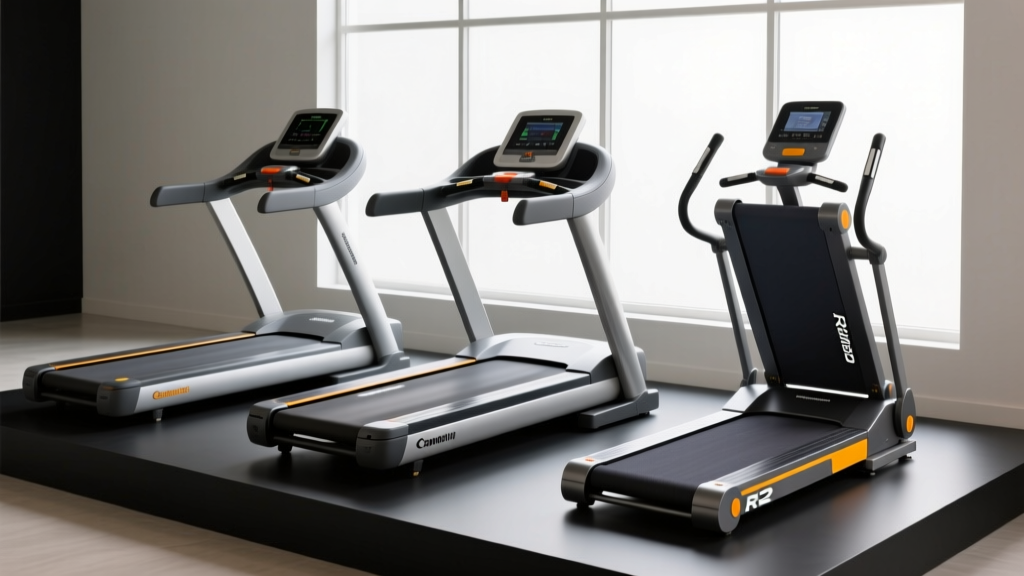
Curved vs Motorized Treadmill vs WalkingPad R2 Folding Treadmill
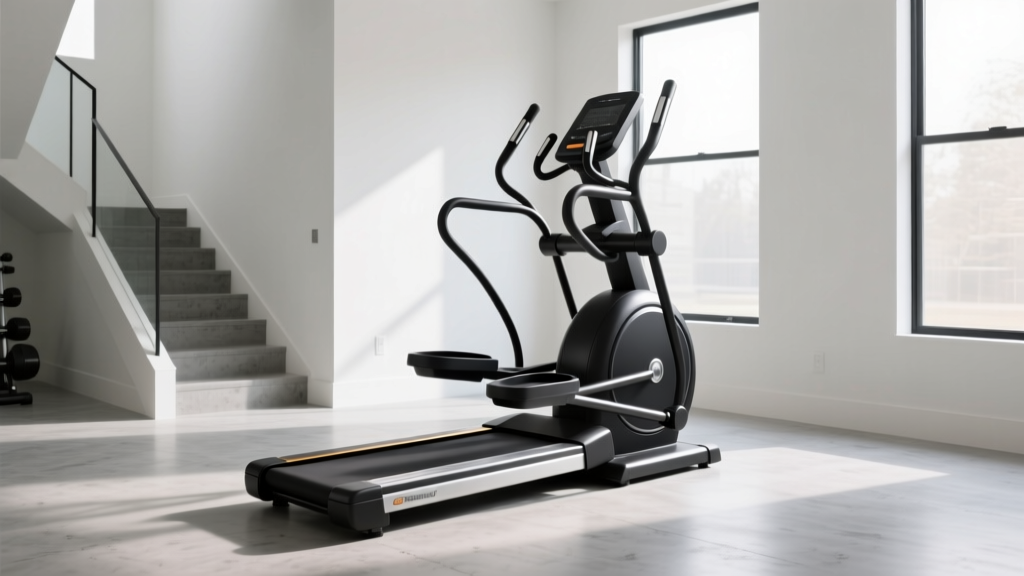
Beyond Centr Treadmill Reviews: Stair Climber Setup Guide

NOHRD Treadmill or Rower? Buying Guide, Technique & Mistakes

Beyond Well Fit Treadmill Reviews: Motor Size & Setup Walkthrough
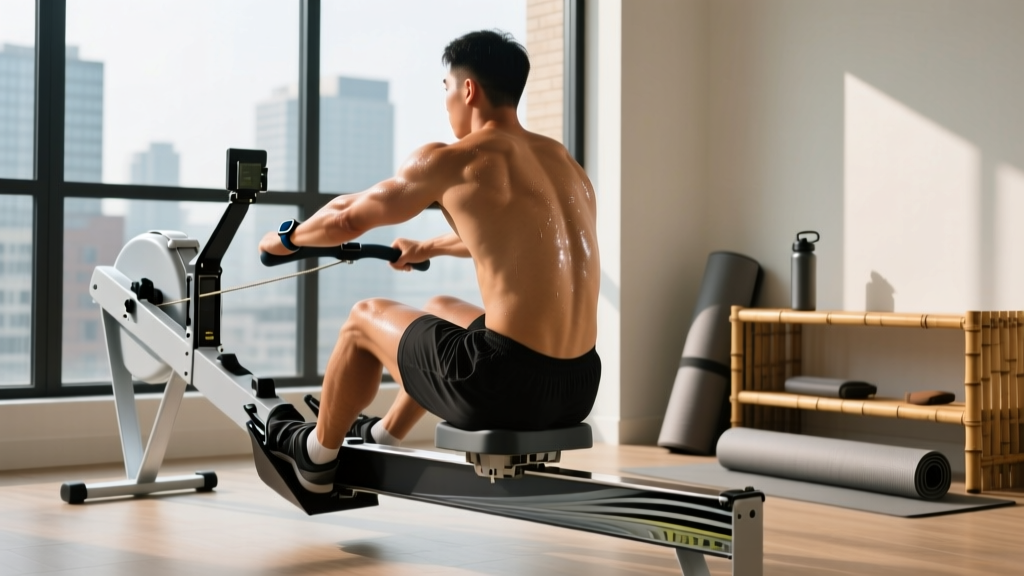
Rowing Machine Guide: Better Than Losing Weight on a Treadmill?
