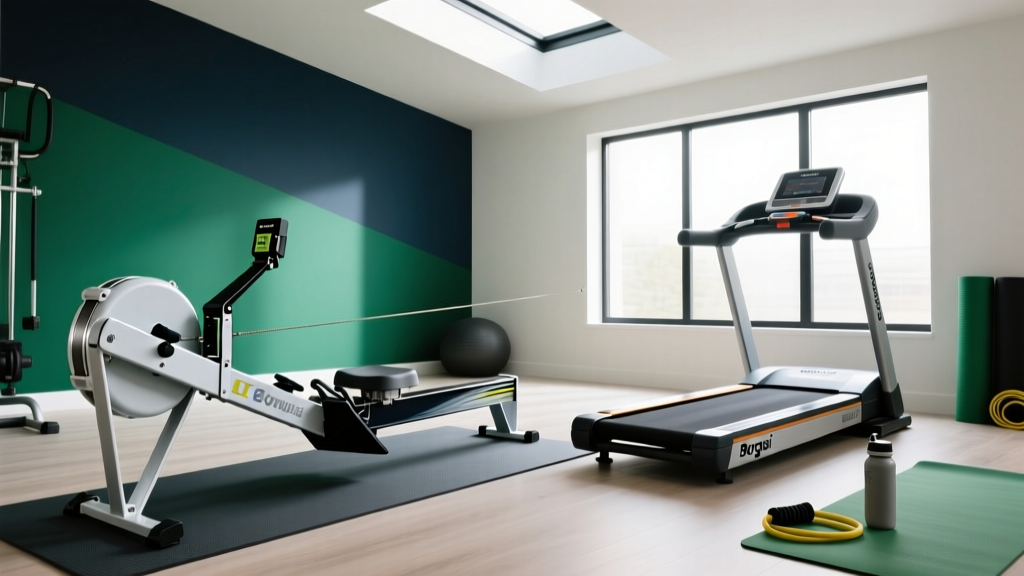
Walking Pad Review: Treadmill Belt Alignment & Top 2026 Picks
We compare top 2026 walking pads, focusing on treadmill belt alignment, motor strain, and real-world durability to find the best under-desk option.

The Hidden Flaw of Walking Pads: Belt Drift
When shopping for an under-desk walking pad in 2026, most buyers focus on peak motor size, weight capacity, and folding mechanisms. However, as any long-term user or physical therapist will tell you, the most critical factor determining a compact machine's lifespan is treadmill belt alignment. Unlike full-sized commercial treadmills that feature heavy-duty crowned rollers and advanced tracking systems, compact walking pads rely on lightweight, flat rollers and minimal deck lubrication. This design compromise makes them highly susceptible to belt drift, motor strain, and edge fraying.
According to Wirecutter's under-desk treadmill testing, the most common reason users abandon their walking pads within the first six months is not motor failure, but the frustration of a constantly drifting belt that requires weekly recalibration. In this head-to-head review, we evaluate three of the most popular walking pads on the market specifically through the lens of belt tracking, maintenance requirements, and long-term durability.
⚠️ The Danger of Ignoring Belt DriftWhen a walking pad belt drifts to the left or right, it creates immense lateral friction against the side rails. This not only frays the belt edges but forces the motor to work up to 40% harder to maintain speed, leading to premature control board burnout and voided warranties.
The Contenders: 2026 Walking Pad Lineup
We selected three distinct market leaders for this comparison: the premium foldable KingSmith WalkingPad X21, the mid-range heavy-duty UREVO Strol 2E, and the budget-friendly Sunny Health & Fitness Asuna 8730G. Below is a snapshot of their core specifications.
| Feature | KingSmith X21 | UREVO Strol 2E | Sunny Asuna 8730G |
|---|---|---|---|
| Retail Price (2026) | $599 | $399 | $249 |
| Motor (Continuous) | 1.2 CHP | 1.0 CHP (2.25 Peak) | 1.5 HP |
| Belt Width | 17.3 inches | 16.5 inches | 15.0 inches |
| Alignment Mechanism | Rear Hex Bolts (6mm) | Rear Hex Bolts (5mm) | Rear Hex Bolts (5mm) |
| Weight | 63 lbs | 55 lbs | 48 lbs |
Head-to-Head: Treadmill Belt Alignment & Durability
KingSmith WalkingPad X21: The Premium Hinge Problem
The KingSmith X21 is widely considered the gold standard for folding walking pads. Its 180-degree folding hinge and 17.3-inch belt offer a premium feel. However, its greatest feature is also its biggest vulnerability regarding treadmill belt alignment. The central hinge creates a micro-flex point in the aluminum frame. If the X21 is placed on a floor that is even slightly uneven (a common issue in home offices with thick rugs or transition strips), the frame twists by millimeters. This twist misaligns the front and rear rollers, causing the belt to aggressively track to the left after approximately 40 to 50 miles of use.
The Fix: X21 owners must ensure the machine is on a perfectly level surface. When adjusting the rear 6mm hex bolts, you must alternate sides in 1/8th turn increments rather than the standard 1/4 turn, as the crowned rollers on the X21 are highly sensitive to over-tensioning.
UREVO Strol 2E: The Factory Over-Tension Trap
UREVO markets the Strol 2E with a '2.25 HP' motor, but this is a peak rating; the continuous duty motor is closer to 1.0 CHP. To prevent the belt from slipping under heavy users during initial use, UREVO factory-tensions these belts incredibly tight. While this prevents immediate slip, it places immense lateral pressure on the front roller bearings. Within three months, many users report a high-pitched whining noise. This is not the motor failing; it is the front roller bearing grinding due to excessive downward and lateral force caused by poor initial treadmill belt alignment and over-tension.
The Fix: Out of the box, loosen both rear adjustment bolts by a full half-turn to relieve factory tension, then re-center the belt using the 1/4-turn rule (detailed below). This simple step will double the lifespan of the Strol 2E's front roller.
Sunny Health & Fitness Asuna 8730G: The Biomechanics of Narrow Belts
The Sunny Asuna is a budget favorite, but its 15-inch belt width introduces a unique alignment challenge rooted in human biomechanics. According to Mayo Clinic's research on office NEAT (Non-Exercise Activity Thermogenesis), walking on narrow surfaces forces users to adopt a clipped, asymmetrical stride to avoid stepping off the machine. This asymmetric ground reaction force continuously pushes the belt toward the user's dominant side. On the Asuna, this results in rapid right-side fraying and a belt that requires realignment every 15 to 20 miles.
The Fix: The Asuna requires proactive maintenance. Users must apply 100% silicone treadmill lubricant under the belt every 30 miles to reduce the friction that exacerbates lateral drift caused by asymmetric walking patterns.
Diagnostic Sound Guide: Identifying Alignment Issues by Ear
You don't always need to look at the belt to know it is misaligned. As noted in the Consumer Reports treadmill buying guide, listening to your machine is the first line of defense against catastrophic motor failure. Here is how to diagnose your walking pad by sound:
- High-Pitched Whine or Squeal: The belt is over-tensioned. The motor is drawing excessive amperage to overcome the friction of the belt stretched too tightly against the deck and rollers.
- Rhythmic 'Thwack' or Slapping: The belt has drifted laterally, and the overlapping seam of the belt is catching on the side rail or deck edge with every revolution.
- Sudden Speed Stutter or Hesitation: The walking belt is over-tensioned, causing the internal drive belt (connecting the motor to the front roller) to slip on the motor pulley.
- Grinding or Crunching: The belt has drifted so far that the edge is riding up onto the plastic side rail, melting the plastic and catching on the roller bearing housing.
The 1/4-Turn Rule: A Masterclass in Fixing Treadmill Belt Alignment
Proper treadmill belt alignment is not about pulling the belt with your hands; it is about adjusting the rear roller to change the tracking geometry. Never adjust the front roller on a walking pad, as it houses the motor drive pulley and altering it will void your warranty and ruin the drive belt tension.
✅ The Golden Rule of Belt TrackingTightening the LEFT bolt pulls the rear roller to the left, which pushes the front of the belt to the RIGHT. Tightening the RIGHT bolt pulls the rear roller to the right, pushing the belt to the LEFT. Always make adjustments in small increments while the machine is running.
- Prepare the Machine: Turn on the walking pad and set the speed to exactly 2.0 MPH. Do not stand on the belt while adjusting; the weight of your body will mask the natural drift of the belt.
- Identify the Drift: Observe which side the belt is drifting toward. If the belt is drifting to the left and touching the left rail, you need to push it to the right.
- Locate the Adjustment Bolts: Find the hex bolts at the very back end of the left and right side caps. Insert the correct Allen wrench (usually 5mm or 6mm).
- Execute the 1/4 Turn: To push a left-drifting belt to the right, turn the LEFT adjustment bolt clockwise exactly one-quarter (1/4) turn. Do not touch the right bolt.
- Observe the Revolutions: Watch the belt complete at least 5 to 10 full revolutions at 2.0 MPH. It takes time for the tension change to propagate through the belt loop.
- Fine-Tune: If the belt is still drifting left, perform another 1/8th turn clockwise on the left bolt. If you overcorrected and it is now drifting right, turn the LEFT bolt counter-clockwise 1/8th turn to loosen it back.
Final Verdict: Which Walking Pad Wins for Longevity?
When evaluating these machines strictly on the ease of maintenance and resistance to belt drift, the KingSmith WalkingPad X21 takes the top spot, provided it is used on a hard, level floor. Its wider 17.3-inch belt naturally reduces the asymmetric stepping that causes lateral drift, and its 6mm adjustment bolts are less prone to stripping than the 5mm bolts found on budget models.
However, if you are on a budget and willing to perform the 'out-of-the-box' tension release, the UREVO Strol 2E offers the best balance of price and durability. The Sunny Asuna, while incredibly affordable, demands too much frequent maintenance regarding treadmill belt alignment to be recommended for heavy daily use over 2 hours a day. Ultimately, a walking pad is only as good as your willingness to maintain it; master the 1/4-turn rule, and your machine will easily survive the 2026 work-from-home grind.
Expert Tip: Keep a dedicated 5mm and 6mm Allen wrench taped to the underside of your desk or the frame of your walking pad. Searching for tools when the belt starts slipping mid-stride leads to frustration and improper, aggressive adjustments that damage the machine.
More gear to consider
All reviews
Air Bike vs Assault Bike: Layouts & Matrix Treadmill Apple Watch Sync
Upright & Recumbent Bike Care: Lessons From a Treadmill Animated GIF

Small Space Treadmill Review & iFIT Treadmill Not Working Fixes

Air Bike vs Assault Bike Trends: Beyond How Do You Spell Treadmill
Inventor of Treadmill Died at What Age? A Stair Climber Guide