
Space Optimization: Integrating Dumbbell Holders Into Your Garage Gym Layout
Maximize your garage gym layout with strategic space optimization. Learn how to integrate heavy-duty dumbbell holders and storage systems for peak workflow.

The Blueprint: Zoning Your Garage Gym for Maximum Flow
Designing a functional home gym is an exercise in spatial geometry and biomechanical flow. When you are working within the confines of a standard residential garage—typically 240 square feet for a single-car or 400 square feet for a double-car—every square inch of floor space is a premium asset. A disorganized garage gym doesn't just look cluttered; it creates physical bottlenecks that disrupt your heart rate, compromise safety, and limit the types of movements you can perform. According to facility design guidelines emphasized by the National Strength and Conditioning Association (NSCA), proper equipment spacing and traffic flow are critical for both safety and performance efficiency.
Effective space optimization requires dividing your garage into distinct functional zones: the Power Zone (squat rack, deadlift platform), the Hypertrophy Zone (benches, cable machines), and the Conditioning Zone (rowers, bikes, kettlebells). The connective tissue between these zones is your storage system. How you position your storage—specifically bulky items like weight plates and dumbbells—dictates the success of your entire layout.
Anchoring the Space: Strategic Placement of Dumbbell Holders
Of all the equipment in a home gym, free weights are the most notorious space-hogs. Choosing the right dumbbell holders is not merely an aesthetic decision; it is a foundational layout choice that impacts your usable floor area. In 2026, the market has shifted heavily toward vertical and wall-mounted storage solutions to combat the shrinking footprint of modern home gyms.
Traditional A-frame or flat 3-tier racks require a massive operational footprint. While the physical steel might only occupy 12 square feet, you must account for the "swing space"—the area required to safely pick up, maneuver, and drop heavy dumbbells without striking adjacent equipment. By contrast, vertical dumbbell holders compress this footprint dramatically, allowing you to push the storage flush against a wall or into a dead corner, reclaiming up to 20 square feet of active workout space.
Footprint and Capacity Matrix: Top Dumbbell Holders
When selecting a rack, you must balance weight capacity, gauge steel thickness, and spatial efficiency. Below is a comparison of the industry's leading space-optimized dumbbell holders based on current market specifications.
| Model | Footprint (L x W) | Capacity / Tiers | Steel Gauge | Est. Price (2026) | Best Layout Application |
|---|---|---|---|---|---|
| Rogue Vertical Dumbbell Rack | 24" x 28" | 10 Pairs / 3-Tier Vertical | 11-Gauge | $395 | Tight corners, flush wall alignment |
| Rep Fitness 3-Tier Rack | 48" x 24" | 15 Pairs / Horizontal | 11-Gauge | $299 | Wide walls, dedicated hypertrophy zones |
| Fringe Sport Vertical Rack | 22" x 22" | 8 Pairs / Vertical Hex | 11-Gauge | $249 | Small 1-car garages, apartment gyms |
| Titan Wall-Mounted Cradles | 4" x 18" (Protrusion) | 3 Pairs / Wall-Mount | 11-Gauge | $129 | Ultra-minimalist, slatwall integration |
Source data aggregated from Garage Gym Reviews and manufacturer specifications.
Vertical Real Estate: Expanding Upward to Reclaim Floor Space
Once your heavy dumbbell holders are secured, the next phase of space optimization involves utilizing vertical wall space for accessories, bands, belts, and lighter implements. The two dominant systems in modern garage gym organization are Slatwall panels and heavy-duty steel pegboards.
- Slatwall Systems: Brands like Titan Fitness and Gladiator offer 4x8-foot high-density PVC or aluminum slatwall panels. These are ideal for hanging heavy accessories like kettlebells (up to 50 lbs per hook) and resistance band anchors. Slatwall provides a clean, finished look and allows for infinite horizontal adjustability.
- Steel Pegboards: For a more industrial, budget-friendly approach, 3/4-inch thick steel pegboards mounted directly to wall studs offer immense load-bearing capacity. They are perfect for hanging lifting belts, chains, ab straps, and jump ropes.
A common and dangerous failure mode in garage gym organization is mounting heavy storage systems directly into drywall or using inadequate toggle bolts. A fully loaded wall-mounted dumbbell cradle or slatwall hook can easily exceed 100 lbs of sheer pull-out force. You must use a stud finder to anchor all vertical storage directly into the wooden or metal wall studs using 3-inch lag screws. If your garage walls are unfinished cinderblock, use concrete wedge anchors rated for at least 200 lbs of shear load per anchor.
The "Drop Zone" and Flooring Clearances
Space optimization is useless if it compromises the structural integrity of your flooring or your equipment. Where you place your dumbbell holders relative to your flooring type is a crucial layout decision.
If you are using 3/4-inch interlocking EVA foam tiles, placing a 600-lb loaded vertical dumbbell rack on top of them will cause long-term compression. Over time, the foam will permanently deform, causing the rack to lean and creating a severe tipping hazard. The Fix: Cut out the foam tiles where the feet of your heavy storage racks will sit, placing the steel feet directly onto the concrete subfloor. Use a thin rubber shim to prevent the steel from scratching the concrete and to maintain a level plane with the surrounding foam.
Furthermore, the Rogue Fitness engineering guidelines and general ergonomic standards suggest maintaining a minimum of 36 inches of clear walkway space around any storage rack, and 48 inches of clearance in front of loading zones (like plate trees or dumbbell shelves) to allow for safe bending and lifting mechanics.
Real-World Layout Configurations
The 1-Car Garage (12' x 20') Layout
In a 240-square-foot space, the perimeter is your best friend. Place your power rack against the back wall, leaving the garage door area open for conditioning and deadlifts. Position a compact vertical dumbbell holder (like the 22" x 22" Fringe Sport model) in the corner immediately adjacent to the power rack. This creates a seamless transition between barbell and dumbbell work without crossing the room. Mount a slatwall panel on the side wall opposite the garage door to store bands, collars, and belts, keeping the center floor entirely clear for dynamic movements.
The 2-Car Garage (20' x 20') Layout
With 400 square feet, you can afford to create dedicated islands. Place your squat rack and deadlift platform in the center-left. Use a wider 3-tier horizontal dumbbell rack as a physical "room divider" between the heavy lifting zone and the conditioning zone (rower, assault bike). This not only organizes the space visually but acts as a safety buffer, preventing rolling dumbbells from migrating into the cardio area.
"The best garage gym layouts don't just store equipment; they dictate the flow of the workout. Your storage should act as a physical guide, leading you naturally from warm-up to heavy compounds, and finally to accessory isolation." — Home Gym Layout Design Principles
FAQ: Optimizing Your Storage Footprint
Can I build my own DIY dumbbell holders to save space?
Yes, but with extreme caution. DIY wooden racks made from 4x4 lumber and 3/4-inch plywood can be cost-effective, but wood is susceptible to warping and splitting under dynamic loads. If you build a custom wooden holder to fit an awkward corner, ensure you use structural-grade screws (like GRK fasteners) and apply a polyurethane sealant to protect the wood from garage humidity and sweat corrosion. However, for heavy hex dumbbells exceeding 50 lbs, commercially welded 11-gauge steel holders remain the safest investment.
How do I store adjustable dumbbells efficiently?
Adjustable dumbbells (like PowerBlock or Bowflex) require specific cradles. Do not attempt to store them on standard tiered racks, as their blocky, non-standard shapes will roll or catch on the rails. Dedicate a specific wall-mounted shelf or the manufacturer's proprietary stand, and place it near your adjustable bench to minimize the distance you must carry the awkward, heavy implements.
What is the best way to store resistance bands without them degrading?
Never hang resistance bands on standard metal pegs or bare slatwall hooks for long periods; the constant tension and friction will cause micro-tears and eventual snapping. Store bands in a breathable mesh bin on a lower shelf of your dumbbell rack, or use specialized plastic-coated band hooks that distribute the pressure evenly across the rubber.
More gear to consider
All reviews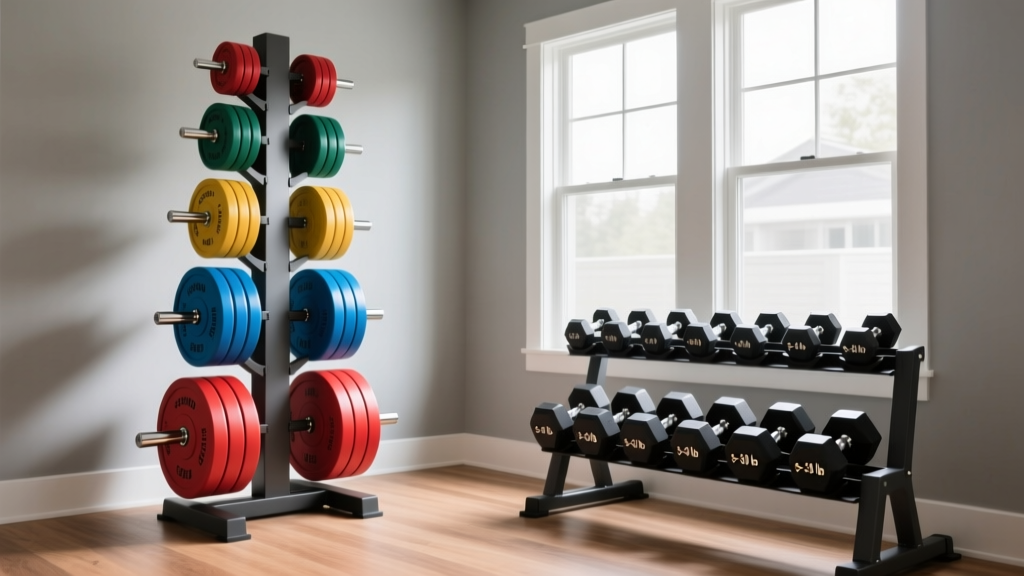
Best Weight Plate Storage Trees & Dumbbell Rack 5-50 Setups

Best Equip Body Chest for Boot: Smart Storage Solutions for Home Gyms & Tactical Environments

Synergy Dumbbell Rack vs Weight Plate Storage Trees in 2026

Plate Storage Tree Mistakes & Dumbbell Holder for Bench Press
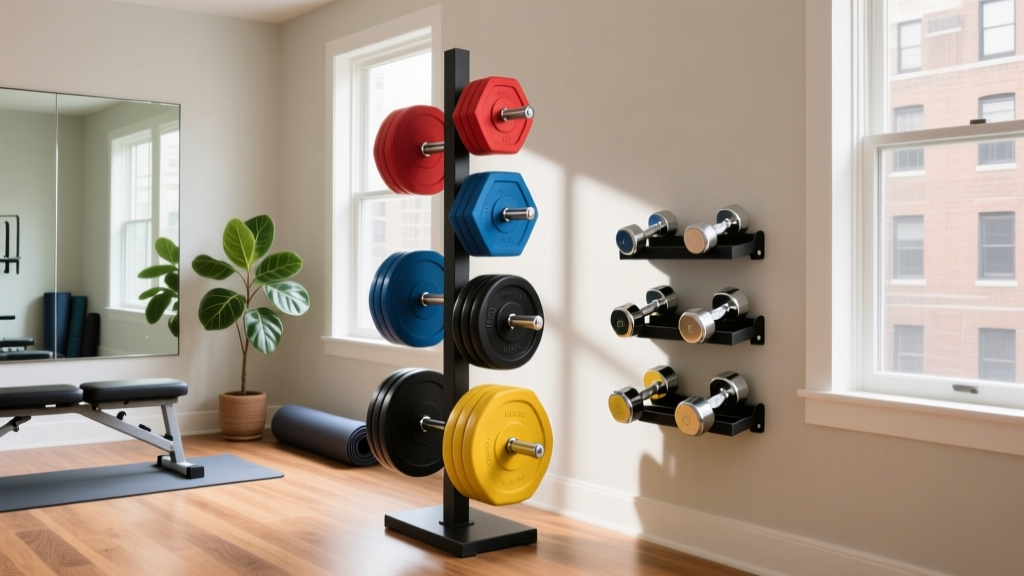
Weight Plate Trees & Dumbbell Holders for Bench Press Setup
