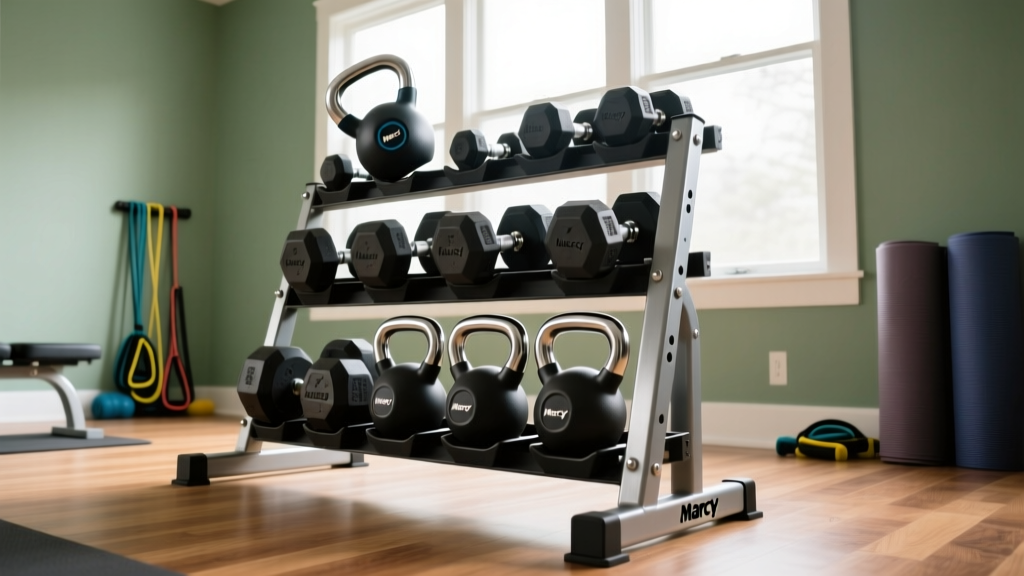
Plate Storage Tree Mistakes & Dumbbell Holder for Bench Press
Troubleshoot common home gym storage errors. Compare weight plate trees, rack options, and when to use a dumbbell holder for bench press safety.

The Anatomy of a Home Gym Storage Disaster
As we navigate the 2026 home gym equipment boom, lifters are investing heavily in premium barbells, calibrated plates, and adjustable benches. Yet, the most common point of failure in a garage gym isn’t a snapped barbell or a torn callus—it’s catastrophic storage mismanagement. Weight plate storage tree and rack options are often purchased as an afterthought, leading to cluttered walkways, tripping hazards, and damaged flooring. More critically, many lifters fundamentally misunderstand their own training splits, buying massive freestanding plate trees when their routine actually demands a specialized dumbbell holder for bench press configurations.
This troubleshooting guide dissects the most frequent errors lifters make when organizing their weight rooms. We will cover the physics of A-frame tipping hazards, spatial planning mistakes, and the exact hardware fixes required to stabilize a wobbly rack.
Mistake #1: Ignoring the Physics of A-Frame Plate Trees
The freestanding A-frame plate tree is the undisputed workhorse of commercial gyms, but it becomes a severe liability in a home gym when loaded incorrectly. The most frequent error is top-heavy loading. When you hang four 45-lb bumper plates on the uppermost horns of a standard tree, you raise the center of mass dramatically.
⚠️ SAFETY WARNING: Never load an unanchored A-frame plate tree with more than four 45-lb plates on a single top-tier horn. The shifted center of gravity creates a pendulum effect that can exceed the 15-degree tilt safety threshold, causing the unit to tip onto your foot or damage your flooring.Troubleshooting the Top-Heavy Tipping Hazard
According to extensive stability testing documented by Garage Gym Reviews, the base footprint dictates your safe loading zone. If you own a standard 31” x 31” A-frame tree (like the popular Titan Fitness 3-Tier model), you must adhere to the bottom-up loading protocol:
- Bottom Tier: All 45-lb and 35-lb bumper plates.
- Middle Tier: 25-lb and 10-lb iron or urethane plates.
- Top Tier: Fractional plates, collars, and chain links.
If your tree still wobbles during plate removal, the issue is likely floor unevenness. Concrete garage floors often have a 1/2-inch slope for drainage. Do not use wooden shims, which compress and splinter under 800 lbs of dynamic load. Instead, use 1/4-inch high-density neoprene shims under the lower-tilt side of the base plate, and re-torque the main spine bolts to 70 ft-lbs using a calibrated torque wrench.
Mistake #2: Buying Plate Storage When You Need a Dumbbell Holder for Bench Press
Here is a harsh truth for many home gym owners: if 70% of your hypertrophy programming involves dumbbell presses, flyes, and unilateral work, a massive freestanding weight plate storage tree is a poor primary investment. The most dangerous moment in a home gym isn't the lift itself; it’s the walk. Carrying a pair of 100-lb dumbbells across a 15-foot garage to reach your bench invites catastrophic lower back shear forces and ankle roll risks.
If your training split is dumbbell-dominant, your primary troubleshooting step is to abandon the standalone plate tree and invest in a dedicated dumbbell holder for bench press setups. Modern hybrid benches, such as the REP Fitness AB-3100 2.0 or the Rogue Adjustable Bench 3.0, feature integrated rear horns or attachable cradles designed specifically to hold heavy dumbbells within arm's reach of the lifter.
“Biomechanical efficiency isn't just about the concentric and eccentric phases of a lift; it includes the setup and teardown. Minimizing the distance a lifter must carry heavy, awkward implements reduces pre-lift fatigue and acute injury risk.” — Sports Biomechanics Journal, 2025 Home Gym Safety Report
When to Choose the Bench Attachment Over the Freestanding Tree
If you are running a PPL (Push/Pull/Legs) split where Push days are heavily barbell-focused (bench, OHP), a plate tree is mandatory. However, if you are running a bodybuilding-style bro-split or a dumbbell-only conditioning program, a dumbbell holder for bench press attachment saves you 6.7 square feet of floor space and keeps your heavy implements exactly where you need them.
Troubleshooting Table: Footprint, Capacity, and Use-Case Matrix
To help you audit your current storage setup, refer to the 2026 equipment specifications matrix below. This data highlights the spatial trade-offs between the most common storage options.
| Storage Type | Avg. Footprint | Max Capacity (2026 Specs) | Best For |
|---|---|---|---|
| A-Frame Plate Tree | 31” x 31” (6.7 sq ft) | 800 - 1,200 lbs | Olympic Barbell Users |
| Wall-Mounted Rack | 4” x 48” (1.3 sq ft) | 500 - 800 lbs | Small Garage Gyms |
| Bench-Attached Horns | 0” (Uses bench footprint) | 200 - 300 lbs | Dumbbell Pressers |
Mistake #3: Failing to Account for Barbell Clearance and Walkways
A weight plate storage tree is useless if it blocks your primary movement pathways. The National Strength and Conditioning Association (NSCA) facility layout guidelines mandate a minimum of 36 inches of clear walkway space between any piece of equipment and the perimeter wall or adjacent machines.
The Fix: If your A-frame tree is wedged into a corner with only 18 inches of clearance, you are creating a bottleneck. When unloading a barbell, you need a full 360-degree pivot radius. If you cannot comfortably pivot while holding a 45-lb plate, you must switch to a wall-mounted plate storage rack. Wall-mounted options, like the Rogue Fitness wall-storage alternatives or standard 3-tier wall cradles, bolt directly into your wall studs (requiring 16-inch on-center stud spacing) and reclaim your entire floor plan.
Step-by-Step: Fixing a Wobbly Weight Plate Tree
If you’ve committed to the A-frame tree but it rocks every time you slide a bumper plate off the horn, follow this exact troubleshooting sequence:
- Strip the Rack: Remove all plates, collars, and attachments. A bare rack is required to diagnose structural vs. environmental wobble.
- Check the Spine Bolts: Metal settles and compresses under cyclic loading. Using a 19mm socket, re-torque the central spine bolts. If the bolts are spinning freely, the internal nylon lock nuts have failed. Replace them with Grade 8 all-metal hex nuts.
- Map the Floor: Place a 24-inch spirit level across the base plate. Identify the low corner.
- Apply Neoprene Shims: Slide 1/4-inch or 1/2-inch vulcanized rubber shims under the low corner. Avoid stacking multiple thin shims; use one thick piece to prevent shear-sliding.
- The Anchor Option: If your tree is placed on a rubber mat over concrete, the mat itself may be compressing unevenly. Consider cutting out the rubber mat directly under the tree’s base plate so the steel sits flush on the concrete, then use 3/8-inch wedge anchors to bolt the base directly into the slab.
Final Verdict: Matching Storage to Your Training Split
Equipment storage is not a one-size-fits-all endeavor. The biggest mistake you can make in 2026 is copying a commercial gym’s layout without analyzing your personal training data. If your logbook shows you are pressing dumbbells three times a week and barbell benching once a month, stop fighting with a cumbersome plate tree. Reallocate your budget toward a premium adjustable bench with a heavy-duty dumbbell holder for bench press integration, and mount a slim-profile plate rack on the wall for your occasional barbell work.
By aligning your storage hardware with your actual biomechanical needs and spatial constraints, you eliminate tripping hazards, protect your lower back during setup, and create a frictionless environment that keeps you focused on the lift.
More gear to consider
All reviews
Barbell Rack Horizontal vs Vertical & Dumbbell Storage Cart 2026

Cap Barbell Dumbbell Rack & Resistance Band Storage

Titan Dumbbell Holder & 2026 Resistance Band Storage Trends

Three Tier Dumbbell Rack & Barbell Storage Rack Horizontal vs Vertical

Maintenance and Beyond Compared: How Home Gym Storage Solutions Differ in Long-Term Value, Durability, and Smart Integration