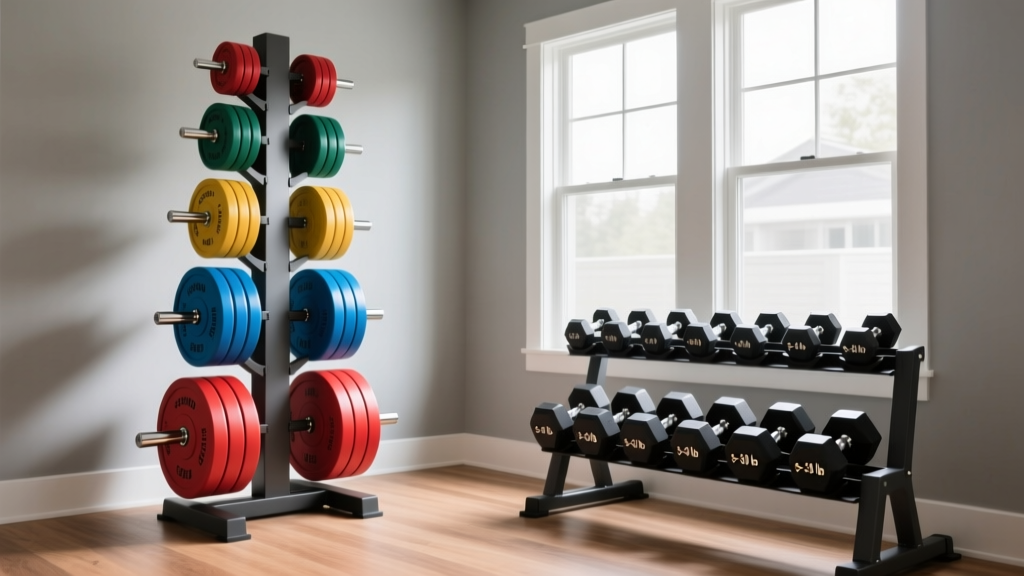
Best Weight Plate Storage Trees & Dumbbell Rack 5-50 Setups
Learn how to choose the best weight plate storage tree and integrate it with a dumbbell rack 5 50 setup. Step-by-step beginner guide for home gyms.

The Home Gym Storage Dilemma: Plates and Dumbbells
Building a home gym is an exciting journey, but beginners quickly discover a harsh reality: free weights take up a massive amount of space and create significant tripping hazards. While most new lifters prioritize purchasing a barbell and an adjustable bench, the secondary market of storage solutions is often an afterthought. Leaving 45-pound Olympic plates scattered on the floor or leaving a fixed-weight dumbbell set in a pile is not just disorganized; it is a severe safety risk and damages your flooring.
In this comprehensive 2026 beginner's guide, we will walk you through the exact steps to select, size, and safely install a weight plate storage tree. Furthermore, we will address the spatial logistics of integrating this tree alongside a standard tiered dumbbell rack 5 50 setup (a rack holding 10 pairs of dumbbells ranging from 5 to 50 lbs). By the end of this guide, you will have a professional-grade, safe, and highly optimized free-weight zone.
Step 1: Understanding Weight Plate Trees vs. A-Frame Racks
Before spending your hard-earned money, you must understand the two primary categories of weight plate storage. Choosing the wrong style for your specific room layout is the most common beginner mistake.
Vertical Plate Trees
A plate tree features a heavy-duty central steel post (usually 11-gauge or 7-gauge steel) with horizontal pegs radiating outward.
- Pros: Extremely compact footprint (often just 24" x 24"), allows for easy one-handed plate loading/unloading, and keeps plates elevated off the floor.
- Cons: Can become top-heavy and tip over if loaded incorrectly. Requires strict bottom-to-top loading discipline.
A-Frame and Slanted Plate Racks
These units feature slanted shelves or angled pegs that mimic the display style of commercial gyms.
- Pros: Inherently stable due to a wide, low center of gravity. Excellent for high-capacity storage (1,000+ lbs).
- Cons: Consumes significantly more floor space (often 40"+ in width) and requires more bending and reaching to access plates.
Step 2: Spatial Planning Around Your Dumbbell Rack 5 50
When pairing a weight tree with a dumbbell rack 5 50 setup, you must account for the combined footprint and the necessary "clearance zones" for safe movement. A standard 3-tier dumbbell rack holding pairs from 5 to 50 lbs weighs approximately 550 lbs on its own and spans about 42 inches in width and 24 inches in depth.
According to home gym layout guidelines from Garage Gym Reviews, you need a minimum of 36 inches of clearance in front of any storage rack to safely bend down, pick up heavy implements, and back away without tripping. Below is a spatial matrix to help you plan your floor layout.
| Equipment Piece | Physical Footprint | Required Clearance Zone | Total Floor Space Needed |
|---|---|---|---|
| Standard Plate Tree (4-Peg) | 24" x 24" | 36" front radius | ~12 sq ft |
| A-Frame Plate Rack (3-Tier) | 42" x 28" | 36" front radius | ~22 sq ft |
| Tiered Dumbbell Rack (5-50 lbs) | 42" x 24" | 36" front radius | ~20 sq ft |
Expert Tip: Never place your plate tree directly behind your lifting platform or bench. If a plate rolls or a tree tips, it becomes a projectile hazard. Always position storage units along the lateral walls of your gym space.
Step 3: Top Weight Plate Storage Options for Beginners (2026 Market)
The fitness equipment market has stabilized in 2026, offering excellent budget and premium options. When shopping, ensure you are buying a tree with 2-inch (50mm) pegs to accommodate standard Olympic plates. Buying a 1-inch standard peg tree will render it useless for modern Olympic bumper and iron plates.
1. Rogue Fitness Monster Lite Plate Tree
Rogue remains the gold standard for home gym durability. The Monster Lite Plate Tree is constructed from 2x3-inch 11-gauge steel and features a robust 24" x 24" base.
- Capacity: 800+ lbs safely distributed.
- Peg Specs: 2-inch diameter with protective UHMW plastic sleeves to prevent metal-on-metal scraping and preserve your expensive bumper plates.
- Price Range: ~$175 - $195.
- Where to find: Check the current inventory on the Rogue Fitness Weight Storage page.
2. Titan Fitness Plate Storage Tree
For beginners on a strict budget, Titan Fitness offers a highly capable alternative that doesn't sacrifice structural integrity.
- Capacity: 600 lbs.
- Base Specs: Slightly smaller 22" x 22" base, making it ideal for tight corners next to a dumbbell rack 5 50 setup.
- Price Range: ~$119 - $139 (often includes free shipping).
- Where to find: Available via the Titan Fitness Plate Trees category.
3. Bells of Steel 3-Tier Weight Plate Rack (A-Frame)
If you have the floor space and prioritize maximum stability over a compact footprint, this A-frame rack is exceptional. It features slanted shelves that allow you to read the plate weights easily and lift them using leg-drive rather than lower-back strain.
- Capacity: 1,000+ lbs.
- Price Range: ~$159 - $179.
Step 4: Step-by-Step Assembly and Safety Anchoring
The most critical failure mode of a vertical plate tree is tipping. A tree loaded with four 45-pound plates on the top pegs and empty bottom pegs raises the center of gravity dangerously high. Follow these steps to ensure your storage zone is safe.
- Prepare the Flooring: Ensure your gym floor is covered with at least 3/4-inch (18mm) thick vulcanized rubber mats. Thin foam tiles will compress unevenly under the 100+ lb point-load of a steel tree base, causing a wobble.
- Assemble the Base First: Tighten all base bolts to the manufacturer's torque specifications. Do not fully tighten the central post until the base is sitting perfectly flat on the rubber matting.
- Apply the Loading Rule: Always load the heaviest plates (45s and 35s) on the bottom pegs. Medium plates (25s and 10s) go in the middle, and fractional plates (5s and 2.5s) go on top. This keeps the center of gravity anchored to the floor.
- Anchor to the Wall (Optional but Recommended): If you have children or pets in the home gym space, use an L-bracket and masonry/drywall anchors to secure the top of the central post to your wall. This entirely eliminates the tipping hazard.
Never unload a heavy plate from one side of a top peg while a heavy plate is still on the opposite side of the same peg. This creates a lateral pendulum effect that can instantly tip an unanchored tree sideways, potentially crushing toes or damaging adjacent equipment like your dumbbell rack.
Common Beginner Mistakes to Avoid
- Ignoring Peg Sleeves: Buying a cheap, bare-steel peg tree will destroy the center hubs of your cast-iron plates and tear the inner rings of your rubber bumper plates. Always buy trees with UHMW plastic or rubber sleeves, or buy aftermarket silicone peg covers.
- Overloading Beyond Base Width: If your tree has a 24-inch base, do not hang 100-pound plates on it. The diameter of a 100lb plate can exceed the width of the base, meaning a slight bump will cause the plate to catch the floor and tip the entire unit.
- Storing Bands on Pegs: While it seems convenient, hanging heavy resistance bands on the top pegs of a plate tree creates a snapping hazard. Store bands in a dedicated mesh bin or wall-mounted hook system.
Frequently Asked Questions
Can I put my plate tree on carpet?
It is highly discouraged. Carpet padding compresses unpredictably under the concentrated weight of a steel base. This creates a slant, increasing the risk of the tree tipping. If you must use carpet, place a 3/4-inch plywood board under the tree base to distribute the load, topped with a rubber horse-stall mat.
How far should the plate tree be from my squat rack?
Keep the plate tree at least 18 to 24 inches away from the uprights of your squat rack. This allows you to safely walk a loaded barbell out of the J-cups without the barbell sleeves colliding with the plates stored on the tree.
Do I need a separate rack for my 5-50 dumbbell set?
Yes. Attempting to store a full 5-50 lb fixed dumbbell set on a plate tree is dangerous and physically impractical. A dedicated 3-tier dumbbell rack is engineered to handle the specific dimensions and lateral weight distribution of hex or round dumbbells, keeping them secure and preventing roll-aways.
More gear to consider
All reviews
Home Gym Safety: 7 Common Mistakes That Cause Injury (and How to Fix Them)

Searching for a Nike Dumbbell Rack? Small Space Storage Guide

Beginner Guide: Setting Up Your Rep Dumbbell Stand & Storage Rack

Precor Dumbbell Rack Value: Garage Gym Storage Budget Breakdown

Three Tier Dumbbell Rack & Barbell Storage Rack Horizontal vs Vertical
