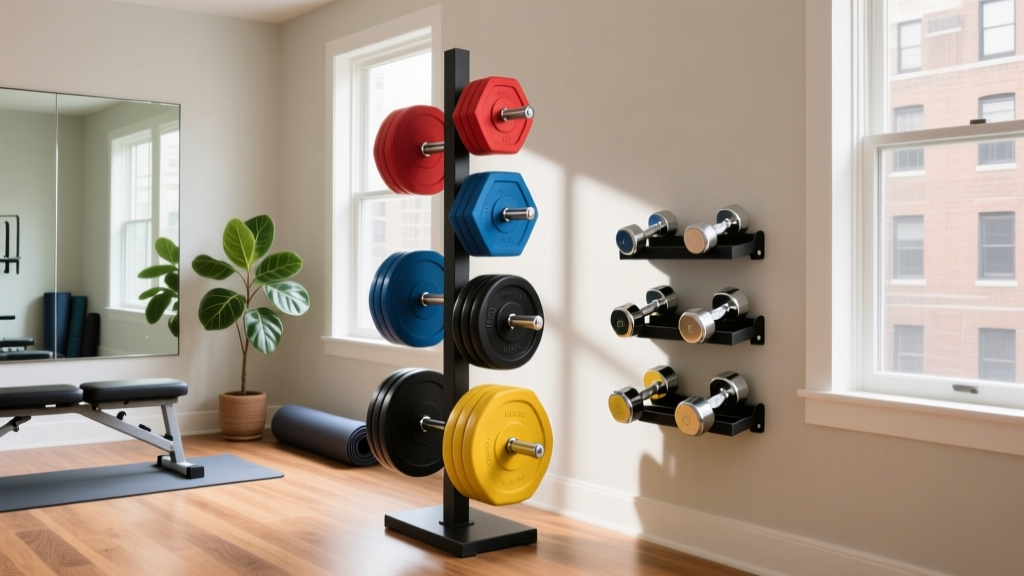
Weight Plate Trees & Dumbbell Holders for Bench Press Setup
Master your gym layout with our setup guide for weight plate storage trees and integrating dumbbell holders for bench press stations safely.

The Architecture of a Safe Storage Zone
Designing a high-functioning home gym in 2026 requires more than just purchasing premium iron; it demands rigorous spatial engineering. When you combine a high-capacity weight plate storage tree with specialized dumbbell holders for bench press stations, you are concentrating over 1,500 pounds of dead weight into a single 48-square-foot zone. Understanding the structural and biomechanical implications of this setup is the difference between a seamless lifting environment and a hazardous, cramped garage.
Before unboxing your storage equipment, you must evaluate your subfloor. According to guidelines referenced by the American Wood Council, standard residential floor joists are typically rated for a 40 PSF (pounds per square foot) live load. A fully loaded 6-peg plate tree holding 1,080 pounds of bumper plates, combined with a 500-pound dumbbell set, can easily exceed localized joist limits if placed at the center-span of a second-floor room. Always position heavy storage nodes directly over load-bearing walls, basement support beams, or on ground-level concrete slabs.
⚠️ Structural Warning: Never place a fully loaded freestanding plate tree on an engineered wood subfloor without supplemental cross-bracing beneath the joists. For garage gyms on concrete, ensure the slab is at least 4 inches thick and fully cured to support wedge anchor tension.Evaluating Weight Plate Storage Tree Options
The market for plate storage has evolved significantly, moving away from flimsy A-frame designs toward heavy-duty, modular nodes that integrate with power racks or stand alone with massive base footprints. Below is a comparison of the top-tier options available for serious home gyms this year.
| Model | Capacity | Footprint | Price (2026) |
|---|---|---|---|
| Rogue RM-390T Plate Tree | 1,000+ lbs | 24' x 24' | $295 |
| Titan Fitness 3-Spoke Tree | 800 lbs | 30' Diameter | $149 |
| Bells of Steel Plate Tree | 1,000 lbs | 22' x 28' | $199 |
For lifters utilizing a mix of Olympic plates and fractional change plates, the Rogue RM-390T remains the gold standard due to its inclusion of both 1-inch and 2-inch UHMW plastic-coated pegs, which prevent damage to expensive calibrating steel plates.
Integrating Dumbbell Holders for Bench Press Stations
Selecting the right dumbbell holders for bench press configurations is critical for shoulder health and workout flow. Bending over to pick up 80-pound hex dumbbells from the floor before a heavy set invites lumbar shear forces and wastes ATP. You have two primary integration routes:
Rack-Attached Shelves vs. Freestanding Tiers
If your bench press is housed inside a power rack, rack-attached dumbbell shelves are the most space-efficient solution. The Rep Fitness PR-5000 V2 Dumbbell Shelf ($119) mounts directly to the uprights using sandwich J-cup brackets. This places the dumbbell handles exactly 22 inches off the floor, aligning perfectly with the seated knee height of a standard 17-inch bench, allowing for safe 'kickback' positioning.
Expert Insight: When mounting dumbbell holders for bench press workflows, ensure the shelf depth is at least 10 inches. Standard 8-inch shelves cause heavier, wider dumbbells (like 100lb+ urethane hex models) to overhang, creating a dangerous tipping hazard when you grab them unevenly.
If you bench press on a flat utility bench outside of a rack, a standalone 3-tier dumbbell rack positioned exactly 18 inches behind the bench headrest is mandatory. This allows you to reach back and grab the weights without twisting your spine under load.
Step-by-Step Installation Walkthrough
Proper installation ensures your storage tree won't tip when you aggressively strip 45-pound plates off the top pegs. Follow this exact sequence for concrete slab anchoring.
- Map the 36-Inch Clearance Zone: Use a laser measure to guarantee a minimum 36-inch radius around the plate tree. This accommodates the 7-foot length of an Olympic barbell when loading plates directly from the tree to the bar sleeves.
- Drill the Anchor Holes: For freestanding trees with 3/8-inch mounting holes, use a 1/2-inch rotary hammer drill with a masonry bit. Drill exactly 3.5 inches deep into the concrete.
- Clear the Dust: Use a shop-vac and compressed air to completely clear concrete dust from the holes. Residual dust will reduce the pull-out strength of wedge anchors by up to 40%.
- Set the Wedge Anchors: Insert 3/8' x 3' zinc-plated wedge anchors through the tree base. Hand-tighten the nuts until the washer is flush.
- Torque to Spec: Using a calibrated torque wrench, tighten each nut to exactly 30 ft-lbs. This expands the wedge at the base of the concrete without cracking the slab.
- Attach Dumbbell Holder Brackets: If integrating rack-attached dumbbell holders for bench press use, mount the upright brackets using 5/8-inch Grade 8 bolts, torqued to 60 ft-lbs to prevent shelf sag under heavy loads.
Hardware Torque Specifications Quick-Reference
- 3/8' Wedge Anchors (Concrete): 30 ft-lbs
- 5/8' Carriage Bolts (Wood-to-Metal): 60 ft-lbs
- 3/4' Through-Bolts (Metal-to-Metal Rack Uprights): 85 ft-lbs
Spatial Planning: The Biomechanics of Storage
The National Strength and Conditioning Association (NSCA) emphasizes that facility layout should minimize the unnecessary carrying of heavy loads. In a home gym, this means your plate tree, dumbbell rack, and barbell storage must form a tight, ergonomic triangle.
Position your weight plate storage tree no more than 4 feet from the collar of your barbell when it is resting on the J-cups. This allows you to slide plates horizontally off the peg and directly onto the bar sleeve without lifting the plate higher than your waist. Similarly, your dumbbell holders for bench press setups should be positioned so that the heaviest dumbbells are stored on the bottom tier, keeping the center of gravity low and reducing the lifting distance required to clean them into position.
Long-Term Maintenance and Hardware Audits
Storage equipment is often ignored once bolted down, but the constant vibration from dropped barbells and heavy plate loading can loosen hardware over time. Implement this quarterly maintenance checklist to ensure your setup remains safe through years of heavy training cycles:
- Re-Torque Anchors: Concrete wedge anchors can lose tension due to micro-vibrations. Check with a torque wrench every 90 days.
- Inspect UHMW Sleeves: The plastic sleeves on plate tree pegs wear down from cast iron friction. If the steel core becomes exposed, replace the sleeves immediately to prevent rust transfer and plate damage.
- Check Shelf Welds: Inspect the TIG welds on rack-attached dumbbell shelves for hairline fractures, especially if you frequently drop heavy dumbbells onto the shelf rather than placing them down controlled.
- Level the Base: Use a machinist level on the base plate of your storage tree. If your garage floor has settled or shifted, use stainless steel shims to eliminate wobble before re-tightening the anchors.
By treating your equipment storage not as an afterthought, but as a foundational pillar of your gym's architecture, you protect your property, your joints, and your focus. A properly installed plate tree paired with intelligently placed dumbbell holders for bench press work transforms a cluttered garage into a professional-grade performance facility.
More gear to consider
All reviews
Maintaining Wall-Mounted Storage and Your TAG Dumbbell Rack
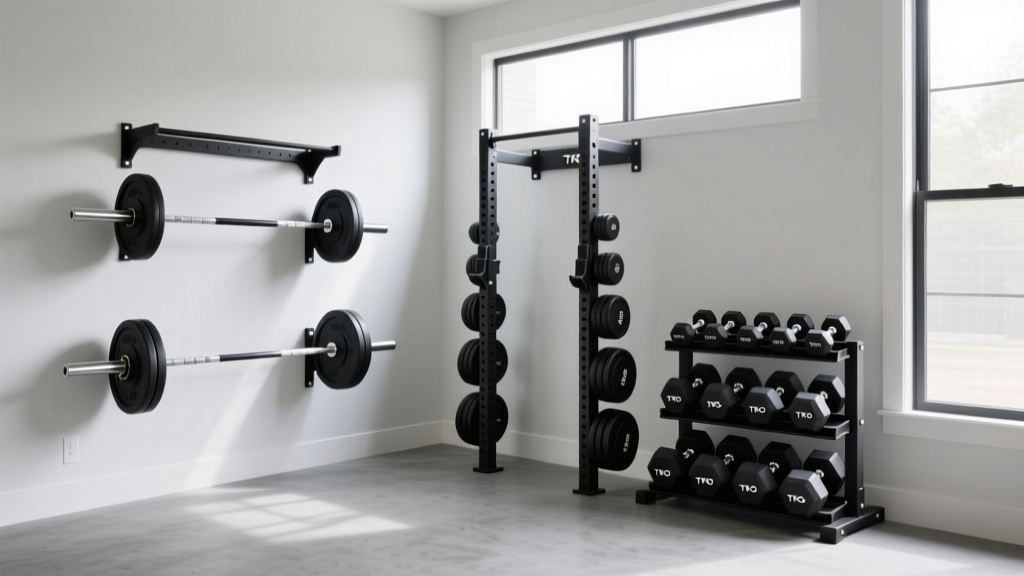
Barbell Rack Horizontal vs Vertical & TKO Dumbbell Rack Layout
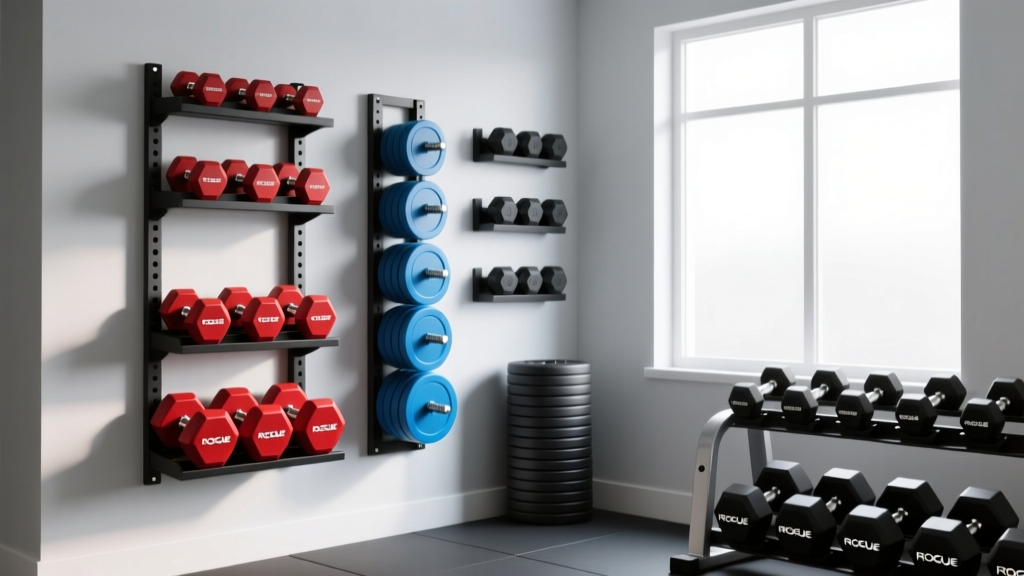
Rogue Dumbbell Storage for Small Spaces: Step-by-Step Guide

How To Match Therapy With Science: Evidence-Based Design Strategies for Home Gym Recovery Spaces

Horizontal vs Vertical Barbell Racks & Cybex Dumbbell Rack Review
