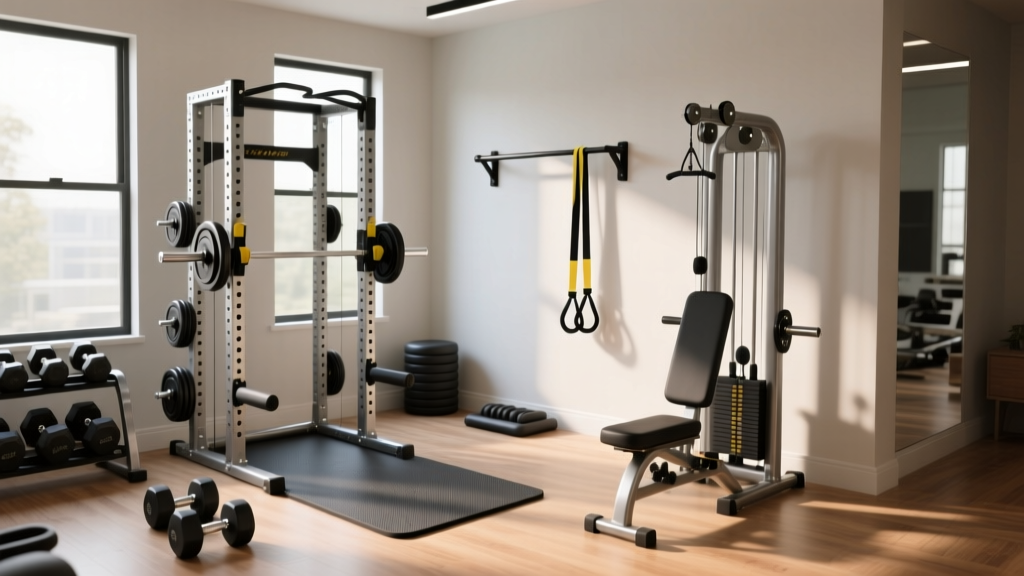
Home Gym Sheds vs Garage Gyms: 2026 Ventilation Trends
Analyze the 2026 shift from garage gym setups to home gym sheds. Compare flooring costs, ventilation CFM needs, and climate control data.

The 2026 Market Shift: From Attached Garages to Detached Studios
The home fitness real estate market is undergoing a structural pivot in 2026. While the traditional garage gym setup remains a staple for millions of lifters, zoning relaxations, the proliferation of prefabricated accessory dwelling units (ADUs), and the desire for dedicated, climate-controlled spaces have triggered a massive surge in home gym sheds. This trend report analyzes the technical divergence between retrofitting an attached two-car garage and outfitting a detached backyard shed, focusing strictly on the two most critical failure points in fitness construction: ventilation dynamics and flooring substrates.
According to recent construction data, permits for detached backyard fitness and wellness studios have increased by over 34% year-over-year. However, transitioning from a concrete-slab garage to a timber-framed shed introduces complex building science challenges. A garage gym setup with proper flooring and ventilation requires managing massive thermal loads and exhaust, whereas home gym sheds demand rigorous moisture control and structural deflection management. Below, we break down the exact specifications, costs, and failure modes for both setups.
Ventilation Showdown: Garage Exhaust vs. Shed Mini-Splits
High-exertion training spaces generate immense heat, humidity, and CO2. The EPA's guidelines on indoor air quality emphasize that inadequate ventilation in enclosed spaces leads to rapid degradation of air quality, triggering fatigue and respiratory irritation. The approach to solving this differs wildly between attached garages and detached sheds.
The Garage Gym Setup: High-Volume Exhaust
Attached garages are notoriously leaky and poorly insulated. A standard 2-car garage measures roughly 400 square feet with a 9-foot ceiling, yielding 3,600 cubic feet of air. To achieve the 4 to 6 Air Changes per Hour (ACH) recommended for active spaces, you must move between 240 and 360 CFM (Cubic Feet per Minute) of air continuously.
- The Solution: Installing dual Panasonic WhisperCeiling 110 CFM exhaust fans (approx. $220 each) wired to a humidistat.
- The Failure Mode: Negative pressure draw. If you exhaust 220 CFM from a tightly sealed garage without a dedicated make-up air inlet, you risk back-drafting carbon monoxide from attached water heaters or furnaces into the gym space.
- 2026 Cost Baseline: $650 - $900 for exhaust fans, make-up air louvers, and smart humidistat wiring.
Home Gym Sheds: The Tight Envelope & ERV Necessity
Modern home gym sheds are built like energy-efficient homes, utilizing spray foam or rigid mineral wool insulation. While this solves the thermal bridging problem of garages, it creates a hermetically sealed box. When two athletes are training in a 200-square-foot shed, CO2 levels can exceed 2,500 ppm in under 20 minutes, severely impacting VO2 max performance.
- The Solution: A Mitsubishi M-Series 12,000 BTU Mini-Split ($1,800 - $2,400 installed) for thermal control, paired with a dedicated Energy Recovery Ventilator (ERV) like the Zehnder ComfoAir 70.
- Why an ERV? An ERV exchanges stale, humid indoor air with fresh outdoor air while transferring the heat/cooling, preventing the mini-split from overworking. ASHRAE Standard 62.2 heavily advocates for balanced mechanical ventilation in tight, modern structures to prevent mold and structural rot.
- 2026 Cost Baseline: $3,200 - $4,500 for complete HVAC and ERV integration.
In home gym sheds, failing to pair your mini-split with an ERV or exhaust fan leads to 'sweat rot.' High humidity from heavy breathing condenses on the interior vapor barrier, eventually saturating the timber framing and causing black mold behind your drywall within a single winter season.
Flooring Substrates: Concrete Slabs vs. Shed Timber Joists
The most overlooked aspect of gym construction is the substrate beneath the rubber. Dropping 500 lbs of deadlift weight behaves entirely differently on a 4,000 PSI concrete slab compared to a suspended timber floor.
Garage Gym Flooring: Moisture & Adhesion
Most garage gyms utilize 3/4-inch thick, 4x6-foot vulcanized rubber horse stall mats (e.g., Rogue Fitness or local agricultural suppliers, averaging $65 per mat). However, placing rubber directly on a garage concrete slab is a primary failure mode in 2026.
- Moisture Vapor Emission Rate (MVER): Concrete slabs wick ground moisture. If your slab's MVER exceeds 3 lbs per 1,000 sq ft (testable with a $15 calcium chloride kit), trapping it under impermeable rubber mats will cause the concrete to spall and the rubber to harbor mildew.
- The Fix: Apply a penetrating silane/siloxane concrete sealer ($0.40/sq ft) or a polyaspartic flake coating ($6-$9/sq ft) before laying down an interlocking modular subfloor grid like the IncStores Diamond Flex tiles ($3.50/sq ft) to allow airflow beneath the heavy mats.
Home Gym Sheds: Managing Joist Deflection
Detached home gym sheds are often built on post-and-beam foundations or concrete piers with suspended floor joists. The enemy here is deflection (the bounce of the floor under load). The International Residential Code (IRC) mandates an L/360 deflection limit for living spaces, but heavy Olympic lifting demands L/480 or better to prevent joint fatigue and equipment shifting.
- Subfloor Specification: Use 3/4-inch AdvanTech engineered subflooring panels ($55 per 4x8 sheet), glued and screwed to 2x8 pressure-treated joists spaced 12 inches on-center (rather than the standard 16 inches).
- Impact Layer: Top the AdvanTech with a 1/2-inch layer of CDX plywood, followed by your 3/4-inch rubber stall mats. This 2-inch sandwich distributes the point-load of a dropped barbell across multiple joists, preventing catastrophic fastener failure.
Comparative Matrix: Garage vs. Shed Specifications
| Feature | Attached Garage Gym Setup | Detached Home Gym Shed |
|---|---|---|
| Envelope Tightness | Low (High infiltration, drafty) | High (Requires mechanical ventilation) |
| HVAC Strategy | High-CFM Exhaust + Make-up Air | Mini-Split + ERV System |
| Climate Control Cost | $650 - $900 (Ventilation only) | $3,200 - $4,500 (Heating/Cooling/Vent) |
| Substrate Base | 4,000 PSI Concrete Slab | Suspended Timber Joists (2x8 @ 12" OC) |
| Primary Moisture Risk | Slab vapor transmission (Spalling) | Interior condensation (Timber Rot) |
| Avg. Build Cost (200 sqft) | $1,500 - $3,000 (Retrofit) | $18,000 - $35,000 (New Construction) |
Information Gain: The Acoustic & Vibration Factor
An emerging trend driving the 2026 migration toward home gym sheds is acoustic isolation. Attached garages share walls with living spaces, meaning the low-frequency vibration of dropped bumper plates travels through the home's framing. Building science experts note that low-frequency sound transmission is notoriously difficult to mitigate in shared structures. By utilizing a detached home gym shed with an isolated concrete pier foundation, lifters can drop heavy loads at 5:00 AM without triggering structural vibration sensors or waking household members, a luxury that garage retrofits simply cannot provide without spending thousands on specialized acoustic decoupling membranes.
Final Verdict for Home Gym Builders
The decision between a garage gym setup and a dedicated shed hinges entirely on budget and property lines. If you are working within a $3,000 budget, optimizing your existing garage with polyaspartic floor coatings, high-CFM exhaust fans, and premium 3/4-inch rubber mats remains the most cost-effective path to a professional-grade training environment. However, if you are capitalizing on the 2026 ADU trend and possess the capital ($20k+) for a detached build, a home gym shed offers superior climate stability, acoustic isolation, and structural customization—provided you strictly adhere to ERV ventilation protocols and L/480 joist deflection standards.
More gear to consider
All reviews
Beginner Starter Kit for Your Marcy Home Gym Routine
Compact Home Gyms Ideas: Apartment Equipment Maintenance

Rental Apartment Functional Training Home Gym: No-Damage Setup

Shared Home Gym Setup: How Much Weight Can You Lose on a Treadmill

Building a Feierdun Home Gym Setup Under $500: Value Analysis