
Home Gym Size and Layout: The Essential Starter Kit Guide
Master your home gym size and layout with our 2026 essential starter kit guide. Compare equipment footprints, costs, and space-saving setups for beginners.

The Intersection of Equipment and Space
Building a home gym is one of the highest-ROI investments you can make for your long-term health, but beginners frequently make the same critical error: buying equipment without first calculating their home gym size and layout. A commercial-grade power rack might look incredible online, but if it blocks your garage door tracks or prevents you from fully extending a barbell during a bench press, it becomes an expensive clothes hanger.
In 2026, the fitness equipment market offers more space-efficient, modular options than ever before. However, optimizing your footprint requires a strategic approach to equipment selection, spatial geometry, and structural clearances. This guide bridges the gap between spatial planning and equipment purchasing, providing you with an essential home gym starter kit tailored to your exact square footage.
The Golden Rule of Clearance
According to the American Council on Exercise (ACE), you must account for the dynamic envelope of your body and the equipment, not just the static footprint. Always add a minimum of 24 inches of clearance to the front and sides of any lifting station for safe loading, unloading, and emergency bailing.
Minimum Space Requirements by Equipment Type
Before purchasing a starter kit, you must understand the non-negotiable dimensions of standard strength training equipment. Below is a comparison matrix detailing the static footprint versus the dynamic operational space required for foundational home gym pieces.
| Equipment | Static Footprint | Required Operational Clearance | 2026 Avg. Cost |
|---|---|---|---|
| Standard Power Rack (e.g., Rep PR-1100) | 48' x 48' (16 sq ft) | 10' x 8' (80 sq ft) | $399 - $550 |
| Folding Wall Rack (e.g., Rogue RM-3) | 4' x 21' (Folded) | 8' x 6' (48 sq ft) | $725 - $850 |
| Adjustable Bench (e.g., Rep AB-3100) | 18' x 48' (6 sq ft) | 6' x 4' (24 sq ft) | $250 - $350 |
| 7-Foot Olympic Barbell | 84' length | 116' total width (includes sleeves) | $150 - $295 |
Tier 1: The Compact Apartment Layout (Under 60 Sq Ft)
When your home gym size and layout is restricted to a spare bedroom corner or a small apartment living area, traditional barbell setups are usually out of the question. A standard 7-foot barbell requires nearly 10 feet of horizontal wall space just to un-rack safely. Instead, your essential starter kit must prioritize high-density resistance and vertical storage.
The Compact Starter Kit
- Resistance: Nuobell 80lb Adjustable Dumbbells ($429/pair). Unlike older dial-based models, the Nuobell system uses a twisting handle mechanism that maintains the exact physical dimensions of a traditional dumbbell, preventing the awkward bulk that limits range of motion on exercises like goblet squats.
- Support: Foldable FID Bench ($180 - $250). Look for models with transport wheels and a vertical storage footprint of less than 12 inches.
- Conditioning: WalkingPad P1 Foldable Treadmill ($399) or a compact under-desk elliptical. These slide under a bed or sofa, eliminating the permanent spatial tax of a traditional cardio machine.
- Pull-up Solution: Doorway tension pull-up bar ($40). Ensure your door trim is structurally sound and can support dynamic loading.
Pro Tip: Utilize vertical wall space for dumbbell storage racks. Keeping the floor clear creates the psychological illusion of a larger room and prevents tripping hazards.
Tier 2: The Standard Garage Corner Layout (100-150 Sq Ft)
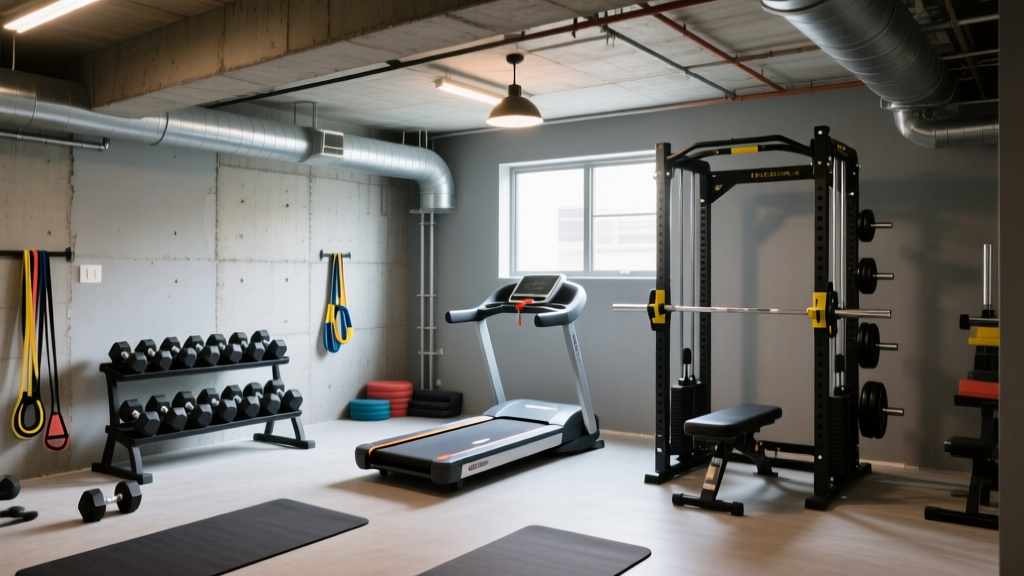
If you have a dedicated 10x10 or 10x15 foot section of a garage or basement, you can accommodate a full barbell setup. This is where understanding your home gym size and layout pays dividends, as you can safely perform heavy compound movements like squats, deadlifts, and overhead presses.
The Garage Corner Starter Kit
- The Rack: Titan Fitness T-3 Series Power Rack ($599). With a 48-inch interior width and 11-gauge steel uprights, it provides commercial stability without requiring you to bolt it into concrete (though bolting is always recommended for safety).
- The Barbell: Rogue Ohio Bar ($295). A 20kg multi-purpose bar with composite bushings that offers the perfect balance of spin for Olympic lifts and stiffness for heavy squats.
- The Plates: 230 lbs of Urethane-Coated Iron Plates ($250 - $350). Urethane is critical for garage gyms as it does not emit the harsh 'new rubber' off-gassing odor that plagues standard crumb-rubber bumpers in unventilated spaces.
- The Bench: Rep Fitness AB-4100 Adjustable Bench ($399). Features a 1,000 lb capacity and a 13-inch pad width, which prevents shoulder impingement during heavy incline pressing.
Ceiling Height: The Silent Layout Killer
Beginners meticulously measure floor space but completely forget to measure vertical clearance. Standard power racks are typically 80 to 90 inches tall. If your basement or garage ceiling is 84 inches (7 feet), you will physically strike the ceiling when attempting an overhead press or pulling yourself up to the bar.
Critical Measurement Check: Measure your ceiling height, then subtract 12 inches. That is your maximum allowable rack height. If your ceiling is 84 inches, you must purchase a 'short' rack, such as the Rogue SML-1C 70-inch Monster Lite Squat Stand, to maintain safe operational clearance.
Flooring: Where Beginners Make Costly Mistakes
Your layout plan must include a dedicated flooring zone to protect your subfloor from dropped weights and to provide a stable, non-compressible base for heavy lifts. According to Garage Gym Reviews' comprehensive flooring guide, the material you choose drastically impacts both safety and equipment longevity.
The Flooring Hierarchy
- 3/4-Inch Vulcanized Rubber Horse Stall Mats (The Gold Standard): Available at agricultural supply stores like Tractor Supply Co. for roughly $55 per 4x6 foot sheet. These are incredibly dense, will not compress under 500+ lb deadlifts, and protect concrete slabs from cracking.
- 3/8-Inch Interlocking EVA Foam Tiles (The Beginner Trap): While cheap and easy to install, foam tiles compress unevenly under heavy loads. This creates an unstable base for squats, increasing the risk of ankle rolling and knee valgus. Furthermore, they degrade quickly under the friction of dropped dumbbells.
- Crumb Rubber Bumper Plates on Bare Concrete: Never lift directly on bare concrete. The vibration transfers through the floor, which can crack the slab over time and cause severe joint fatigue.
Frequently Asked Questions
Can I put a home gym on a second-floor bedroom?
Yes, but with strict weight limitations. Standard residential floor joists are typically rated for 40 pounds per square foot (psf) of live load. A single 45-pound plate dropped from waist height generates thousands of pounds of impact force. If building on a second floor, restrict your setup to adjustable dumbbells, resistance bands, and machines with distributed weight bases. Avoid dropping any free weights.
How much ventilation do I need for a garage gym?
Garages trap heat and humidity, which accelerates the oxidation (rusting) of unprotected steel equipment. Install a high-CFV wall exhaust fan or use a heavy-duty oscillating floor fan. If you live in a high-humidity climate, running a dehumidifier set to 50% relative humidity is mandatory to protect your barbell shaft and rack hardware.
Should I bolt my power rack to the floor?
The Mayo Clinic's guide to home gym safety emphasizes securing heavy equipment to prevent tipping. If your rack is under 80 inches tall, lacks a deep rear stabilizer, or if you plan to use resistance bands and do kipping pull-ups, you must anchor it to the concrete using wedge anchors or use a heavy rear weight storage peg system to act as a counterbalance.
Finalizing Your Layout Plan
Optimizing your home gym size and layout is an exercise in spatial geometry just as much as it is a fitness endeavor. By measuring your dynamic clearances, respecting your ceiling height, and selecting an essential starter kit that matches your specific square footage, you will build a training space that is safe, efficient, and built for long-term progress. Grab your tape measure, sketch your floor plan on graph paper, and invest in equipment that serves your space—not the other way around.
More gear to consider
All reviews
Body Solid G1S Home Gym: The Ultimate Budget Setup Under $500

Configuring Your Space for a Strength Home Gym Training Program

Home Gym in Shed: How Much Weight Do You Actually Need?
Unfinished Basement Home Gym: Budget Breakdown & Remodel Costs

How Much Weight You Need: Iron vs MaxPro SmartConnect Home Gym Review
