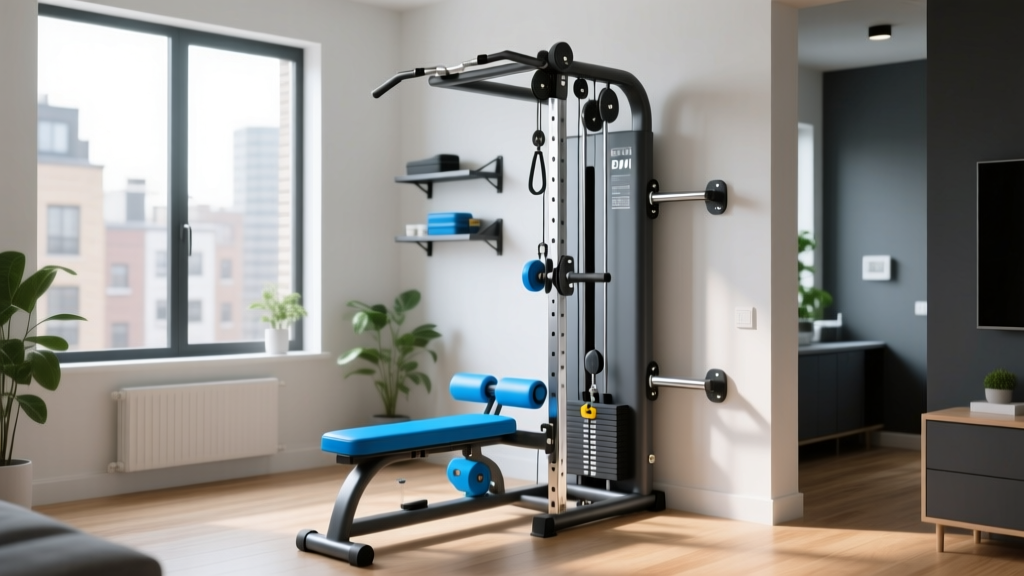
Maintaining Your Compact BMI Home Gym in Small Apartments
Maximize the lifespan of your compact BMI home gym in small apartments with expert maintenance tips for cables, hinges, and apartment flooring.

The Unique Maintenance Paradigm of Small-Space Fitness
Designing a home gym setup for small spaces and apartments requires a delicate balance of spatial efficiency and equipment versatility. When you invest in a compact BMI home gym system—such as a wall-mounted functional trainer, a fold-away cable rack, or an all-in-one compact smith machine—you are maximizing your square footage. However, operating heavy fitness equipment in a multi-use apartment environment introduces unique environmental stressors that commercial gyms simply do not face.
Unlike climate-controlled commercial facilities with industrial HVAC turnover, small apartments trap dust, lint, and localized humidity. Over time, these micro-climate factors can severely degrade the moving parts, cables, and structural hinges of your equipment. As of 2026, modern compact trainers utilize advanced materials, but they still demand rigorous, environment-specific maintenance. This guide provides deep-dive, actionable protocols to ensure your apartment BMI home gym setup remains safe, quiet, and fully functional for years to come.
Core Principle: The Dust-to-Friction Ratio
In a small apartment, airborne particulate matter (from clothing, bedding, and pets) is concentrated. When this dust mixes with the aerosolized sweat from your workouts, it forms a microscopic abrasive paste on guide rods and pulley tracks. Managing this paste is the single most important factor in small-space equipment longevity.
Managing the Micro-Climate: Humidity and Airborne Particulates
Small rooms lack the cubic volume required to dissipate the heat and moisture generated during intense training sessions. A 45-minute high-intensity interval session can raise the localized relative humidity in a 10x10 foot bedroom by up to 15%. According to the Environmental Protection Agency (EPA), maintaining indoor relative humidity between 30% and 50% is critical to preventing mold and material degradation. For your BMI home gym equipment, high humidity accelerates micro-corrosion on uncoated steel weight pins and selector rods.
Actionable Climate Control Steps
- Targeted Airflow: Position an oscillating fan to blow directly across the weight stack and guide rods during use. This evaporates sweat aerosol before it settles on the steel components.
- Desiccant Placement: Place rechargeable silica gel desiccant canisters (like Eva-Dry E-333 units, approx. $25 each) near the base of the weight stack to absorb ambient moisture at the floor level where air stagnates.
- Post-Workout Wipe Down: Never leave sweat on the equipment. Use a microfiber cloth lightly dampened with a 50/50 mix of distilled water and white vinegar. Avoid bleach-based cleaners, which emit fumes that can oxidize nearby metal finishes in poorly ventilated rooms.
Cable and Pulley Longevity on Compact Functional Trainers
Compact BMI functional trainers rely heavily on intricate pulley systems to deliver a full range of motion in a small footprint. These systems typically utilize 3/16-inch or 1/4-inch nylon-coated aircraft cables. In an apartment setting, the primary failure mode for these cables is not snapping, but rather the degradation of the nylon coating due to dust friction, leading to 'fish-hooking' (micro-frays that catch on the pulley wheel).
The Cotton Ball Inspection Test
Every 60 days, run a standard cotton ball along the entire length of the exposed cable. If the cotton snags, you have a micro-fray. Catching this early prevents the frayed steel from tearing through the nylon coating and destroying the internal bearings of your pulleys.
| Component | Maintenance Action | Frequency | Estimated Cost |
|---|---|---|---|
| Nylon-Coated Cables | Cotton ball inspection & silicone wipe | Every 60 Days | $8 (Silicone spray) |
| Pulley Bearings | Clean tracks with isopropyl alcohol & nylon brush | Every 90 Days | $5 (Alcohol/Brush) |
| Guide Rods | Apply 100% PTFE (Teflon) dry lubricant | Monthly | $12 (PTFE Lube) |
| Selector Pin | Wipe clean, apply light machine oil to spring | Monthly | $4 (3-in-One Oil) |
Expert Warning: Never use standard WD-40 on your BMI home gym guide rods or cables. Standard WD-40 is a solvent and water displacer, not a long-term lubricant. It will strip existing factory grease and leave a sticky residue that aggressively attracts apartment dust, turning your guide rods into sandpaper. Always use a dry PTFE spray or 100% silicone lubricant.
Hinge, Gas Strut, and Folding Mechanism Care
For apartment dwellers, fold-away racks and wall-mounted functional trainers are a necessity. These systems rely on heavy-duty steel pivot pins and hydraulic gas struts to safely deploy and store hundreds of pounds of steel. The shear stress placed on these hinges during the folding process is immense, and neglect can lead to catastrophic failure.
Gas Strut Pressure Testing
Gas struts contain pressurized nitrogen and a small amount of oil. Over time, especially in environments with fluctuating temperatures (like an apartment near a poorly insulated exterior wall), the seals can degrade, leading to pressure loss.
The Test: With the rack empty, slowly lower the folding mechanism. It should descend smoothly and hold its position at any point. If it 'drops' or requires significant upward force to keep open, the struts are failing. Replacement gas struts for compact gym systems typically cost between $40 and $65 per pair and should be swapped every 3 to 4 years.
Pivot Pin Lubrication
The M10 or M12 carriage bolts acting as pivot points must be kept free of rust. Apply a marine-grade grease (like Lucas Oil Marine Grease) directly to the bolt threads and the inner sleeve of the hinge. Because these hinges are often tucked away when folded, they are prone to being forgotten. Set a calendar reminder to re-grease these pivot points bi-annually. Ensure all mounting bolts securing the unit to your apartment wall studs are torqued to the manufacturer's specification (usually 45-55 Nm) using a calibrated torque wrench, as wall vibrations from daily use can slowly back them out.
Protecting Apartment Subfloors from Sweat and Impact
The longevity of your gym setup isn't just about the equipment; it's about preserving the structural integrity of your apartment. Most modern apartments feature engineered hardwood or luxury vinyl plank (LVP) flooring over a concrete or wood subfloor. Human sweat contains urea, salt, and lactic acid. When this acidic mixture drips onto engineered wood, it eats through the polyurethane finish in a matter of months, leading to warping and black staining.
Furthermore, the Consumer Product Safety Commission (CPSC) frequently highlights the importance of stable, non-slip flooring to prevent equipment tipping and user injury in home environments.
The Ultimate Apartment Flooring Stack
To protect your deposit and your subfloor, do not rely on cheap puzzle mats. Implement a three-tier flooring stack:
- Base Layer (Vapor Barrier): Lay down a 6-mil polyethylene plastic sheeting (approx. $0.15 per sq. ft.). This completely blocks acidic sweat and moisture from reaching the apartment floor.
- Impact Layer (Rubber Tiles): Use 3/8-inch (9.5mm) interlocking vulcanized rubber tiles (approx. $2.50 - $3.50 per sq. ft.). Avoid 1/2-inch horse stall mats if you are on an upper floor, as their extreme weight (often 100+ lbs per mat) may exceed residential live-load floor ratings, and their off-gassing odor is unbearable in small, unventilated spaces.
- Top Layer (Equipment Pads): Place high-density EVA foam equipment pads specifically under the feet of your BMI functional trainer to distribute the static point-load and prevent the rubber tiles from permanently compressing over time.
Troubleshooting Common Small-Space Equipment Failures
Even with meticulous care, compact equipment in small spaces will exhibit wear. Here is how to diagnose and fix the most common issues specific to apartment BMI home gym setups.
Squeaking Pulleys During Cable Crossovers
The Cause: Dust infiltration into the unsealed bearing race of the swivel pulley.
The Fix: Remove the pulley from the bracket (usually requires a 5mm Allen key). Submerge the pulley wheel in a bath of isopropyl alcohol to dissolve the dust-grease paste. Spin it manually to work the alcohol into the bearings. Let it dry completely, then apply a single drop of lightweight synthetic bearing oil (like Tri-Flow) to the center axle. Wipe away all excess.
Weight Stack 'Sticking' or Chattering
The Cause: Uneven wear on the guide rod bushings or a buildup of oxidized sweat on the selector pin.
The Fix: Inspect the top and bottom guide rod bushings for micro-cracks. If intact, clean the rods with a Scotch-Brite pad (lightly, to avoid removing the chrome plating) and re-apply PTFE dry lube. If the selector pin feels gritty when inserted, soak it in white vinegar for 10 minutes to dissolve calcium and salt deposits from sweat, then brush it clean with a brass wire brush.
Wall-Mounted Bracket Creep
The Cause: The drywall or wood stud behind the mounting bracket is compressing under the dynamic load of the weight stack.
The Fix: If you notice the bracket pulling away from the wall by even 1mm, stop using the equipment immediately. You must remove the unit and install a 3/4-inch plywood backing board, lag-bolted directly into the wall studs, to distribute the sheer force across a wider surface area. Re-mount the BMI home gym to the plywood using structural lag screws.
Conclusion
Maintaining a BMI home gym in a small apartment requires a shift in perspective. You are not just maintaining a machine; you are managing the interaction between heavy mechanical forces and a delicate, enclosed living environment. By controlling the micro-climate, adhering to strict dry-lubrication protocols for cables and hinges, and installing a proper moisture-blocking flooring stack, you can ensure your compact fitness setup remains a reliable, quiet, and safe cornerstone of your daily routine for years to come.
More gear to consider
All reviews
Weider 9635 Home Gym: Maintenance & Strength Configuration

Bowflex Revolution Home Gym: Apartment Setup & Maintenance Guide

Can You Use HSA for Home Gym Equipment? Build a $500 Setup

Teeter FitForm Home Gym: Layout & Design Review 2026

Weider Home Gym Workout Guide: Electrical Safety & Setup Mistakes
