Power Rack vs Squat Rack vs Stand for Full Body Dumbbell Workouts
Choose the right power rack, squat rack, or squat stand to safely elevate your full body dumbbell workouts at home with this step-by-step beginner guide.

Mastering full body dumbbell workouts in your living room or garage is a massive achievement, but eventually, you will hit a ceiling. Heavy dumbbells become difficult to maneuver, floor space gets cluttered, and safety becomes a concern when pressing near your max. The logical next step is investing in a dedicated lifting station. But when you start shopping, you are immediately hit with a confusing choice: power rack vs squat rack vs squat stand.
Most beginners assume these metal cages are exclusively for barbell lifters. However, a high-quality rack is actually the ultimate force multiplier for a dumbbell-focused home gym. It provides safe storage, enables new exercise variations, and protects your joints from the strain of picking up 80-pound dumbbells from the floor. According to the American Council on Exercise (ACE), optimizing your environment for safe resistance training is critical for long-term adherence and injury prevention.
This step-by-step guide will walk you through the exact differences, real-world pricing, and how to integrate each rack type into your dumbbell routine.
Step 1: Decode the Hardware (The Big Three)
Before dropping hundreds or thousands of dollars, you need to understand the structural differences between the three main rack categories. In 2026, the home gym market has standardized around 11-gauge steel and 3x3-inch uprights for premium models, but the configurations vary wildly.
1. The Power Rack (Full Cage)
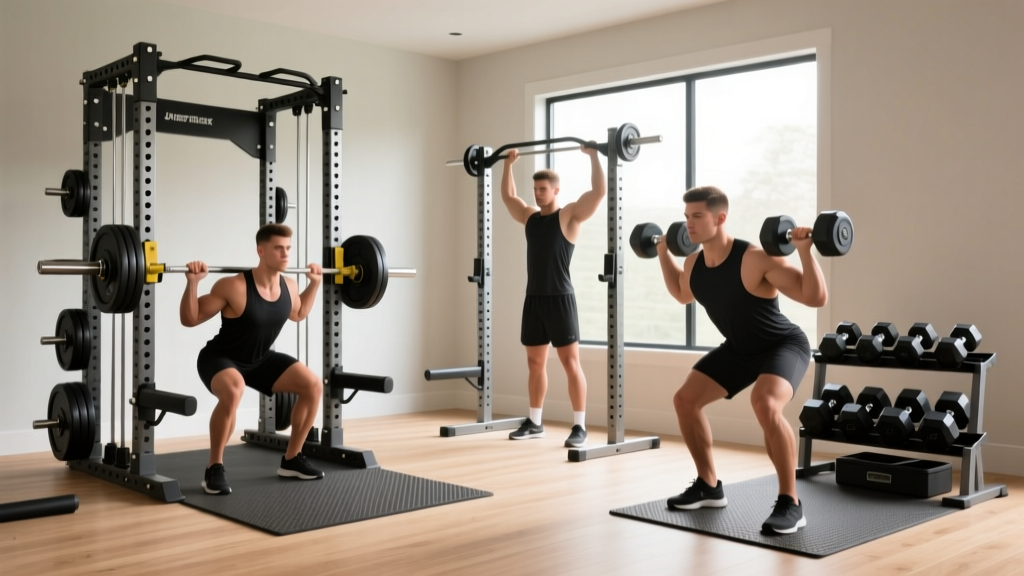
A power rack consists of four main uprights connected by crossmembers, creating a fully enclosed 'cage.' It features a pull-up bar, multiple safety spotter arms or straps, and often integrated weight plate storage.
- Best For: Lifters who want maximum safety, plan to eventually add a barbell, and have a dedicated 4x4 foot space.
- Dumbbell Advantage: You can safely fail heavy dumbbell bench presses inside the cage using safety straps, and use the uprights to store multiple pairs of dumbbells on saddle hooks.
- Top 2026 Model: Titan Fitness T-3 Series Power Rack (approx. $1,299).
2. The Squat Rack (Half Rack)
Often confused with power racks, a true half rack features two front uprights and two shorter rear stabilizers. It is open on three sides, offering a less claustrophobic feel while maintaining a heavy-duty footprint.
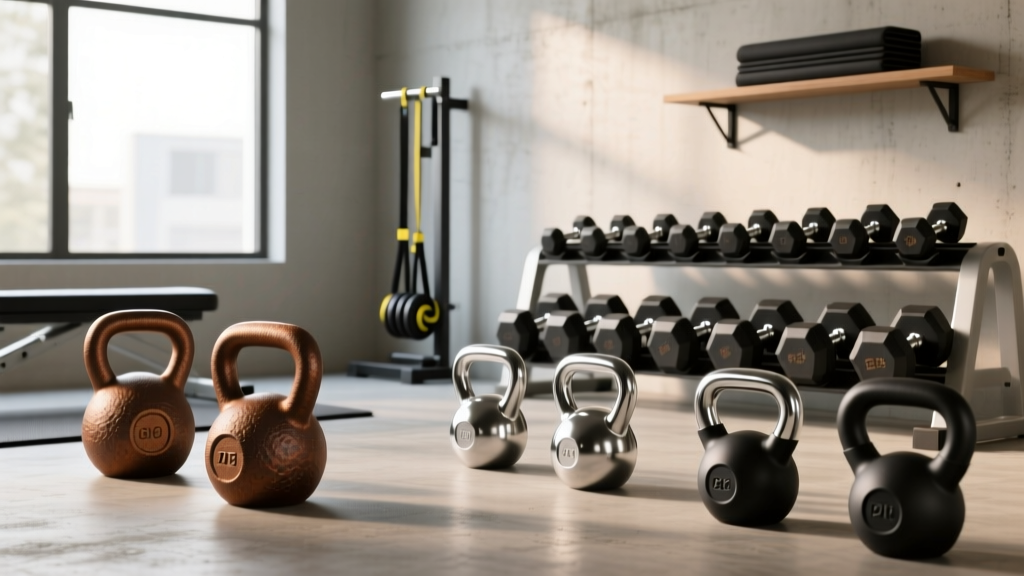
- Best For: Athletes who do a lot of dynamic movements, kettlebell swings, or dumbbell step-ups and need open space around the lifting zone.
- Dumbbell Advantage: The open design makes it incredibly easy to walk heavy dumbbells out from the J-cups or uprights without hitting your elbows on a cage wall.
- Top 2026 Model: REP Fitness PR-4000 Half Rack (approx. $1,899).
3. The Squat Stand (Independent Uprights)
Squat stands are two separate, heavy metal pillars with a wide base. They take up minimal visual space and can often be folded away or pushed into a corner.
- Best For: Beginners in apartments, tight garages, or multi-purpose rooms where a permanent cage is impossible.
- Dumbbell Advantage: Acts as a premium dumbbell storage tier, keeping your heaviest pairs off the floor to save your lower back during setup for exercises like Romanian Deadlifts (RDLs).
- Top 2026 Model: Rogue S-Series Squat Stand 2.0 (approx. $445).
Step 2: Compare Footprint, Price, and Specs
To make an informed decision, you need hard data. The table below breaks down the average specifications for mid-to-high-tier home gym racks available in 2026, as verified by equipment testing from Garage Gym Reviews.
| Feature | Power Rack (Full Cage) | Squat Rack (Half Rack) | Squat Stand |
|---|---|---|---|
| Average Price | $1,100 - $2,500 | $1,400 - $2,200 | $250 - $600 |
| Footprint | 48" x 48" (16 sq ft) | 48" x 36" (12 sq ft) | 24" x 24" (4 sq ft) |
| Weight Capacity | 1,000 - 1,200 lbs | 1,000 lbs | 600 - 800 lbs |
| Safety Mechanism | Enclosed + Spotter Arms/Straps | Front Spotter Arms | None (or basic catchers) |
| Pull-Up Bar | Yes (Multi-grip usually) | Yes (Usually straight) | No |
When buying any rack, check the 'hole spacing' on the uprights. Look for Westside Hole Spacing (1-inch holes in the bench press zone). This allows you to set safety pins at the exact millimeter needed to catch a heavy dumbbell if your arms give out, rather than leaving a dangerous 2-to-4-inch gap between your chest and the safety bar.
Step 3: Upgrade Your Full Body Dumbbell Workouts
How does a rack actually improve a dumbbell routine? The Cleveland Clinic notes that varying your exercise angles and utilizing progressive overload are key to breaking plateaus. A rack unlocks several advanced dumbbell variations you cannot perform on the floor or a standard bench.
1. Dumbbell Rack Pulls (Posterior Chain)
Instead of straining your lower back to pick up 100-pound dumbbells from the floor, set the safety spotter arms at mid-shin height. Rest the dumbbells on the pins between sets. This allows you to focus purely on the hip-hinge mechanics of the RDL or Rack Pull without the dangerous initial floor pull.
2. Elevated Bulgarian Split Squats (Unilateral Legs)
Use a low crossmember or a saftey pin set at 12 inches to elevate your rear foot. Holding heavy dumbbells in a traditional split squat on the floor often leads to grip fatigue before your quads fail. Elevating the rear foot increases the stretch on the glute and quad of the working leg, maximizing hypertrophy.
3. Pin-Press Floor Variations (Chest & Triceps)
If you don't have a bench, lie on the floor inside a power rack. Set the safety pins just above your chest height. Press the dumbbells up, then lower them until the handles rest on the safety pins. This eliminates the stretch reflex, forcing your triceps and chest to generate pure starting strength from a dead stop.
Step 4: The Safety and Spotting Protocol
Lifting heavy dumbbells alone is inherently riskier than using machines. If a 75-pound dumbbell slips during a floor press, it can crush your ribcage or tear a pectoral muscle. Here is how to use your new rack to mitigate those risks:
- Always Use UHMW Lining: Ensure your J-cups and spotter arms are lined with Ultra-High-Molecular-Weight (UHMW) plastic. Bare metal will chew up the rubber or chrome handles of your dumbbells and create dangerous metal-on-metal slipping.
- The Strap Catch Method: For power racks, swap out metal pin-pipe safeties for nylon safety straps. If you drop a heavy dumbbell, metal pipes will bounce the dumbbell back at you or dent the equipment. Nylon straps absorb the kinetic energy and cradle the weight safely.
- Clear the Drop Zone: With squat stands, ensure you have a clear path to dump the dumbbells forward or backward. Never use squat stands for heavy, unassisted overhead pressing where a backward fall could tip the stands.
Step 5: Your Final Buying Decision Tree
Still stuck? Follow this quick diagnostic to find your perfect match:
- Choose the Power Rack if: You have a dedicated 10x10 foot room, a budget over $1,200, and want the safest possible environment to push your dumbbell presses to absolute failure while leaving the door open for future barbell squats.
- Choose the Squat Rack (Half Rack) if: You do a lot of functional fitness, lunges, and kettlebell work around your rack, and need an open footprint that doesn't feel like a cage, but still offers front-spotting safety.
- Choose the Squat Stand if: You are renting, have less than $500 to spend, or need to push your equipment against a wall when not in use. It is the ultimate minimalist anchor for full body dumbbell workouts.
Regardless of which rack you buy, purchase aftermarket 'saddle hooks' or 'dumbbell pegs' that slide into the 1-inch holes of the uprights. Storing your most-used pairs at waist height will save your lumbar spine hundreds of repetitive bending motions every month.
Frequently Asked Questions
Can I do pull-ups if I only buy a squat stand?
No, standard squat stands do not include a pull-up bar. If pull-ups are a staple in your full body dumbbell workouts, you will need to buy a standalone wall-mounted pull-up bar or upgrade to a half/power rack.
Do I need to bolt my rack to the floor?
Power racks and half racks over 80 inches tall should ideally be bolted to concrete or weighted down with rear plate storage to prevent tipping during kipping movements or heavy dumbbell rack pulls. Squat stands under 600 lbs of load are generally stable on rubber matting but should never be used for dynamic, swinging movements.
More gear to consider
All reviews
Smart Dumbbell Storage for Standing Side Bends with Dumbbells & More
EZ vs Straight Bar: Upgrading Your Type of Dumbbell Curls Routine

Prone Dumbbell Row Safety: Maintaining Loadable Dumbbells

Beyond Lower Chest Exercises with Dumbbells: Olympic Barbell Setup
Bumper vs Iron Plate Trends & Dumbbell Exercises for Seniors PDF