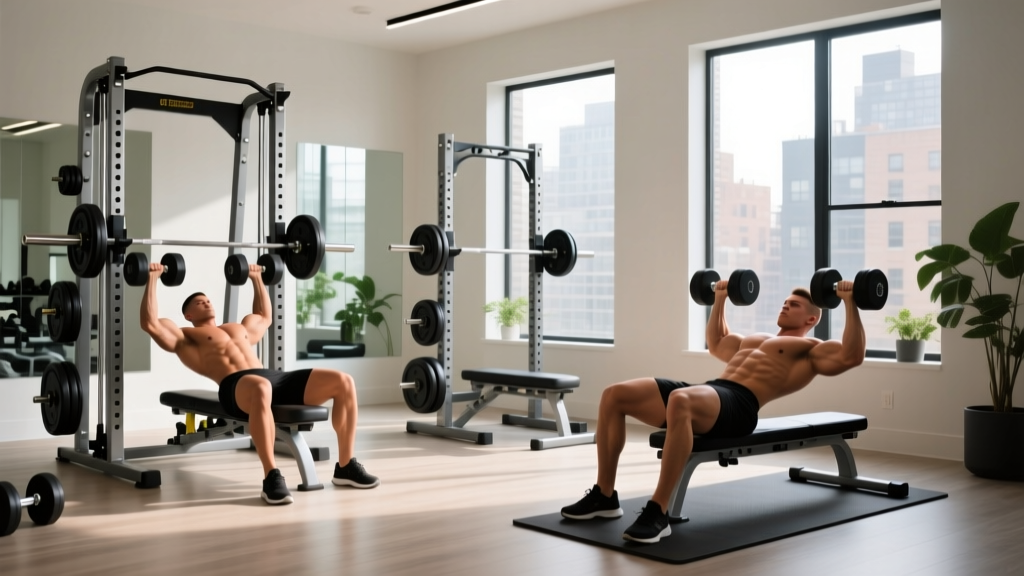
Power Rack vs Squat Rack vs Stand: How to Hit Chest with Dumbbells
Compare power racks, squat racks, and stands for your 2026 home gym. Learn specs, pricing, and how to hit chest with dumbbells safely using spotter arms.

The Core Differences: Power Rack vs. Squat Rack vs. Squat Stand
Building a home gym in 2026 requires navigating a maze of steel, specifications, and spatial constraints. Whether you are outfitting a two-car garage or a spare bedroom, the foundation of your free weight zone comes down to three primary structures: the power rack (full cage), the squat rack (half rack), and the squat stand. While most buying guides focus exclusively on barbell squatting and benching, a truly versatile rig must accommodate your entire arsenal. This includes knowing how to hit chest with dumbbells safely, maximizing hypertrophy without risking a torn pec or a crushed sternum when training alone.
According to BarBend's Rack Comparison Guide, the choice between these three setups hinges on four variables: interior working width, footprint, attachment compatibility, and safety mechanisms. Below, we break down the exact engineering specs, current 2026 pricing, and real-world use cases for each category.
Quick Comparison Matrix
| Feature | Power Rack (Full Cage) | Squat Rack (Half Rack) | Squat Stand |
|---|---|---|---|
| Average Footprint | 48" x 48" to 53" x 53" | 48" x 48" (plus weight storage horns) | 24" x 24" to 30" x 30" |
| Interior Width | 42" - 49" | 42" - 49" | N/A (Open concept) |
| Safety Mechanism | Internal spotter arms / straps | External spotter arms | External spotter arms (optional) |
| Attachment Ecosystem | Extensive (Lat pulldowns, belt squats, monolifts) | Moderate (Dip bars, plate storage, pull-up bars) | Minimal (Usually just J-cups and basic safety catches) |
| 2026 Price Range | $700 - $3,500+ | $500 - $1,800 | $250 - $600 |
Deep Dive: Power Racks (Full Cages)
Power racks are the undisputed kings of safety and versatility. Constructed with four to six uprights, they enclose the lifter, allowing for failed reps to be caught safely on internal spotter arms or UHMW plastic-lined safety straps.
Top 2026 Models & Specifications
- Rep Fitness PR-4000: The gold standard for home gyms. Features 3x3" 11-gauge steel, 5/8" Westside hole spacing, and a massive attachment ecosystem. Base price starts around $1,099, but fully outfitted with sandwich J-cups and a lat pulldown, expect to spend closer to $1,800.
- Rogue RM-6 Monster Rack: Built for commercial abuse and elite garage gyms. Uses 3x3" 11-gauge steel but steps up to 1" hardware and larger 5/8" holes. Pricing starts at $3,400+ before shipping.
- Titan T-3 Series: The budget-conscious powerhouse. Offers 3x3" uprights and 5/8" holes for roughly $699, though the finish and hardware quality trail slightly behind Rep and Rogue.
Deep Dive: Squat Racks (Half Racks)
Half racks typically feature two main front uprights and two rear stabilizer uprights, often doubling as weight plate storage horns. They offer a more open feel than a full cage, which is ideal for Olympic lifting variations where the barbell might travel forward and miss the internal safeties.
Pros and Cons
- Pros: Better weight storage integration, easier to bail on heavy squats outward, generally slightly cheaper than full cages.
- Cons: Spotter arms extend outward, eating into your floor space; fewer overhead attachment points for cable systems.
Models like the Rogue S-2 Squat Rack 2.0 (approx. $1,250) remain incredibly popular for lifters who prioritize Olympic lifts alongside standard powerlifting movements.
Deep Dive: Squat Stands
Squat stands are essentially two independent, heavy-duty metal pillars with J-cups. They are the ultimate space-saving solution, often capable of being folded flat or tucked into a corner.
The Foldable Revolution
The Rogue SML-2C Monster Lite Foldable Squat Stand ($445) revolutionized the garage gym market. By utilizing a clever hinge mechanism and gas-shock assist, you can fold the 3x3" uprights flat against the wall when not in use. However, squat stands lack the overhead crossmembers required for pull-ups or cable attachments, and they are inherently less stable if you fail to bolt them down or load the rear weight horns.
Rig Versatility: How to Hit Chest with Dumbbells Safely
Many lifters focus solely on barbell movements when buying a rack, but knowing how to hit chest with dumbbells safely inside your rig is crucial for joint health and muscle hypertrophy. According to the ExRx Biomechanics Database, dumbbell presses allow for a deeper stretch, greater pectoralis major activation, and reduced shoulder impingement risks compared to fixed barbell paths.
However, dropping 100 lb dumbbells to the floor after a max set is a primary cause of rotator cuff tears and wrist sprains. Here is how to configure your rack for heavy dumbbell benching.
Step 1: Interior Width Clearance
To execute a proper dumbbell chest press without banging your elbows or the dumbbell heads against the uprights, you need a rack with at least 42 inches of interior width. If you are using a narrow squat stand, you have unlimited width, but you lose the safety benefits of the cage. For full racks like the PR-4000, ensure your bench is perfectly centered.
Step 2: Spotter Arm Calibration for Dumbbells
Setting up safeties for dumbbells is fundamentally different than for barbells. BarBend's Dumbbell Bench Press Guide notes that dumbbells travel lower and wider than a barbell.
"When setting spotter arms for dumbbell work, place them slightly lower than you would for a barbell bench press, and position them wider apart to catch the dumbbells themselves, not your elbows or the bar path."
The Setup: Place the spotter arms in the lowest possible hole setting that still allows you to slide the dumbbells out of the bottom position if you fail. Use UHMW plastic-lined spotter arms to prevent the metal dumbbell handles from slipping or gouging the steel pins.
Step 3: The Knee-Flick and Rack Entry
Learning how to hit chest with dumbbells safely also means mastering the setup. Do not pick the dumbbells up from the floor and try to press them while standing. Sit on the bench, rest the dumbbells on your thighs, and use a controlled "knee-flick" to kick them into the starting position as you lean back. Keep your feet planted firmly to maintain a stable arch.
Safety Warning: Never use a squat stand for heavy dumbbell benching without external spotter arms extended fully outward. If you fail a rep and drop a dumbbell laterally, the asymmetric shockwave can tip an unbolted squat stand forward onto your head.Buying Decision Framework for 2026
Use this framework to finalize your purchase based on your specific constraints:
- Choose a Power Rack if: You train alone frequently, plan to buy cable/lat attachments, and have a dedicated 8x8 foot space. It is the only safe option for solo heavy dumbbell and barbell pressing.
- Choose a Squat Rack if: You incorporate Olympic lifts (cleans, snatches) where bailing forward is necessary, and you need built-in plate storage to save floor space.
- Choose Squat Stands if: You are in a studio apartment, need to fold your gym away, and primarily focus on squats, overhead presses, and light-to-moderate dumbbell work.
Frequently Asked Questions
Can I do dumbbell chest flyes inside a power rack?
Yes, but you must ensure the spotter arms are set wide enough to catch the dumbbells at the bottom of the flye arc. Because flyes require a massive stretch, the dumbbells will travel much lower than a standard press. Set the safeties just one inch below your maximum comfortable stretch depth.
Do I need 1-inch or 5/8-inch hole spacing?
For 95% of home gym owners in 2026, 5/8-inch holes (Westside spacing) are superior. They offer more precise adjustments for J-cups and safeties, and the hardware is lighter and easier to swap out. 1-inch holes are generally reserved for commercial gym monsters and specific strongman implements.
What is the best bench for dumbbell chest work inside a rack?
Look for an adjustable FID (Flat/Incline/Decline) bench with a rear ladder or telescoping front support. Benches like the Rep AB-5200 2.0 (approx. $499) feature a zero-gap decline pad and a short base that easily slides into the tight confines of a power rack without the rear stabilizer bar hitting the uprights.
More gear to consider
All reviews
Dumbbell Shoulder Workout Routine Stalled? Collar vs. Clamp Guide
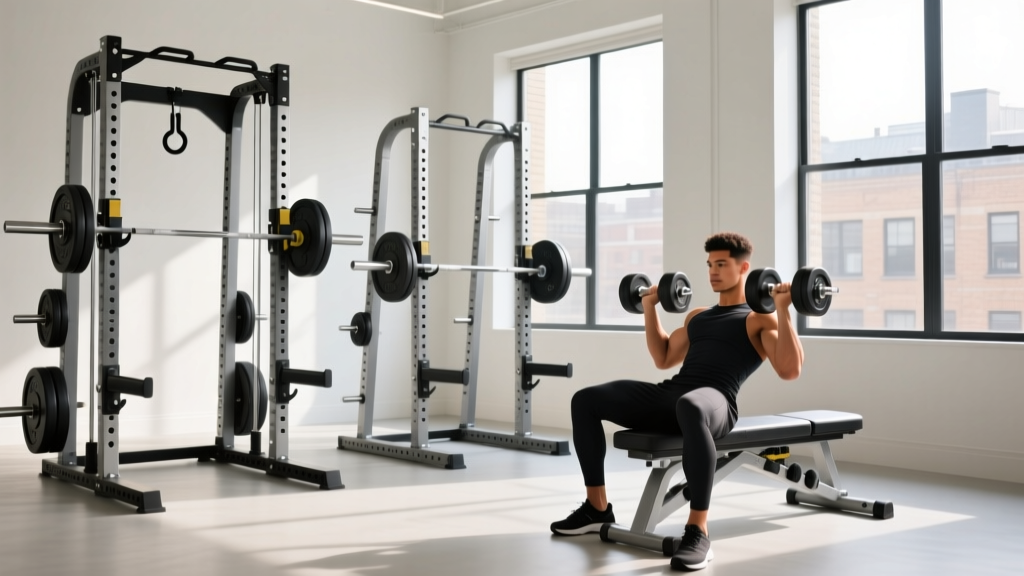
Power Rack vs Squat Rack vs Stand: Incline Dumbbell Tricep Extension

Bicep Dumbbell Workouts: Troubleshooting & Adjustable Dumbbell Reviews
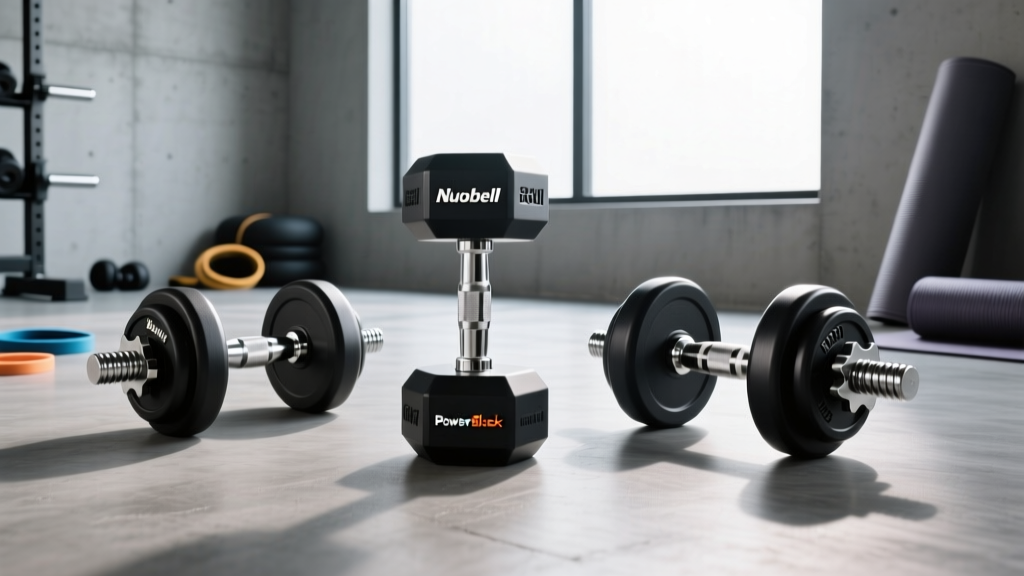
Best Adjustable Dumbbells for Your Shoulders Dumbbell Workout (2026)

Barbell Knurling Mistakes & Dumbbell Push Ups Benefits Explained
