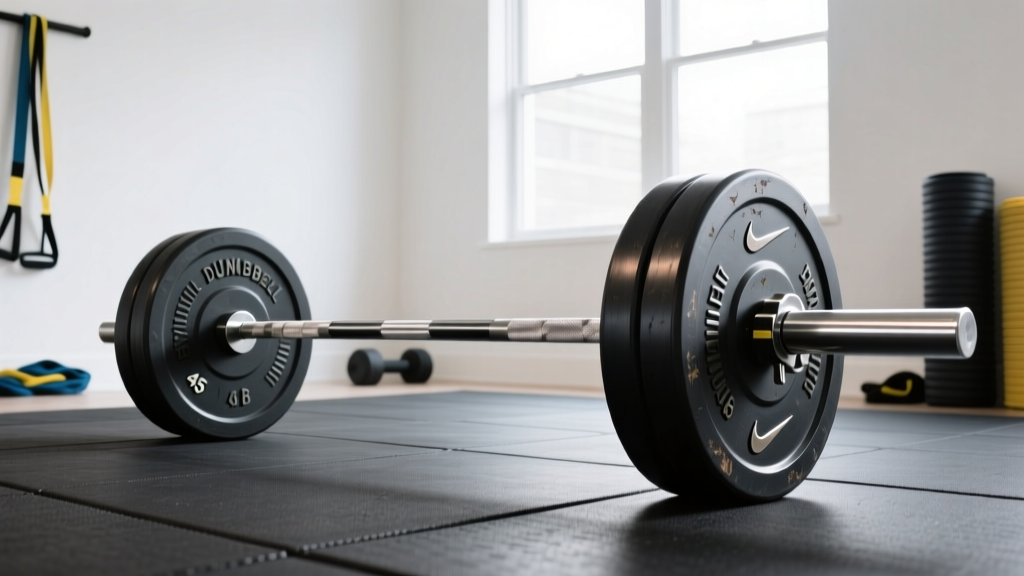
Skip the Nike Dumbbell: Olympic Barbell Weight & Knurl Guide
Distracted by the trendy Nike dumbbell? Discover why serious lifters invest in Olympic barbells. Our guide covers weight tolerances, steel PSI, and knurling.

The Aesthetic Trap vs. Foundational Steel
If you have been browsing fitness forums, TikTok, or Instagram in 2026, you have likely encountered the massive hype surrounding the elusive Nike dumbbell sets. While branded, aesthetic lifestyle gear has its place in light conditioning and home gym decor, serious strength athletes quickly realize a fundamental truth: foundational hypertrophy, central nervous system adaptation, and true progressive overload require a different tool entirely. A trendy dumbbell cannot replicate the biomechanical demands of a heavy barbell squat, deadlift, or clean and jerk.
When transitioning from aesthetic fitness accessories to serious strength training, your budget is best allocated toward a high-quality Olympic barbell. However, not all barbells are created equal. The difference between a $150 import bar and a $350 precision-machined implement comes down to two critical, often misunderstood factors: weight calibration tolerances and knurling topography. This in-depth buying guide will decode the metallurgy and machining that separate elite barbells from budget junk.
Expert Insight: While a premium Nike dumbbell might cost upwards of $150 per pair on the resale market due to brand scarcity, that same $300 investment secures a world-class, multi-purpose Olympic barbell that will literally outlive you. Prioritize steel over logos.Decoding Olympic Barbell Weight Standards & Tolerances
According to the International Weightlifting Federation (IWF), a standard men's Olympic barbell must weigh exactly 20 kilograms (44.09 pounds) and feature a 28-millimeter shaft diameter. A women's Olympic bar weighs 15 kilograms (33.06 pounds) with a 25-millimeter shaft. However, manufacturing these exact specifications requires rigorous quality control, which is where weight tolerance comes into play.
Weight tolerance refers to the acceptable margin of error from the stated weight. Cheap, mass-produced barbells often have a tolerance of +/- 2% to 5%. This means your '45-pound' barbell might actually weigh 43 pounds or 47 pounds. When you are tracking progressive overload in 2.5-pound increments, a miscalibrated bar renders your training log useless.
2026 Barbell Comparison Matrix: Steel, Tolerance, and Pricing
| Barbell Model | Tensile Strength | Weight Tolerance | Shaft Diameter | Est. Price (2026) |
|---|---|---|---|---|
| Rogue Ohio Bar | 190,000 PSI | +/- 1% | 28.5mm | $295.00 |
| Kabuki Strength New Gen | 215,000+ PSI | +/- 0.1% | 28.0mm | $339.00 |
| Eleiko Sport Training | 215,000+ PSI | IWF Calibrated | 28.0mm | $1,150.00+ |
| Titan Fitness Olympic | 165,000 PSI | +/- 2% to 3% | 28.5mm | $179.00 |
Note: Tensile strength measures the steel's resistance to breaking or permanent bending under load. The National Strength and Conditioning Association (NSCA) recommends a minimum of 165,000 PSI for general lifting, but 190,000 PSI is the recognized sweet spot for multi-purpose bars that endure heavy squats and dynamic Olympic lifts without taking a permanent set.
The Science of Knurling: Mountain, Hill, and Volcano
Knurling is the cross-hatched diamond pattern machined into the steel shaft of the barbell. Its purpose is to increase friction between the steel and the skin of your hands. However, the geometry of these diamonds drastically alters the feel, grip security, and tear-rate on your calluses. According to manufacturing experts at Rogue Fitness, there are three primary knurl topographies you must understand before purchasing.
1. Volcano Knurl (The Gold Standard)
The volcano knurl is widely considered the pinnacle of barbell machining. During the lathe cutting process, the sharp peaks of the diamond pattern are intentionally shaved flat. This leaves a 'rim' or 'crater' edge that provides immense surface area for grip without acting like a cheese grater on your palms. The Kabuki Strength New Generation Power Bar and the Rogue Ohio Power Bar feature exceptional volcano knurling. It bites into the skin securely for heavy deadlifts but is forgiving enough for high-volume hypertrophy work.
2. Mountain Knurl (Aggressive & Sharp)
Mountain knurling leaves the peaks of the diamonds completely sharp and pointed. This creates an incredibly aggressive grip that feels like holding a handful of needles. While this is beneficial for elite powerlifters pulling 600+ pound deadlifts in competition (where the bar must not slip at all costs), it is notorious for tearing calluses and causing hand fatigue during high-rep sets. If you train without chalk or have sensitive hands, avoid mountain knurling.
3. Hill Knurl (The Budget Compromise)
Hill knurling occurs when the peaks of the diamonds are rounded off, either intentionally by poor machining or through years of wear on cheap steel. The result is a smooth, slippery surface that provides almost zero friction. Most sub-$200 import barbells feature hill knurling. When your hands get sweaty, a hill-knurled bar becomes a safety hazard during heavy bench presses or squats.
Pro-Tip on Knurl Depth: Look for a knurl depth between 0.015 and 0.025 inches. Anything shallower will feel like a hill knurl; anything deeper will cause excessive skin tearing. Always check the manufacturer's spec sheet for exact depth measurements rather than relying on marketing buzzwords like 'aggressive grip'.Center Knurl & Shaft Diameter: Matching the Bar to Your Lifts
Beyond the topography of the knurl, the placement and shaft diameter dictate the bar's application.
- 28mm Shaft (Olympic Weightlifting): Thinner shafts provide more 'whip' (elastic deformation) during the clean and jerk, aiding in the transition phase of the lift. They also feature a smooth or very light center knurl to prevent neck abrasion during front squats.
- 29mm Shaft (Powerlifting): Thicker, stiffer shafts minimize whip, providing a stable base for heavy back squats and bench presses. These bars always feature a deep, aggressive center knurl to grip the back of your t-shirt or skin during low-bar squats.
- 28.5mm Shaft (Multi-Purpose): The ultimate compromise. Bars like the Rogue Ohio Bar use a 28.5mm shaft with a moderate volcano knurl, making them suitable for everything from snatches to heavy deadlifts.
Coatings and Their Effect on Knurl Feel
The finish applied to the barbell steel drastically alters how the knurl feels in your hands. In 2026, Cerakote and E-Coat have largely surpassed traditional black oxide and zinc finishes due to superior corrosion resistance.
- Bare Steel / Black Oxide: Provides the most aggressive knurl feel because there is no coating filling the valleys of the diamonds. Requires frequent oiling to prevent rust.
- Hard Chrome / Zinc: Adds a thin layer of protection. Fills the knurl valleys slightly, reducing aggressiveness but maintaining a solid grip.
- Cerakote (Ceramic Polymer): Highly resistant to rust and available in custom colors. However, if applied too thickly, it can fill the knurl peaks, effectively turning a volcano knurl into a slippery hill knurl. Always buy Cerakote bars from premium manufacturers who use specialized, thin-layer application processes.
Final Verdict: Where to Allocate Your 2026 Gym Budget
It is easy to get swept up in the aesthetics of modern fitness culture. A rare Nike dumbbell set might look incredible on a shelf, but it will not build a 400-pound deadlift or a 315-pound back squat. When building a home gym or upgrading a commercial facility, the barbell is the single most important piece of equipment you will purchase. It is the only piece of gear that physically connects your body to the load.
Skip the overpriced lifestyle accessories and invest $300 to $400 into a 190k+ PSI, properly calibrated Olympic barbell with a precision-cut volcano knurl. Your hands, your central nervous system, and your long-term strength progression will thank you.
Frequently Asked Questions
Q: Can I use an Olympic barbell for dumbbell-style unilateral work?
A: While you cannot replicate the exact stabilization demands of a dumbbell, you can perform unilateral barbell movements like landmine presses, single-arm landmine rows, and suitcase deadlifts, which offer incredible core and stabilizer engagement.
Q: How do I maintain my barbell's knurling?
A: Use a stiff nylon or brass brush (never steel wire on coated bars) to remove chalk and dead skin from the knurl valleys once a week. Apply a light coat of 3-in-One oil or mineral oil to bare steel or black oxide bars monthly to prevent oxidation.
More gear to consider
All reviews
Barbell Clamp Types Comparison & Dumbbell Rear Delt Flys Safety

Cast Iron vs Competition Kettlebells & MX55 Dumbbells Guide
Dumbbell Shoulder to Overhead CrossFit: Power vs Squat Rack vs Stand

Barbell Collar & Clamp Types for Rows and Dumbbell Lifts for Back

Adjustable Dumbbell Setup & Review: Dumbbell Row Muscles Worked
