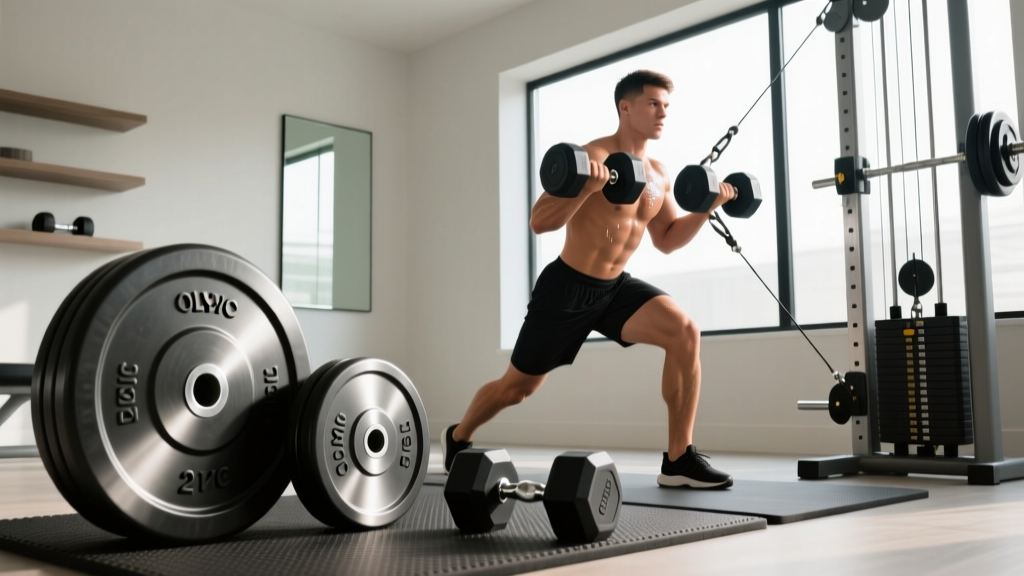
Olympic vs Standard Plates & Cable Crossover with Dumbbells Guide
Discover the differences between Olympic and standard weight plates, plus a step-by-step guide to performing a cable crossover with dumbbells at home.

Building a home gym in 2026 is an exciting journey, but beginners are immediately confronted with a confusing fork in the road: the weight plate sizing dilemma. Walk into any big-box sporting goods store or browse online marketplaces, and you will see two distinct categories of iron. Understanding the mechanical and financial differences between these options is critical to avoiding costly mistakes. Furthermore, transitioning from a commercial gym to a home setup means leaving expensive cable machines behind. In this guide, we will break down the Olympic vs standard weight plate debate, and then provide a biomechanically sound, step-by-step tutorial on how to execute a cable crossover with dumbbells to maintain your chest hypertrophy without a $2,500 functional trainer.
The Core Dilemma: Olympic vs Standard Weight Plates
The primary difference between Olympic and standard weight plates lies in the center hole diameter and the corresponding barbell sleeve size. While they may look similar to the untrained eye, their performance ceilings are vastly different.
- Standard Plates: Feature a 1-inch (25.4mm) center hole. They are typically paired with lightweight, solid steel or chrome-plated bars that lack rotating sleeves. These are commonly found in beginner sets, department stores, and budget-friendly online bundles.
- Olympic Plates: Feature a 2-inch (50mm) center hole. They are designed for heavy-duty barbells with rotating sleeves (utilizing bushings or bearings), which is essential for dynamic lifts like the clean and jerk or heavy snatches. Olympic plates are the universal standard in commercial gyms, powerlifting federations, and serious home garages.
Head-to-Head Comparison Matrix
Before spending your hard-earned money, review this direct comparison of the two plate ecosystems based on current 2026 market averages.
| Feature | Standard Plates (1-Inch) | Olympic Plates (2-Inch) |
|---|---|---|
| Center Hole Diameter | 1 inch (25.4mm) | 2 inches (50.8mm) |
| Barbell Weight Capacity | 150 lbs - 250 lbs (max) | 500 lbs - 1,000+ lbs |
| Plate Material Options | Cast iron, cement-filled plastic | Cast iron, urethane, virgin rubber, bumper |
| Average Cost Per Pound | $0.80 - $1.20 / lb | $1.80 - $4.50+ / lb |
| Sleeve Rotation | None (fixed bar) | Bushing or Bearing (reduces torque) |
| Resale Value & Longevity | Poor (difficult to upgrade) | Excellent (lifetime durability) |
Why Beginners Fall Into the 'Standard' Trap
⚠️ The Upgrade Trap Warning: Buying a 110-pound standard cement-filled set for $50 feels like a victory on day one. However, once your squat or deadlift surpasses 135 pounds, standard bars will physically bend under the load, and the lack of rotating sleeves will cause severe wrist strain. You will inevitably be forced to sell the standard set at a massive loss and rebuy Olympic gear. As noted in BarBend's comprehensive guide to weight plates, investing in Olympic gear from the start is the most cost-effective long-term strategy for any lifter planning to progress past the novice stage.If you are strictly buying dumbbells and a light adjustable bench for general fitness, standard plates might suffice. But if you intend to use a barbell for compound movements (squats, deadlifts, bench presses), Olympic is the only logical choice. Look for entry-level cast iron Olympic plates from reputable brands like CAP Barbell or Rep Fitness, which typically hover around $2.00 per pound.
Bridging the Gap: Machine Exercises with Free Weights
Once your home gym foundation is set with the right plates and dumbbells, you will quickly notice the absence of commercial cable machines. Cable machines provide continuous tension throughout the entire range of motion, which is highly beneficial for isolation exercises like chest flys and crossovers. Gravity, however, only pulls straight down. This means that during a traditional flat-bench dumbbell fly, tension on the pectoral muscles drops to near zero at the top of the movement when the dumbbells are stacked directly over your shoulder joints.
So, how do you replicate that constant, horizontal cable tension at home? You learn how to perform a modified cable crossover with dumbbells using an incline bench and strategic resistance band integration.
Step-by-Step: Executing a Cable Crossover with Dumbbells
This hybrid movement bridges the gap between free weight stabilizers and cable machine tension. You will need a pair of moderate dumbbells (15–30 lbs), a loop resistance band, and an adjustable bench.
Step 1: The Setup and Anchoring
Set your adjustable bench to a slight 15-degree incline. This specific angle targets the sternal head of the pectoralis major, mimicking the mid-pulley setting of a commercial cable crossover. Take your loop resistance band and anchor it securely to the heavy base of your power rack, or wrap it around a sturdy structural pillar behind the bench.
Step 2: Loading the Dumbbells
Sit on the bench and pick up your dumbbells. Here is the crucial biomechanical trick: loop the center of the anchored resistance band over the handles of the dumbbells (or wrap it around your wrists if the band is thin). The band should be pulling your hands backward, toward the anchor point, while the dumbbells pull your hands downward toward the floor.
Step 3: The Eccentric Phase (The Stretch)
Press the dumbbells up and out to the starting position with a slight bend in your elbows (about 15 to 20 degrees). Slowly lower the weights in a wide arc. Because the band is pulling horizontally, your chest muscles will remain under immense tension even at the bottom of the stretch, perfectly replicating the 'pull' of a cable machine. Inhale deeply as you feel the pec fibers stretch.
Step 4: The Concentric Phase (The Squeeze)
Drive the dumbbells back up and together in a hugging motion. According to the American Council on Exercise (ACE) exercise library, the primary function of the pectoralis major is horizontal adduction. By combining the downward pull of the dumbbells with the backward pull of the band, you force the pecs to fight resistance on two distinct planes of motion. Squeeze at the top for a full 1.5 seconds before initiating the next rep.
Expert Troubleshooting & Form Cues
When adapting cable movements to free weights, beginners often make a few critical errors that lead to shoulder impingement or reduced hypertrophy.
- Failure Mode 1: Bending the elbows too much. If your elbows bend past 30 degrees, you shift the mechanical load from the chest to the front deltoids and triceps, turning the crossover into a close-grip press. Keep the arm angle fixed and locked.
- Failure Mode 2: Using excessive weight. The cable crossover with dumbbells is an isolation movement, not a strength-builder. Leave your ego at the door. Using 50-pound dumbbells for this hybrid movement will compromise your rotator cuff. Stick to weights that allow for 12-15 controlled repetitions.
- Failure Mode 3: Losing scapular retraction. Keep your shoulder blades pinched together and driven down into the bench pad throughout the entire set. If your shoulders roll forward at the top of the squeeze, the anterior deltoid steals the workload.
2026 Purchasing Framework for Home Gyms
If you are allocating a $500 budget for your free weight setup this year, do not waste it on a massive set of standard plates. Instead, adopt this lean purchasing framework:
- Invest in the Barbell ($150 - $200): Buy a 2-inch Olympic barbell with bronze bushings and a 190k PSI tensile strength shaft. This is the lifeline of your gym.
- Buy Used Olympic Plates ($100 - $150): Cast iron is virtually indestructible. Scour local marketplaces for used Olympic plates. You can often find them for $1.00 to $1.25 per pound, completely erasing the price advantage of standard plates.
- Allocate the Rest to Adjustable Dumbbells ($150 - $200): A pair of 5-50 lb adjustable dumbbells (like the Nuobell or PowerBlock Sport series) will allow you to perform the banded cable crossover with dumbbells, alongside dozens of other unilateral movements, saving massive amounts of floor space.
By prioritizing the 2-inch Olympic ecosystem and utilizing creative band-assisted free weight variations, you can build a commercial-grade physique in your garage without compromising on biomechanical tension or long-term equipment viability.
More gear to consider
All reviews
2026 Trend: The Rental Powerhouse Elite Home Gym Setup
Incline Dumbbell Press vs Shoulder Press: Rack & Storage Budget Guide

Olympic vs Standard Plates: Serve the Platter Dumbbell Setup Guide

Collar Types Compared: Safe Dumbbell Skull Crushers Workout
Olympic vs Standard Plates for a Dumbbell Chest Press Without Bench
