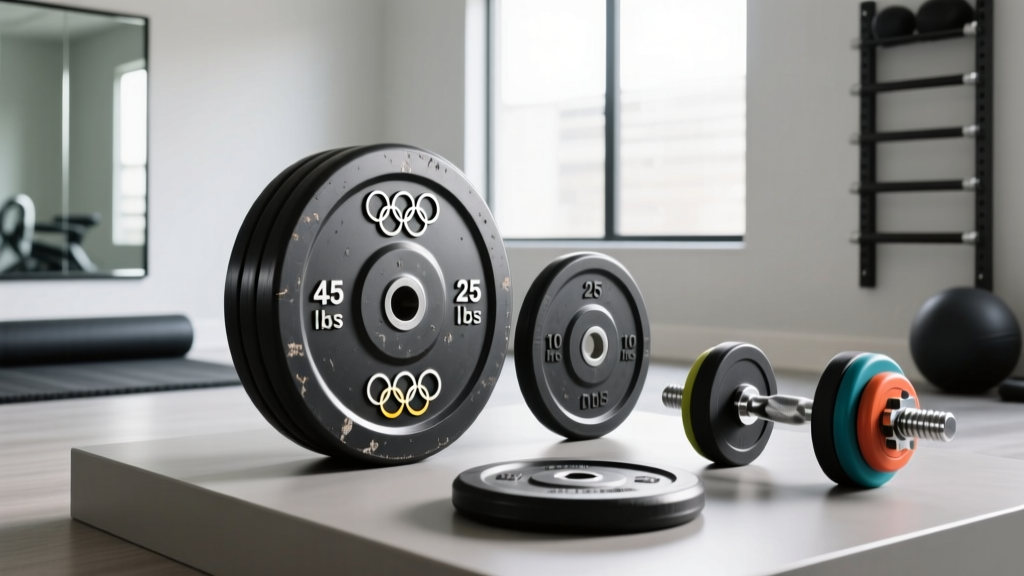
Olympic vs Standard Plates: Troubleshooting Beyond a Dumbbell Illustration
Troubleshoot common Olympic vs standard weight plate mistakes. Learn about diameter shifts, sleeve adapters, and physics beyond a basic dumbbell illustration.

When beginners first explore resistance training, they often rely on a basic dumbbell illustration to understand grip, stance, and foundational biomechanics. While these visual guides are excellent for isolated movements and fixed-weight dumbbells, transitioning to plate-loaded barbell training introduces a complex web of physics, compatibility, and safety variables. One of the most frequent and costly pitfalls for home gym owners is misunderstanding the critical differences between Olympic and standard weight plates.
At FitGearPulse, we see countless home gym setups compromised by mismatched equipment, bent barbell sleeves, and altered lifting mechanics. This troubleshooting guide dives deep into the exact failure modes, dimensional discrepancies, and biomechanical shifts that occur when you mix up Olympic and standard plates—and how to fix them before an injury or equipment failure occurs.
The Core Misconception: 1-Inch vs. 2-Inch Realities
The most fundamental difference between standard and Olympic equipment lies in the mounting hole diameter. Standard plates feature a 1-inch (25.4mm) center hole, designed to slide onto solid, 1-inch steel bars. Olympic plates feature a 2-inch (50.8mm) hole, engineered for the rotating, high-tensile steel sleeves of Olympic barbells.
⚠️ The Sleeve Adapter Trap
A common troubleshooting mistake is purchasing 1-inch to 2-inch sleeve adapters to use Olympic plates on a standard barbell. Do not do this for heavy compound lifts. Standard bars are typically made from lower-grade solid steel with a yield strength of around 40,000 to 60,000 PSI. Loading 250+ lbs of Olympic plates onto a 1-inch bar via adapters creates massive shear stress. The bar will permanently bend (take a 'set'), and the adapters can snap under the dynamic load of a deadlift or squat.
The Fix: If you have standard plates and want to upgrade to Olympic, you must replace the barbell. If you have Olympic plates and a standard bar, sell the bar and invest in a proper Olympic barbell, such as the Rogue Ohio Bar, which boasts a 190,000 PSI tensile strength shaft and precision-machined 50mm sleeves.
Visualizing the Load: Why the Dumbbell Illustration Fails for Barbells
Unlike a static dumbbell illustration that assumes a fixed center of gravity and uniform ground clearance, a loaded barbell behaves dynamically based on the plates you use. The most overlooked troubleshooting issue in home gyms is the Range of Motion (ROM) Shift caused by plate diameter differences.
According to the International Weightlifting Federation (IWF) technical guidelines, all Olympic bumper plates from 10kg (22lbs) to 25kg (55lbs) must share a uniform diameter of 450mm (17.7 inches). This ensures that whether you are lifting 135 lbs or 405 lbs, the barbell starts at the exact same height from the floor.
Standard cast-iron plates, however, scale in diameter as they increase in weight. A standard 45lb plate is typically only 14.5 inches in diameter. This creates a massive 3.2-inch discrepancy in ground clearance.
The Biomechanical Fallout of Diameter Mismatches
When you attempt a conventional deadlift with standard 45lb plates, the bar sits over 3 inches lower to the ground than it would with Olympic plates. If you are following a generic lifting guide or dumbbell illustration adapted for barbell hinges, this lower starting position forces you into excessive lumbar flexion and anterior pelvic tilt just to grip the bar.
| Equipment Type | Diameter | Bar Height Off Floor | Impact on Deadlift Setup |
|---|---|---|---|
| Olympic Bumper / Iron | 17.7 in (450mm) | ~8.85 in | Optimal hip height, neutral spine |
| Standard Cast Iron | 14.5 in (368mm) | ~7.25 in | Forces deep squat grip, high lumbar shear |
The Troubleshooting Fix: If you are stuck using standard plates for deadlifts, you must artificially elevate the bar to match Olympic height. Use wooden blocks, specialized deadlift blocks, or stack 10lb standard plates under the working plates to restore the 8.85-inch starting height. The American Council on Exercise (ACE) consistently emphasizes that maintaining a neutral spine during the initial pull phase is critical for preventing herniations; do not sacrifice your spine to accommodate undersized plates.
Material Failures: Cast Iron vs. Urethane and Bumpers
Another frequent mistake is treating all weight plates with the same level of care. Standard plates are almost exclusively cast iron. Olympic plates come in cast iron, urethane, and rubber bumper variations. Dropping a standard barbell loaded with cast iron plates onto a standard residential concrete garage floor will result in catastrophic spalling (cracking and flaking of the concrete) and shattered plates.
Troubleshooting Floor and Equipment Damage
- The Bumper Plate Misconception: Not all Olympic rubber plates are meant to be dropped. Cheap 'rubber-coated' Olympic plates have a solid iron core with a thin rubber shell. If dropped from overhead, the rubber will tear, and the iron core will transfer the shockwave directly into your floor and barbell sleeves.
- The Durometer Solution: If you plan to drop weights (e.g., Olympic lifts or heavy deadlifts), you must purchase true bumper plates with a durometer rating of 85 to 90 Shore A. Virgin rubber bumpers absorb the kinetic energy and protect both the floor and the barbell's internal bearings.
- Standard Plate Shock Absorption: If you only own standard cast iron plates, you must invest in 3/4-inch thick vulcanized rubber horse stall mats. Do not rely on cheap, high-density EVA foam puzzle mats; they will bottom out instantly under a 300lb drop, offering zero protection to your concrete slab.
Sleeve Length and Capacity Math
Home gym owners frequently max out their standard bars without realizing they are out of sleeve real estate. A typical 7-foot standard barbell features 10-inch loadable sleeves. Because standard cast-iron plates are incredibly thick (a 45lb standard plate is often over 2 inches thick), you can only fit five 45lb plates per side. This caps your maximum load at 450 lbs (including the bar), long before the bar's structural limit is reached.
"Upgrading to an Olympic setup isn't just about weight capacity; it's about spatial efficiency. A 45lb Olympic iron plate is roughly 1.3 inches thick, allowing you to load over 600 lbs onto a standard 16.3-inch Olympic sleeve."
The Fix: Before buying more plates, measure your barbell's loadable sleeve length (the distance from the inside of the collar to the end of the sleeve). If you are approaching 85% sleeve capacity, the plates are at risk of sliding off during heavy squats if the collars fail. Upgrade to an Olympic barbell with extended sleeves or switch to thinner Olympic urethane/steel plates to maximize your loadable surface area.
Expert Troubleshooting Checklist
Run through this quick diagnostic checklist to ensure your weight plate setup is safe, biomechanically sound, and optimized for your training:
- Check the Hole: Verify your plates match your bar. Never use 1-inch adapters for loads exceeding 150 lbs.
- Measure the Diameter: If your 45lb plates measure under 17 inches, use blocks to elevate your deadlifts and power cleans.
- Inspect the Collars: Standard spring clips lose tension over time. Upgrade to aluminum locking barbell collars (like Rogue HG 2.0) to prevent plate migration.
- Audit the Floor: Ensure your dropping zone is covered by 3/4-inch vulcanized rubber, not decorative foam.
- Calculate Sleeve Capacity: Divide your sleeve length by your plate thickness to find your true max load limit.
Final Thoughts
Moving beyond the simplicity of a dumbbell illustration requires a deeper understanding of equipment physics. The transition from standard to Olympic weight plates is a rite of passage for serious lifters, but it is fraught with compatibility traps and biomechanical shifts. By respecting the dimensional differences, avoiding dangerous adapter workarounds, and adjusting your range of motion to match your plate diameters, you can build a home gym that is both incredibly safe and optimized for long-term strength gains.
More gear to consider
All reviews
Power Rack vs Squat Rack vs Squat Stand: RDL Dumbbell Setup Guide

Sitting Dumbbell Press Errors & Olympic Barbell Knurling Guide
EZ Bar vs Straight Bar: Space Layouts & Dumbbell Pullover Clearance

Olympic vs Standard Plates Setup & Back Exercises Dumbbells Only

Bumper vs Iron Plate Maintenance for a Full-Body Dumbbell Workout
