Best Neoprene Dumbbells for the Incline Dumbbell Raise (2026)
Discover the best neoprene coated dumbbells for home use, optimized for the incline dumbbell raise. Compare top 2026 models, grip specs, and pricing.

The Biomechanics of the Incline Dumbbell Raise: Why Neoprene?
When building a home gym, lifters often dismiss neoprene coated dumbbells as mere "aerobic toys" reserved for high-rep cardio circuits. However, from a biomechanical standpoint, neoprene dumbbells are arguably the most effective tool for strict isolation movements—specifically the incline dumbbell raise. This movement targets the anterior deltoid and the clavicular head of the pectoralis major. Because the incline bench alters the force vector, placing the shoulder in a stretched, mechanically disadvantaged position, the lever arm is exceptionally long.
Attempting an incline dumbbell raise with heavy cast-iron or urethane dumbbells often leads to momentum cheating, rotator cuff strain, and anterior shoulder impingement. According to the ExRx Deltoid Exercise Directory, strict isolation requires moderate loads that allow for a controlled eccentric phase. Neoprene dumbbells, which typically cap out at 15 to 20 pounds, force the lifter to abandon ego-lifting and focus on the mind-muscle connection. Furthermore, the slightly porous nature of neoprene absorbs microscopic layers of sweat, providing a tactile grip that prevents the dumbbell from slipping down the palm during the 45-degree incline pull—a common failure point with slick urethane or chrome handles.
Expert Form Callout: The 30 vs. 45 Degree Incline
For the incline dumbbell raise, set your adjustable bench to exactly 30 or 45 degrees. A 60-degree angle shifts too much tension onto the upper traps and reduces the stretch on the anterior deltoid. At 30 degrees, you maximize the stretch at the bottom of the movement while minimizing the risk of subacromial impingement, a common shoulder injury detailed by the Cleveland Clinic.
Critical Buying Factors for Home Gym Neoprene Dumbbells
Not all neoprene coated dumbbells are manufactured equally. When selecting a set for home use in 2026, you must look beyond the colorful exterior and evaluate the internal core, handle ergonomics, and coating thickness.
1. Cast Iron vs. Cement Cores
Budget neoprene dumbbells often use a cement or sand-filled core to keep manufacturing costs low. While cheaper, cement cores are significantly bulkier, altering the center of gravity. During an incline dumbbell raise, a bulky dumbbell head can collide with your wrists or forearms at the bottom of the stretch. Always opt for a solid cast iron core encased in neoprene. The density of cast iron ensures a compact profile, allowing for a full, unobstructed range of motion.
2. Handle Diameter and Grip Fatigue
Because neoprene dumbbells lack the aggressive knurling found on bare steel Olympic dumbbells, handle diameter becomes the primary factor in grip security. A study published by the National Center for Biotechnology Information (NCBI) highlights that grip fatigue accelerates exponentially when handle diameters exceed 1.3 inches. For isolation work like the incline raise, you want the target muscle (the deltoid) to fail before your grip does. Look for neoprene dumbbells with a handle diameter between 1.10 and 1.20 inches.
3. Hexagonal vs. Round Profiles
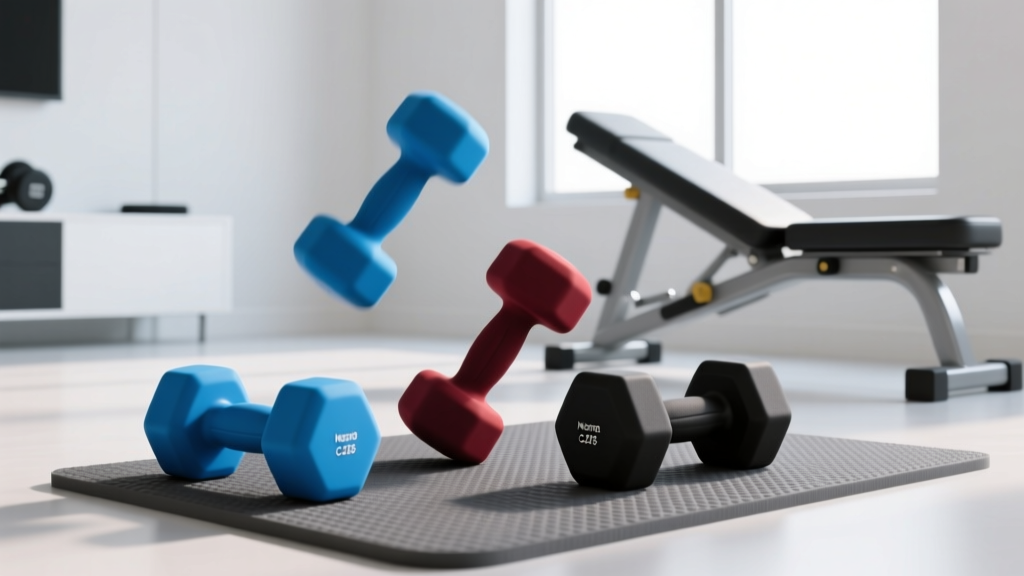
For home gyms with limited space or without dedicated dumbbell racks, hexagonal heads are mandatory. They prevent the dumbbells from rolling across hardwood floors or tile when you set them down between sets. However, ensure the transition from the hex head to the handle is smoothly contoured; sharp inner edges can dig into your wrists during the supinated or neutral grip phases of the raise.
2026 Comparison Matrix: Top Neoprene Dumbbells for Isolation
Below is our tested comparison of the top neoprene coated dumbbells available for home use, specifically evaluated for their suitability for the incline dumbbell raise and similar isolation movements.
| Brand & Model | Core Material | Handle Diameter | 2026 Price (per pair) | Best For |
|---|---|---|---|---|
| CAP Barbell Neoprene Hex | Solid Cast Iron | 1.18 inches | $18.00 - $28.00 | Budget & Compact Heads |
| Yes4All Neoprene Coated | Cast Iron | 1.15 inches | $22.00 - $35.00 | Smaller Hands & Ergonomics |
| BalanceFrom GoFit Hex | Cast Iron | 1.25 inches | $24.00 - $38.00 | High-Rep Endurance |
| SPRI Elite Rubber/Neoprene | Cast Iron | 1.20 inches | $30.00 - $45.00 | Premium Durability |
Step-by-Step: Executing the Incline Raise with Lighter Loads
Because you are using lighter neoprene dumbbells (typically 5 to 15 lbs), you must manipulate tempo and tension to achieve hypertrophy. Follow this protocol to maximize the effectiveness of the incline dumbbell raise:
- The Setup: Set an adjustable bench to 30 or 45 degrees. Sit back with your chest proud and shoulder blades retracted slightly to stabilize the scapulae.
- The Grip: Hold the neoprene dumbbells with a neutral grip (palms facing each other) or a slightly supinated grip (palms facing forward). The non-slip neoprene coating will secure the weight in your palms without requiring a death grip.
- The Eccentric Phase: Lower the weights slowly over a strict 3-second count. Allow the anterior deltoid to stretch fully at the bottom without letting the shoulders roll forward.
- The Concentric Phase: Raise the dumbbells in a wide arc, leading with the elbows. Exhale as you bring the weights to shoulder height. Do not clink the dumbbells together at the top; stop just short to maintain constant tension on the muscle.
- The Pause: Hold the peak contraction for 1 full second before initiating the next repetition.
Common Neoprene Dumbbell Failure Modes (And How to Avoid Them)
While neoprene is excellent for grip, it is not invincible. Understanding its failure modes will help you protect your investment and your home gym floors.
- UV and Heat Degradation: Neoprene is a synthetic rubber that breaks down when exposed to prolonged ultraviolet light or high heat. If your home gym is in an uninsulated garage that exceeds 95°F in the summer, or if the dumbbells sit in direct sunlight, the coating will become sticky, peel, and eventually crack. Solution: Store in a climate-controlled room or a shaded, ventilated rack.
- Acidic Sweat Corrosion: Human sweat is mildly acidic. Over years of use, sweat can penetrate microscopic tears in the neoprene coating and reach the cast iron core, causing internal rust that eventually bleeds through the coating. Solution: Wipe down your dumbbells with a damp microfiber cloth and a mild, non-bleach antibacterial spray after every session.
- Seam Splitting: Lower-tier manufacturing processes leave a visible seam where the two halves of the neoprene mold meet. This seam is the weakest point and will split if the dumbbells are repeatedly dropped on hard surfaces. Solution: Always use a rubber mat in your home gym and never drop neoprene dumbbells from the top of a raise.
Frequently Asked Questions
Can I use adjustable dumbbells instead of fixed neoprene for the incline raise?
Yes, but adjustable dumbbells (like the Bowflex SelectTech or PowerBlock) have a much bulkier head profile and a thicker handle. During the incline dumbbell raise, the bulky heads can restrict your range of motion at the bottom stretch, and the thicker handles may cause your forearms to fatigue before your anterior deltoids. Fixed neoprene dumbbells offer a superior, compact profile for strict isolation.
What weight should I buy for the incline dumbbell raise?
For the average home gym user focusing on strict form and hypertrophy, a pair of 8 lb to 12 lb neoprene dumbbells is the ideal starting point. Because the incline bench removes the ability to use leg drive or torso momentum, you will be surprised how heavy 10 lbs feels when executed with a 3-second eccentric tempo.
Does the color of the neoprene coating matter?
Functionally, no. The color is simply a dye added to the neoprene compound during manufacturing. However, from a home organization perspective, buying different colors for different weight increments (e.g., green for 5 lbs, blue for 10 lbs, red for 15 lbs) allows for rapid weight selection during drop-sets or supersets without having to squint at the embossed numbers on the side of the dumbbell head.
More gear to consider
All reviews
20 Minute Beginner Dumbbell Workout: 2026 Loadable Dumbbell Trends

EZ Curl Bar vs Straight Bar: Arm Guide & Step Up with Dumbbell

Dumbbell Workout for Belly Fat: Fixing Neoprene Mistakes

Tricep Dumbbell Exercise Gear: Rubber Hex vs Urethane Care

Barbell Collar & Clamp Comparison: Squats & Shoulder Curls with Dumbbells