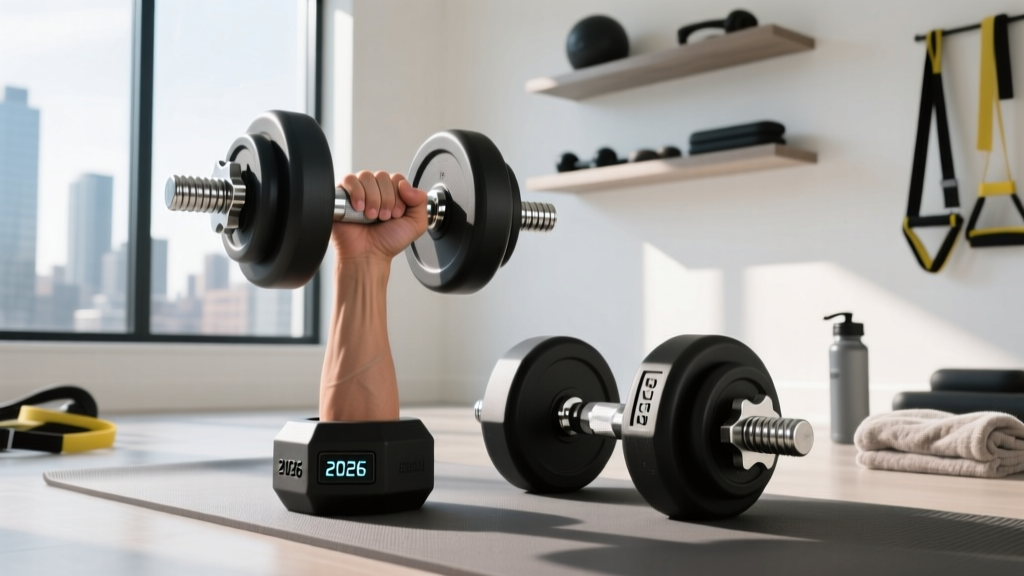
Olympic vs Standard Plates for Hamstring Exercises Dumbbell Only
Compare Olympic vs standard weight plates to build the ultimate home gym for hamstring exercises dumbbell only routines. Expert specs and 2026 pricing.

The Hamstring Overload Problem: Why Plate Selection Matters
Building a complete lower-body physique at home without a dedicated leg curl machine requires strategic loading. When programming hamstring exercises dumbbell only, the limiting factor is rarely the exercise selection—it is the equipment's capacity for progressive overload. The hamstrings are massive, powerful muscle groups that respond best to heavy eccentric loading and deep stretch-mediated hypertrophy. Movements like Dumbbell Romanian Deadlifts (RDLs), Single-Leg RDLs, and Deficit Dumbbell Hip Thrusts are highly effective, but they demand serious weight to stimulate growth once you pass the beginner phase.
Fixed heavy dumbbells are prohibitively expensive and consume massive amounts of floor space. The logical solution is investing in loadable dumbbell handles and weight plates. But this leads to a critical crossroads for home gym owners: weight plate types Olympic vs standard. Choosing the wrong plate ecosystem can bottleneck your hamstring training, compromise your grip, or result in bent equipment. In this 2026 in-depth buying guide, we break down exactly which plate system supports heavy, dumbbell-only hamstring training.
The Biomechanical Demand of Dumbbell Hamstring Training
The hamstring complex—comprising the biceps femoris, semitendinosus, and semimembranosus—crosses both the hip and knee joints. According to the ExRx biomechanics database, maximizing hamstring activation requires exercises that load the muscle in both its shortened (knee flexion) and lengthened (hip extension) positions.
Because we are focusing on a dumbbell-only setup, hip-hinge movements like RDLs and Good Mornings become the primary drivers of hypertrophy. These lengthened-position exercises require significant load. A 200-pound male lifter will quickly outgrow 50-pound fixed dumbbells for RDLs, necessitating a plate-loaded setup that can safely hold 80 to 120 pounds per hand. This is where the physical dimensions and metallurgy of your weight plates dictate your training ceiling.
Olympic vs Standard Weight Plates: Core Differences Explained
The fundamental difference between Olympic and standard plates lies in the center hole diameter, which dictates the handles, barbells, and storage racks you can use. As detailed in BarBend's comprehensive plate guide, the 2-inch Olympic standard was born from competitive weightlifting, while the 1-inch standard is a legacy commercial and budget-home-gym specification.
| Feature | Standard Plates (1-Inch Hole) | Olympic Plates (2-Inch Hole) |
|---|---|---|
| Center Hole Diameter | 1 inch (25.4 mm) | 2 inches (50.8 mm) |
| Typical Handle Sleeve Length | 4.5 to 6 inches | 8 to 10.5 inches |
| Max Load per Dumbbell | ~60 - 80 lbs (limited by sleeve) | 120 - 160+ lbs |
| Handle Grip Diameter | Usually 1 inch (smooth or light knurl) | 1.1 to 1.2 inches (aggressive knurl) |
| Average 2026 Price (Cast Iron) | $1.20 - $1.60 per lb | $1.80 - $2.50 per lb |
Applying Plates to Hamstring Exercises Dumbbell Only Routines
How do these physical differences translate to the actual feeling and execution of hamstring exercises? Let's look at the two most critical movements.
1. Dumbbell Romanian Deadlifts (RDLs) and Grip Synergy
When performing heavy Dumbbell RDLs, grip strength is often the first point of failure. Standard dumbbell handles are typically 1 inch in diameter. Olympic loadable dumbbell handles, such as the Rogue Loadable Dumbbell 2.0, feature a 1.125-inch grip diameter with deep knurling. While the thicker Olympic handle taxes your forearms more heavily, it forces a tighter, more secure crush grip, which translates to better neural drive and control during the eccentric (lowering) phase of the RDL. Furthermore, Olympic plates sit flush against the collar, reducing the 'wobble' effect that cheap standard plates often exhibit when you lower the dumbbells to the floor.
2. Deficit Reverse Lunges and Hip Thrust Elevation
Hamstring exercises dumbbell only routines often incorporate deficit work to increase the range of motion. For Deficit Reverse Lunges, you need to stand on an elevated, stable surface. Standard 10-pound cast iron plates are narrow and prone to tipping if you step on the edge. Olympic bumper plates or thick urethane grip plates offer a much wider, rubberized surface area, providing a safe, non-slip platform for your lead foot during deep hamstring-stretching lunges.
2026 Cost and Space Analysis for the Home Gym
Outfitting a home gym specifically for heavy lower-body training requires a financial and spatial calculus. Here is what you can expect to pay in the current 2026 market for a 200-pound plate setup.
- Standard Cast Iron (CAP Barbell / Yes4All): Expect to pay around $240 to $280 for a 200lb set. These are highly compact, stacking tightly on a small vertical tree rack. However, the paint chips easily, and the machining tolerances mean the center holes can vary, making plate changes frustrating.
- Olympic Cast Iron (Titan Fitness / Rogue): A 200lb set of machined cast iron Olympic plates will run between $360 and $450. They take up slightly more horizontal space on a rack due to the wider 2-inch hub, but the machined steel inserts guarantee a perfect slide onto your dumbbell sleeves every time.
- Olympic Urethane/Rubber Grip Plates: If you are doing dumbbell hamstring curls (lying on a bench and squeezing a plate between your feet) or need to drop weights safely, rubberized Olympic grip plates cost upwards of $550 for 200lbs. They are bulky but protect your flooring and reduce noise.
Real-World Failure Modes and Edge Cases
As a domain expert reviewing hundreds of home gym setups, I see specific failure modes when lifters try to push heavy hamstring exercises dumbbell only using the wrong plate ecosystem.
The Standard Sleeve Bend
If you attempt to load 80 pounds onto a budget $15 chrome standard dumbbell handle using standard plates, the 1-inch steel sleeve will eventually bend under the torque of heavy RDLs. Once the sleeve bends, your spin-lock collars will no longer thread correctly, creating a massive safety hazard where plates can slide off mid-rep.
Olympic Spring Collar Slippage
Conversely, Olympic loadable dumbbells solve the bending issue, but introduce collar slippage. During the violent hip-hinge of a Dumbbell Good Morning or RDL, standard metal spring collars often fail to grip the smooth steel Olympic sleeve. Solution: You must invest in clamp-style collars (like Lock-Jaw or Rogue HG 2.0 collars) that use a cam-lever action to bite into the sleeve, ensuring your plates stay locked during dynamic hamstring movements.
'Progressive overload on the hamstrings requires absolute trust in your equipment. If you are mentally distracted by wobbling plates or loose collars during a heavy eccentric RDL, you will subconsciously limit your range of motion, robbing yourself of the exact stretch-mediated stimulus required for growth.'
Final Verdict: Which Should You Buy?
If your goal is strictly casual fitness, light toning, and you are operating on a severe budget with minimal space, Standard weight plates paired with 14-inch handles will suffice for basic hamstring curls and light lunges.
However, if you are serious about hypertrophy, strength, and executing heavy hamstring exercises dumbbell only like RDLs and Deficit Lunges, Olympic weight plates are the undisputed winner. The 2-inch ecosystem allows for longer loadable sleeves, thicker knurled handles for superior grip, and the structural integrity required to safely load 100+ pounds per hand. Invest in a pair of high-quality Olympic loadable dumbbell handles, a set of machined cast iron or urethane Olympic plates, and heavy-duty clamp collars. Your hamstrings—and your safety—will thank you.
More gear to consider
All reviews
Triceps Extensions With Dumbbells: 2026 Adjustable Gear Guide

Bumper vs Iron Plates & Single Dumbbell Exercises for Shoulders
Best Adjustable Dumbbells for a Fast Dumbbell Workout (2026)

Chest and Back Exercises with Dumbbells: Loadable Set Value Analysis

Long Dumbbell vs Olympic Barbell: Beginner Guide to Weight & Knurling