
Cast Iron vs Competition Kettlebells & Dumbbell Curls Muscles Worked
Analyze cast iron vs competition kettlebells with a 2026 budget breakdown, plus a biomechanical look at dumbbell curls muscles worked.

When building a home gym in 2026, enthusiasts often fall into the trap of prioritizing mirror muscles. They spend hours researching the dumbbell curls muscles worked, optimizing for bicep peaks, and buying premium adjustable dumbbells, only to completely misallocate their remaining budget on foundational ballistic equipment. The kettlebell is the undisputed king of posterior chain development, but the market is fractured between traditional cast iron and standardized competition models. This guide bridges the gap between your arm isolation goals and your heavy lifting budget, providing a ruthless value analysis of the kettlebell market.
The Arm Isolation Conundrum: Kettlebells vs. Dumbbells
Before we drop heavy iron on the floor, let us address the biomechanics of arm training. When analyzing the dumbbell curls muscles worked, the primary movers are the biceps brachii (long and short heads), with the brachialis and brachioradialis acting as crucial synergists. Dumbbells allow for supination, wrist neutrality, and a direct line of pull against gravity, maximizing mechanical tension on the biceps.
Kettlebells, conversely, are inherently poor tools for strict isolation curls. The offset center of mass and the thick, wide horns place extreme torque on the wrist joint during elbow flexion. Attempting heavy kettlebell curls shifts the load disproportionately to the brachioradialis and forearm stabilizers, increasing the risk of tendinopathy without providing superior hypertrophic stimulus to the biceps brachii.
🏋️ Expert Takeaway: Keep your adjustable dumbbells for strict isolation and hypertrophy. Allocate your kettlebell budget strictly for ballistic movements (swings, snatches, cleans) and grinds (presses, squats) where the offset center of gravity actually provides a biomechanical advantage.Cast Iron vs. Competition: The 2026 Market Landscape
Once you accept that kettlebells are for full-body power and dumbbells are for isolation, you face the primary purchasing decision: Cast Iron or Competition? The price disparity is significant, and understanding the manufacturing differences is critical for long-term value.
Traditional Cast Iron: The Budget Workhorse
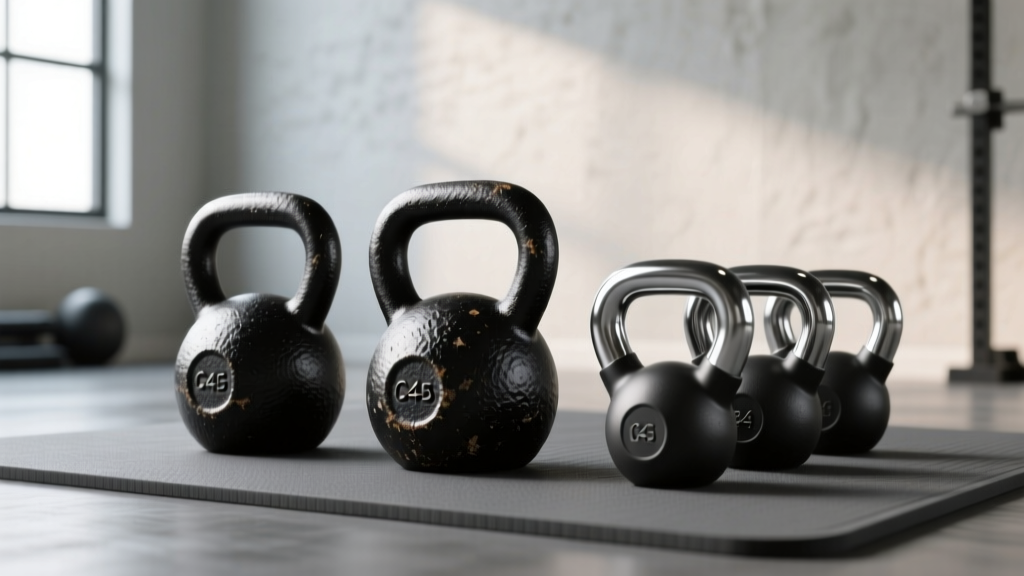
Cast iron kettlebells are poured into molds as a single, solid piece of iron (or steel-iron alloy). Because they are solid, their physical dimensions scale with their weight. A 12kg cast iron bell is noticeably smaller than a 32kg bell. The handle thickness also varies, typically ranging from 30mm on lighter bells to 35mm or more on heavier ones.
- Pros: Significantly cheaper per pound; highly durable; smaller footprint for lighter weights; excellent for general fitness and hardstyle training.
- Cons: Inconsistent dimensions require constant technique adjustments as you increase weight; wider handles on heavy bells can cause grip fatigue; prone to rust if the coating chips.
Competition Kettlebells: The Premium Standard
Originating from Girevoy sport, competition kettlebells are manufactured to exact, uniform dimensions regardless of weight. Whether it is an 8kg or a 48kg bell, the height is exactly 280mm, the width is 210mm, and the handle diameter is strictly 33mm. To achieve this, lighter bells are constructed with a steel shell and filled with denser materials like lead or tungsten, while heavier bells are solid steel.
- Pros: Perfect dimensional consistency ensures your technique never changes; 33mm handle is optimal for high-rep snatches and jerks; color-coded shells for easy identification.
- Cons: Substantially more expensive; the uniform large size of lighter bells can be awkward for smaller-framed lifters; steel shells can dent if dropped on bare concrete.
Budget Breakdown: Cost-Per-Pound Matrix
To determine true value, we must look beyond the sticker price and analyze the cost per pound (CPP) across top-tier brands in 2026. Shipping heavy iron is a massive overhead factor, so we have calculated these estimates including average freight costs.
| Brand / Model | Type | Avg. CPP (2026) | Handle Dia. | Coating / Finish |
|---|---|---|---|---|
| Rep Fitness Cast Iron | Cast Iron | $1.30 - $1.60 | 32-35mm | Matte Powder Coat |
| Rogue Cast Iron | Cast Iron | $1.80 - $2.20 | 33-35mm | E-Coat / Powder |
| Kettlebell Kings Comp | Competition | $2.90 - $3.40 | 33mm | Bare Steel / Paint |
| Onnit Competition | Competition | $3.80 - $4.50 | 33mm | Polished Steel |
"The biggest mistake home gym owners make is buying a full set of competition kettlebells when they only train hardstyle. If you are not competing in Girevoy sport or performing high-rep snatches, the premium for uniform dimensions yields a negligible return on investment."
Hidden Costs and Failure Modes
When executing your budget breakdown, you must account for the hidden failure modes of cheap kettlebells.
The Coating Degradation Trap
Budget cast iron bells (under $1.20/lb) often use thick vinyl or cheap enamel coatings. These coatings chip upon impact with other weights, exposing the raw iron to humidity. Once rust sets in, it compromises the structural integrity of the handle and stains your flooring. Always insist on powder-coat or e-coat finishes, which bond to the iron at a molecular level and withstand the abrasion of chalk and repeated drops.
Shipping Logistics
Kettlebells are incredibly dense. A pair of 24kg bells weighs over 100 lbs. Many retailers offer 'free shipping' but bake the $40-$80 freight cost directly into the per-pound price. When comparing local sporting goods stores against online fitness retailers, calculate the final out-the-door price. Buying locally from a used market or a store with flat-rate heavy shipping can save you up to 25% on your total budget.
The Final Value Verdict
To maximize your 2026 fitness budget, adopt a hybrid approach. Invest in a high-quality pair of adjustable dumbbells to perfectly target the dumbbell curls muscles worked and handle all your isolation hypertrophy work. For your kettlebell needs, purchase cast iron bells in the foundational weights (16kg, 20kg, 24kg) from a reputable brand like Rogue or Rep Fitness, keeping your cost per pound under $2.00. Only upgrade to competition steel if you are specifically training for kettlebell sport endurance, where the 33mm handle and uniform shell dimensions are non-negotiable for joint health and technique consistency.
More gear to consider
All reviews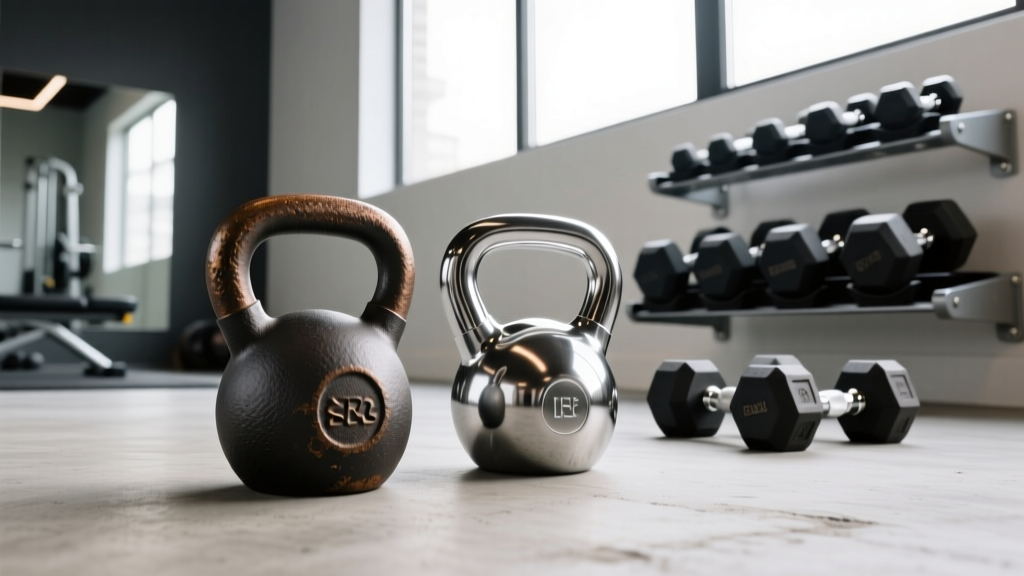
Cast Iron vs Competition Kettlebells: Dumbbell Squat to Shoulder Press
How to Spot Dumbbell Chest Press & Choose Olympic vs Standard Plates

EZ Curl Bar vs Straight Bar & Plank Dumbbell Pass
Cast Iron vs Competition Kettlebells: Full Body Dumbbell Alternative

Best Adjustable Dumbbells for the Dumbbell Squat: Woman's 2026 Guide
