EZ Curl vs Straight Bar: Layout Tips & Dumbbell Exercises Chart
Optimize your home gym layout by comparing EZ curl bar vs straight bar footprints, complete with a space-saving dumbbell exercises chart for tight rooms.

The Spatial Reality of Arm Day: Barbell Footprints
When designing a compact home gym in 2026, the most common layout failure mode isn't a lack of equipment variety; it's spatial miscalculation during lateral movements. Arm day, in particular, presents a unique architectural challenge. Lifters frequently debate the biomechanical merits of the EZ curl bar vs straight bar, but from a space optimization perspective, the decision fundamentally alters your room's required clearance zones and storage footprint.
If you are building out a bedroom gym, garage corner, or apartment fitness space under 150 square feet, understanding the exact dimensional sweep of your equipment is critical. Below, we break down the spatial geometry of arm training and provide a strategic dumbbell exercises chart to help you pivot when your floorplan simply cannot accommodate a full-sized barbell.
The Lateral Clearance Equation: Barbell Math
To determine if a barbell fits your lifting zone, you must calculate the 'Total Lateral Sweep.' This is the sum of the barbell's length and the lifter's wingspan (which averages roughly equal to their height, or about 70 inches for an average male). Let's compare the three most common arm-day bars:
- Standard Olympic Straight Bar (86 inches): Requires a minimum of 156 inches (13 feet) of unobstructed lateral wall-to-wall space to perform a strict curl without knurling scraping the drywall.
- Shorty Straight Bar (72 inches): Requires 142 inches (11.8 feet) of lateral clearance. Often used in power racks but still cumbersome for dedicated curl stations.
- Standard EZ Curl Bar (47 inches): Requires only 117 inches (9.75 feet) of lateral clearance. This 39-inch spatial savings is massive in a 10x10 room.
According to equipment specifications from Rogue Fitness, a standard 47-inch curl bar features a 30mm shaft and angled grips that not only reduce wrist supination stress but physically pull the lifter's elbows inward. This biomechanical tuck further reduces the effective lateral sweep by an additional 4 to 6 inches compared to the forced elbow flare of a straight bar curl.
Ergonomics vs. Architecture: The Wall Proximity Problem
Space optimization isn't just about left-to-right width; it's also about depth from the wall. When performing lying tricep extensions (skullcrushers) or strict wall curls, your proximity to the wall dictates your bar path.
Layout Insight: A straight bar forces a fully supinated grip (palms up), which naturally causes the elbows to flare outward. If you are benching near a wall or power rack upright, this flare increases the risk of the bar sleeves clipping the rack. The semi-pronated grip of an EZ curl bar keeps the elbows tucked, allowing you to position your bench up to 12 inches closer to a wall or rack without collision risk.Biomechanical analyses from ExRx.net highlight that the straight bar demands maximum supination, which engages the biceps brachii heavily but places immense torque on the radioulnar joint. In a confined space where you cannot freely adjust your stance width to compensate for joint stress, the EZ bar's 120-degree and 150-degree grip angles offer a safer, more space-efficient alternative.
The Space-Saver Pivot: Dumbbell Exercises Chart
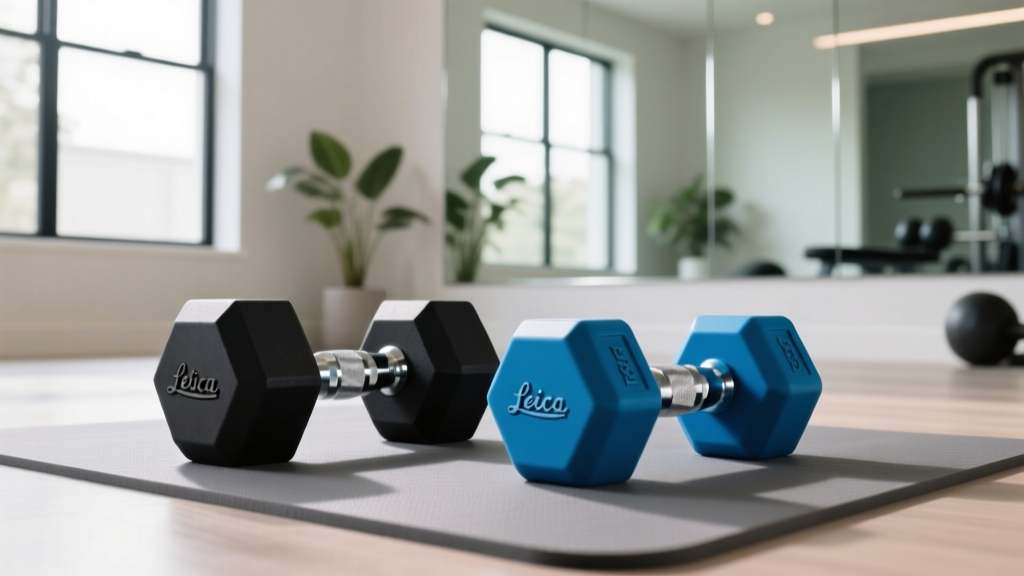
What happens when your lifting zone is less than 8 feet wide? You abandon the barbell entirely and transition to adjustable dumbbells (like the Nuobell 80s or PowerBlock Elite, which measure a mere 15 to 17 inches in length). By utilizing the dumbbell exercises chart below, you can replicate the exact muscle stimulation of a barbell arm day while reducing your required lateral clearance to under 7 feet.
| Barbell Movement | Spatial Constraint | Dumbbell Alternative | Clearance Required |
|---|---|---|---|
| Strict Barbell Curl | Requires 13ft lateral sweep; elbows hit walls. | Seated DB Supinating Curl | 6.5 ft (Seated width) |
| BB Skullcrusher | Bar sleeves clip rack uprights on descent. | Lying DB Tricep Extension | 4 ft (Vertical focus) |
| BB Reverse Curl | Wrist strain in tight, awkward room angles. | Standing DB Hammer Curl | 5 ft (Neutral grip) |
| Close-Grip BB Press | Requires full bench footprint + 86in bar. | Floor Press (Neutral Grip) | 6 ft (No bench needed) |
As noted in the ExRx hammer curl directory, moving from a pronated barbell reverse curl to a neutral-grip dumbbell hammer curl actually increases brachialis activation while completely eliminating the lateral wall-strike risk. You trade a 72-inch piece of steel for two 16-inch adjustable dumbbells, instantly reclaiming over 40 inches of usable floor space.
Storage Footprints: Rack Integration & Wall Mounts
Optimizing your layout also means optimizing how your equipment lives when not in use. The storage geometry of an EZ curl bar vs straight bar dictates your wall and rack accessory purchases.
Horizontal vs. Vertical Storage
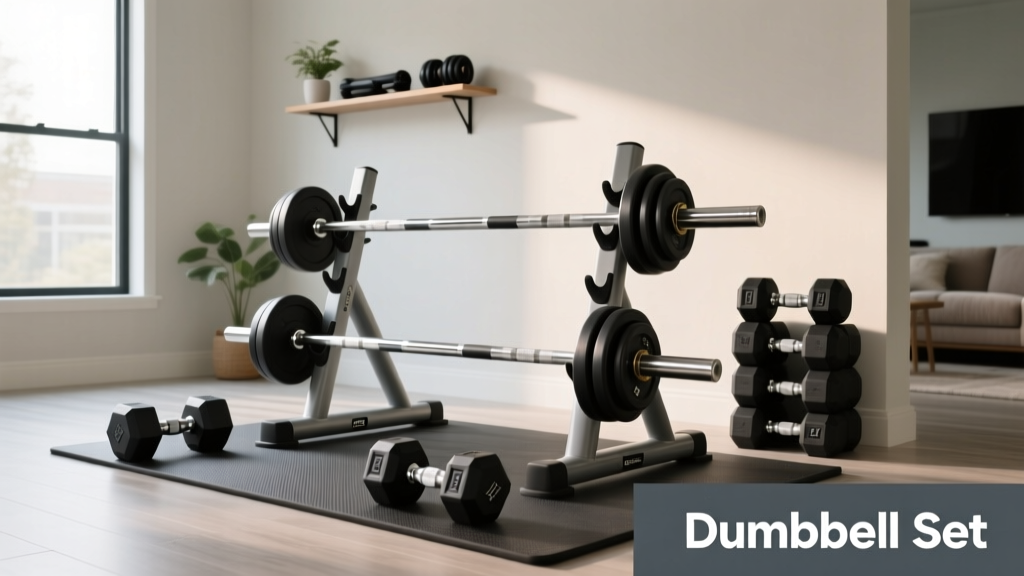
- The Straight Bar Dilemma: Storing an 86-inch bar horizontally on a wall mount requires two heavy-duty brackets spaced at least 48 inches apart, anchored directly into 16-inch on-center wooden studs. This consumes a massive 7.5-foot stretch of vertical wall real estate.
- The EZ Bar Advantage: A 47-inch curl bar can be stored vertically using a single, heavy-duty wall hanger (such as the Titan Fitness Vertical Bar Hanger, typically priced around $35). This requires only 6 inches of wall width and utilizes dead space in the corner of a room or directly behind a power rack upright.
Power Rack Integration
If your layout relies on a single 4x4 upright power rack, storing a straight bar inside the rack via J-cups or safety straps eats into your internal working width. A 47-inch EZ curl bar, however, can be stored vertically against the inside of the upright using a magnetic or bolt-on vertical barbell holder, leaving your internal rack width completely unobstructed for squats and bench presses.
Final Layout Decision Matrix
Use this quick-reference matrix to finalize your arm-day equipment purchases based on your exact room dimensions:
Room Width Under 8 Feet (Micro-Gyms & Apartments)
Verdict: Skip the barbells entirely. Invest in a premium adjustable dumbbell set (5-80 lbs) and utilize the dumbbell exercises chart above. Add a set of resistance bands for tricep pushdowns to avoid wall-strike issues.
Room Width 8 to 11 Feet (Bedrooms & Small Garages)
Verdict: Purchase a 47-inch Olympic EZ Curl Bar. It provides the heavy loading capability of a barbell while respecting your lateral clearance limits. Pair with a vertical wall hanger to save floor space.
Room Width 12+ Feet (Dedicated Garage Gyms)
Verdict: You have the luxury of space. Buy a standard 86-inch Olympic straight bar for heavy, strict curls and close-grip presses, but keep an EZ curl bar on hand for high-volume tricep work and joint-deload weeks.
Ultimately, the debate between an EZ curl bar and a straight bar shouldn't just be about muscle isolation; it must be about how the equipment interacts with your physical environment. By mapping your lateral clearance and leveraging adjustable dumbbells when the architecture demands it, you can build a highly effective, joint-friendly arm day without compromising the flow of your home gym.
More gear to consider
All reviews
Arnold Press Dumbbell Form & Best Adjustable Sets 2026

Olympic vs Standard Plates: Setup and Dumbbell Row Guide for Women

B Stance Dumbbell RDL & Kettlebell Guide: Cast Iron vs Competition

Space-Saving Kettlebell Guide & Beginner Dumbbell Workout Women Need

Olympic vs Standard Plate Setup & Dumbbell Exercises for Seniors with Pictures