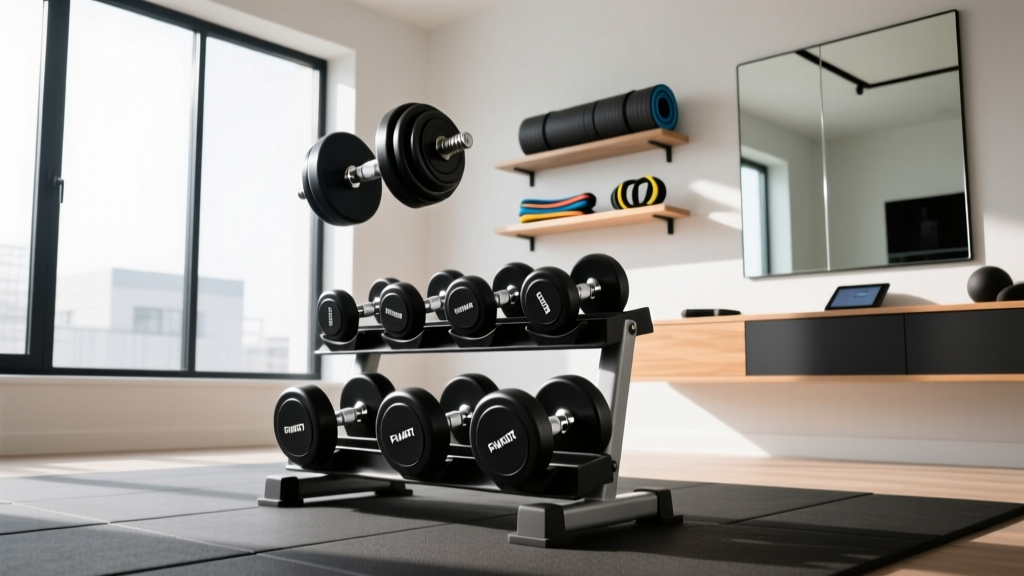
Leg Raises Dumbbell Mistakes: Adjustable Set Reviews
Discover common leg raises dumbbell mistakes, troubleshooting tips for adjustable sets, and which 2026 models are safest for weighted core training.

The Hidden Dangers of the Weighted Core Hold
The lying leg raise is a staple for targeting the lower rectus abdominis and hip flexors. However, as lifters progress, bodyweight alone ceases to provide adequate progressive overload. This leads many to the leg raises dumbbell variation—clamping a dumbbell between the feet to add resistance. While effective, this movement introduces severe equipment risks when using modern adjustable dumbbells.
Unlike fixed hex or urethane dumbbells, adjustable sets feature intricate dial mechanisms, plastic end-caps, and extended handle lengths. Squeezing these mechanisms between your feet or accidentally dropping them on a gym mat can result in catastrophic equipment failure. In this guide, we break down the most common mistakes lifters make when using adjustable dumbbells for leg raises, troubleshoot mechanism failures, and review which 2026 adjustable models are actually safe for this high-risk exercise.
⚠️ Safety Warning: Never grip the selector dials or plastic housing of an adjustable dumbbell with your feet. The sheer lateral force of dorsiflexion can snap the internal retention pins, permanently jamming the weight plates.Biomechanics and Equipment Stress Points
According to biomechanics data cataloged by ExRx (Exercise Prescription on the Internet), the lying leg raise requires intense isometric contraction of the adductors and ankle dorsiflexors to secure the load. When you place a dumbbell handle between your shoes, the medial pressure applied to the dumbbell can exceed 80 pounds of lateral force per square inch, depending on the weight of the dumbbell and the lever arm of your legs.
Why Adjustable Dumbbells Struggle Here
- Handle Length: Most dial-based adjustable dumbbells are between 15 and 17 inches long. This excessive length creates an awkward fulcrum between the feet, increasing the chance of the dumbbell slipping and striking the face or teeth.
- Material Fragility: Fixed rubber dumbbells absorb impact if dropped. Adjustable dumbbells contain steel pins, plastic trays, and precision gears. Dropping a 40-pound adjustable dumbbell from a 45-degree leg raise angle will almost certainly shatter the base tray or misalign the selector stem.
- Knurling Damage: The aggressive knurling designed for hand grips will tear through lifting shoes or cause severe friction burns on bare feet during the eccentric lowering phase of the movement.
Top 3 Mistakes When Using Adjustable Sets for Leg Raises
Through years of equipment testing and gym-floor observation, we have identified the primary failure points when lifters attempt the leg raises dumbbell technique with adjustable gear.
Mistake 1: Using Dial-Based Adjustables for Foot Grips
Dumbbells like the Bowflex SelectTech 552 rely on an external plastic dial to engage internal metal tabs. When users squeeze the ends of the dumbbell with their feet to secure it for leg raises, the lateral pressure warps the plastic dial housing. Over time, this causes the dial to grind against the internal weight plates, leading to a 'stuck' dial that refuses to turn past 25 lbs.
Mistake 2: Ignoring the Eccentric Drop
Fatigue during the final reps of a weighted leg raise often causes lifters to simply let the dumbbell fall from their feet to the floor. While a fixed iron dumbbell will bounce, an adjustable dumbbell's internal locking mechanism will experience acute shear stress. This frequently bends the central guide rod, rendering the entire set unusable.
Mistake 3: Overloading the Hip Flexors Too Quickly
The National Strength and Conditioning Association (NSCA) emphasizes that progressive overload on the core must respect spinal mechanics. Jumping from a bodyweight leg raise to a 30-pound adjustable dumbbell hold forces the hip flexors (psoas major) to dominate the movement, pulling on the lumbar spine and negating abdominal isolation. Furthermore, a 30lb adjustable dumbbell is physically bulkier than a 30lb fixed plate-loaded dumbbell, making the foot grip exponentially more precarious.
2026 Adjustable Dumbbell Comparison: The Leg Raise Matrix
Not all adjustable dumbbells are created equal. Below is our proprietary comparison matrix evaluating the top models on their suitability, safety, and dimensional profile for foot-gripped core exercises.
| Model (2026 Market) | Overall Length | Foot-Grip Safety | Drop Risk Tolerance | Est. Price |
|---|---|---|---|---|
| Bowflex SelectTech 552 | 16.9 inches | Poor | Very Low | $399 |
| Nuobell 80 | 16.0 inches | Fair | Low | $649 |
| PowerBlock Elite USA | 12.0 inches | Excellent | Moderate | $369 |
The Verdict: The PowerBlock Elite USA is the undisputed winner for leg raises. Its compact, blocky 12-inch cage design eliminates the awkward overhang of traditional handled dumbbells. The steel cage can withstand the lateral crushing force of the adductors without damaging a fragile dial mechanism. Conversely, the Bowflex 552 should never be used for foot-gripped movements due to its 16.9-inch length and exposed plastic dials.
Troubleshooting Adjustable Dumbbell Wear and Tear
If you have already been using your adjustable dumbbells for weighted leg raises and are experiencing mechanical issues, follow this troubleshooting guide before attempting to use them for heavy presses or rows.
Issue: The Selector Dial Refuses to Turn
Cause: Lateral pressure from the feet has bent the internal alignment stem or forced a weight plate out of the stack track.
Fix: Do not force the dial with pliers. Remove the dumbbell from the base tray. Inspect the bottom of the handle for the retention clips. If a clip is cracked (common on older Bowflex models), you must order a replacement stem assembly. Gently tap the side of the dumbbell housing with a rubber mallet to reseat the misaligned plate, then try turning the dial while the dumbbell is suspended in the air.
Issue: Excessive Rattling During the Eccentric Phase
Cause: The tolerance gaps between the nested plates in adjustable dumbbells (especially Nuobell and Ironmaster) allow for micro-movements. When you lower your legs during a leg raise, the angle shift causes the plates to clank, distracting from the core contraction.
Fix: Wrap a standard 1-inch rubber resistance band around the outer housing of the dumbbell before gripping it with your feet. This not only dampens the acoustic rattle but provides a high-friction surface that prevents the dumbbell from slipping out of your shoes during the movement.
Issue: Handle Knurling Tearing Shoes
Cause: Aggressive diamond knurling meant for chalked hands acts like a cheese grater on mesh or leather athletic shoes.
Fix: Apply a layer of athletic tape or use a specialized silicone handle sleeve over the center grip before securing the dumbbell between your feet. This preserves your footwear and creates a uniform surface for a secure isometric hold.
"When loading the lower abs, the goal is posterior pelvic tilt and spinal flexion. If the implement you are holding between your feet requires so much adductor tension and mental focus to balance that you lose the pelvic tilt, the tool is too cumbersome. Compact block-style adjustable dumbbells or dedicated ankle weights are vastly superior to elongated dial dumbbells for this specific movement pattern."
— Biomechanics & Core Loading Principles, NSCA Guidelines
Safer Alternatives to the Dumbbell Foot-Grip
If you are reading this and realizing your $600 adjustable dumbbell set is entirely unsuited for leg raises, do not despair. There are safer, more biomechanically sound ways to load the leg raise without risking your equipment or your teeth.
- Dip Belt with Ankle Attachment: Many modern lifting belts feature D-rings that can be routed through the ankle. Attaching a cable or chain to the ankle allows you to load weight plates safely, completely removing the dumbbell from the equation.
- Adjustable Ankle Weights: Sand-filled or steel-insert ankle weights (up to 20 lbs per ankle) distribute the load evenly across the joint without requiring an isometric foot grip.
- Cable Machine Ankle Strap: Lying on a decline bench and attaching a low-pulley cable to an ankle strap provides continuous tension throughout the entire range of motion, a stimulus that free weights cannot replicate due to gravity vectors.
Frequently Asked Questions
Can I use my Bowflex 552 for weighted leg raises?
Technically, yes, but it is highly discouraged. The 16.9-inch length makes balancing the dumbbell between your feet incredibly awkward, and the lateral squeezing force can crack the plastic dial housing. If you must use them, place the dumbbell on the floor, slide your feet under the smooth center handle (avoiding the knurling), and lift carefully. However, switching to a PowerBlock or ankle weights is a much safer long-term strategy.
What is the ideal weight increment for progressing the leg raise?
Because the lever arm of the legs is so long, even small weight increases dramatically alter the torque on the lumbar spine. Progress in 2.5 lb to 5 lb increments. Adjustable dumbbells that offer 2.5 lb micro-increments (like the Nuobell) are excellent for this, provided you use a silicone grip sleeve to protect the mechanism from foot pressure.
Why do my hip flexors cramp when holding a dumbbell between my feet?
Cramping occurs because your feet are forced into extreme dorsiflexion to grip the handle, which puts the anterior tibialis and deep hip flexors into a shortened, highly active state. To mitigate this, focus on pointing your toes slightly (plantarflexion) and squeezing the smooth end-caps of a compact dumbbell (like the PowerBlock) rather than gripping a long handle with the arch of your foot.
More gear to consider
All reviews
Space-Saving Home Exercise With Dumbbells: Rubber Hex vs Urethane
Cast Iron vs Competition Kettlebells & Dumbbell Lateral Layouts

Barbell Collar & Clamp Types Comparison: Dumbbell Side Laterals
2026 Rack Trends: Storage Solutions for Chest Presses with Dumbbells

Barbell Collar Types & Setup for a Dumbbell Lateral Raise Drop Set