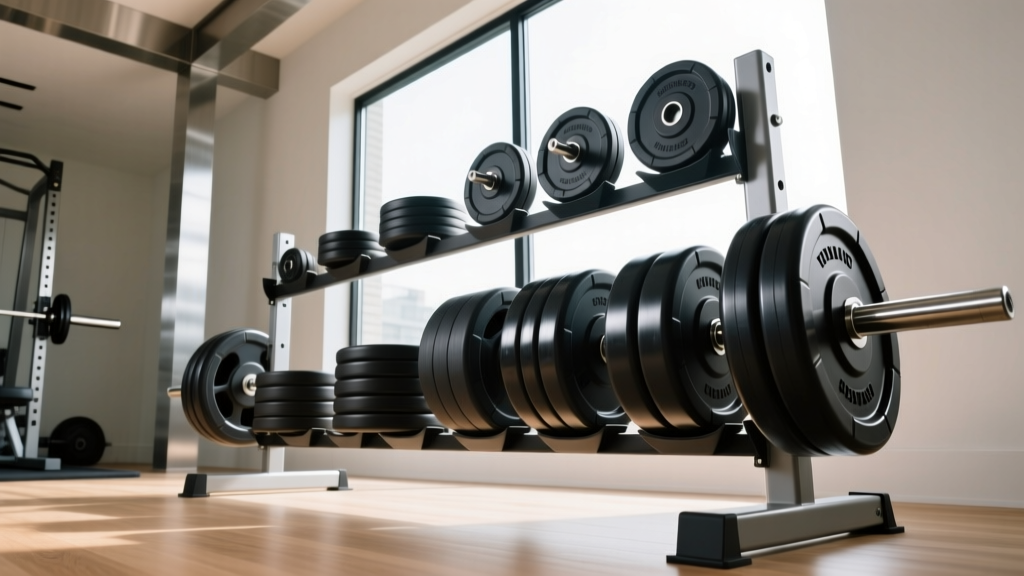
Bumper vs Iron Plates: Gear for Incline Dumbbell Y Raises
Compare bumper vs iron plates for your 2026 home gym. Learn which weight plates suit heavy lifts and gear up for incline dumbbell y raises and isolation.

The Duality of Strength: Heavy Loads and Scapular Health
Building a comprehensive home gym in 2026 requires a dual-focus approach: accommodating heavy, high-impact barbell work while preserving joint health through precise isolation. This brings us to a critical programming and equipment crossroads. Your choice between bumper plates and cast iron plates will define your heavy compound lifts, but your structural longevity depends on having the right micro-loading and dumbbell gear for prehabilitation movements—most notably, incline dumbbell y raises.
As a strength equipment reviewer, I see countless lifters max out their credit cards on Olympic weight sets, only to neglect the structural balance required to keep their shoulders healthy under heavy loads. Whether you are outfitting a garage gym for powerlifting or functional fitness, understanding the biomechanical and financial differences between plate types is just as important as mastering your accessory work. Below, we break down the bumper plate vs iron plate debate, and explore how to properly equip your gym for everything from heavy deadlifts to the lower-trapezius activation required for incline dumbbell y raises.
Bumper Plate vs Iron Plate: The 2026 Comparison Matrix
Before diving into programming, we need to look at the raw data. Based on our hands-on testing of popular models like the Rogue Echo Bumpers and REP Fitness Cast Iron Grip Plates, here is how the two primary weight plate categories stack up against each other this year.
| Feature | Bumper Plates (Virgin/Crumb Rubber) | Cast Iron Plates (Machined/Grip) | Winner |
|---|---|---|---|
| Average Cost (2026) | $3.50 - $5.00 per lb | $1.50 - $2.25 per lb | Cast Iron |
| Plate Thickness (45lb) | ~2.15 inches | ~1.25 inches | Cast Iron |
| Drop Tolerance | High (Designed for Olympic drops) | Low (Will crack floors/plates) | Bumper Plates |
| Barbell Sleeve Space | Limits max loading (approx. 405-450 lbs) | Maximizes loading (500+ lbs easily) | Cast Iron |
| Corrosion Resistance | Impervious to rust | Requires humidity control/enamel | Bumper Plates |
Heavy Compounds: Where Plate Choice Dictates Performance
According to BarBend's comprehensive equipment analysis, the primary dividing line between bumpers and iron is the 'drop factor.' If your programming includes high-volume Olympic weightlifting (snatches, cleans) or CrossFit-style WODs where the barbell is routinely dropped from overhead or the shoulder, bumper plates are non-negotiable. Virgin rubber bumpers absorb kinetic energy, protecting both your barbell' whip and your concrete garage floor.
The Thickness Problem: Barbell Rows and Floor Presses
However, bumpers suffer from a severe density issue. A standard 45lb iron plate is roughly 1.25 inches thick, while a 45lb bumper plate is over 2 inches thick. This becomes a massive hindrance during exercises that start from the floor or require a full range of motion, such as Pendlay rows or floor presses. When using bumpers, the bar sits higher off the ground, altering the starting mechanics of your pull. Furthermore, if you are a strong powerlifter pushing past 500 lbs on the deadlift, the sheer thickness of bumper plates will cause them to overflow the 16.3-inch loadable sleeve space of a standard Olympic barbell. For pure strength work, machined cast iron plates remain the undisputed king of density and sleeve economy.
Bridging the Gap: Isolation and Incline Dumbbell Y Raises
While your heavy plates dictate the success of your posterior chain overload, your structural longevity relies on isolation movements. Heavy bench pressing and overhead pressing inevitably lead to internal rotation and tight pectorals. To counteract this, elite strength coaches program scapular stabilization work. This is where the biomechanical breakdown of incline rear lateral raises and Y-raises becomes critical.
The incline dumbbell y raise specifically targets the lower trapezius and the serratus anterior. Unlike heavy barbell movements where you are loading hundreds of pounds, the Y-raise requires extreme precision and remarkably light weight—often between 5 and 15 pounds per hand. This highlights a crucial gap in home gym planning: you cannot use your heavy iron or bumper plates for this. You must allocate budget toward adjustable dumbbells with micro-stepping capabilities or a dedicated set of light neoprene/urethane dumbbells.
Expert Execution Guide: Incline Dumbbell Y Raises
To properly integrate this movement into your routine without aggravating the rotator cuff, follow these strict parameters:
- The Setup: Set an adjustable bench to a 30-to-45-degree incline. Lie prone (chest down) to eliminate momentum and isolate the scapular stabilizers.
- The Grip: Hold light dumbbells (start with 5-10 lbs) with a neutral grip (thumbs pointing up).
- The Path: Raise the dumbbells up and outward at a 30-degree angle from your torso, forming a 'Y' shape. Do not raise them straight out to the side (that is a T-raise, targeting the rhomboids).
- The Squeeze: At the apex, actively depress your scapulae (pull your shoulder blades down toward your back pockets) to ensure the lower traps are doing the work, not the upper traps.
Real-World 2026 Budgeting: Plates, Dumbbells, and Micro-Loads
How do you balance a budget when you need heavy iron for deadlifts, bumpers for occasional cleans, and light dumbbells for incline dumbbell y raises? Here is the optimal allocation strategy for a $2,000 free weight budget in 2026:
- Base Iron Set ($450 - $600): Invest in a 300lb set of machined cast iron grip plates (10s, 25s, 45s). This covers 90% of your heavy strength work, squats, and deadlifts with maximum sleeve efficiency.
- Technique Bumpers ($150 - $200): Purchase a pair of 10lb and 15lb technique bumper plates. These share the exact 450mm diameter of a full-sized 45lb bumper, allowing you to safely practice Olympic lifts and drops from the floor without risking your iron plates or your flooring.
- Adjustable Dumbbells ($350 - $450): Skip fixed dumbbells. Invest in a high-quality adjustable pair (like the Nuobell or Bowflex SelectTech) that allows you to drop down to 5lb increments. This single purchase enables your incline dumbbell y raises, lateral raises, and heavy shrugs without cluttering your gym floor.
- Fractional/Micro Plates ($40 - $60): Buy a set of 0.25lb to 1lb steel fractionals. When you are progressing on upper body isolation movements, jumping from 15lbs to 20lbs is a 33% increase in load. Micro-plates allow for smooth, sustainable progressive overload.
Frequently Asked Questions
Can I mix bumper plates and iron plates on the same barbell?
Yes, but with a major caveat. If you are dropping the bar, the bumper plates must be on the outside, and they must be of equal or greater weight than the iron plates on the inside. If you put heavy iron plates on the outside and light bumpers on the inside, the drop will shatter the iron plates because the rubber will not absorb the kinetic energy first. For static lifts like squats and bench presses, mixing them is perfectly safe and is a great way to fill out sleeve space.
Why do my shoulders hurt during heavy benching, and will Y-raises fix it?
Shoulder pain during heavy pressing is often caused by a weak serratus anterior and lower trapezius, leading to poor scapular upward rotation. Incline dumbbell y raises directly strengthen these exact muscles. By programming 3 sets of 12-15 reps of Y-raises at the end of your upper-body days, you reinforce the scapular stability required to keep the humerus centered in the glenoid fossa during heavy loads.
Are urethane bumper plates better than rubber?
Urethane is vastly superior to crumb rubber in terms of longevity, odor, and resistance to UV degradation. However, in 2026, urethane plates still carry a massive premium (often $7.00+ per lb). For the vast majority of home gym owners, virgin rubber bumpers (like the Rogue Fitness Echo Bumper Plates) offer the best balance of durability, low bounce, and cost-effectiveness without the toxic off-gassing associated with cheap recycled crumb rubber.
Final Verdict: Balance Your Gym, Balance Your Body
The bumper vs iron plate debate ultimately comes down to your specific training modalities. If you are an Olympic weightlifter, bumpers are mandatory. If you are a powerlifter or general strength enthusiast, cast iron provides superior density and value. However, true expertise in gym programming extends beyond the barbell. Equipping your space with the right adjustable dumbbells to perform meticulous, light-load isolation work like incline dumbbell y raises is what separates lifters who burn out from those who build resilient, injury-proof physiques for decades to come.
More gear to consider
All reviews
Olympic vs Standard Plates: 5kg Dumbbells & Bar Mistakes

Kettlebell vs Dumbbell: Beginner's Adjustable Dumbbell Guide

Rogue Fitness Rubber Hex Dumbbells: Rack Storage & Care Guide

Power Rack vs Squat Stand: Beyond Planet Fitness Dumbbell Weights
Master the Dumbbell Chest Fly with Space-Saving Loadable Dumbbells
