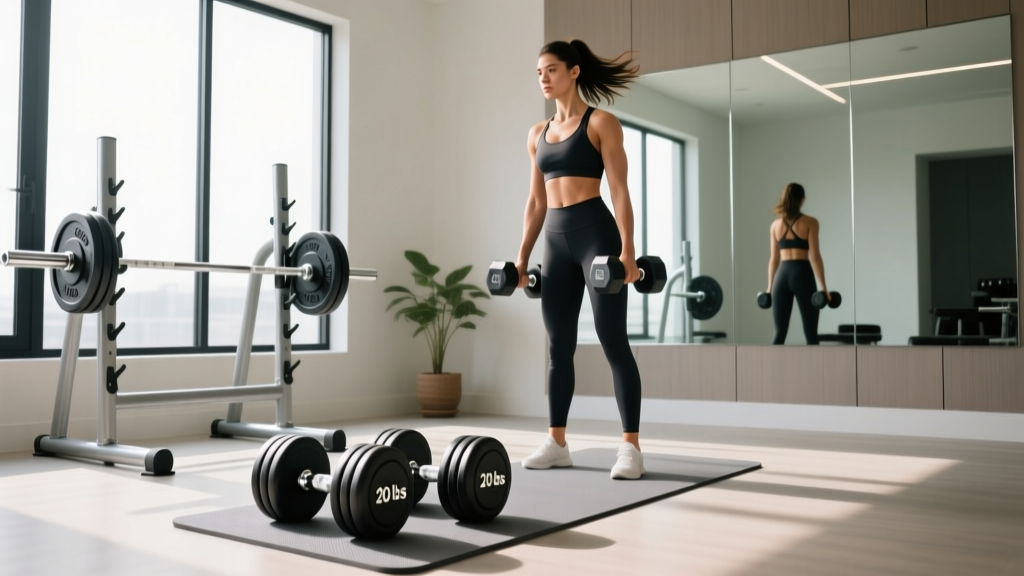
Best Dumbbell Exercises for Women: Barbell Knurling & Weight Mistakes
Transition from the best dumbbell exercises for women to Olympic barbells. Troubleshoot common weight and knurling buying mistakes in our expert guide.

The Plateau: Why the Best Dumbbell Exercises for Women Eventually Fall Short
If you have spent the last year mastering the best dumbbell exercises for women—such as goblet squats, Bulgarian split squats, and dumbbell Romanian deadlifts—you have undoubtedly built a formidable foundation of strength. However, as your neuromuscular adaptations peak, you will inevitably hit a ceiling. Commercial gyms rarely stock dumbbells heavier than 50 to 70 pounds, and home adjustable dumbbells typically max out at 52.5 or 90 pounds. To continue progressing in posterior chain and compound movements, transitioning to an Olympic barbell is non-negotiable.
Yet, this transition is where many lifters make critical purchasing errors. Buying an Olympic barbell is not as simple as picking up a standard 45-pound metal stick. Misunderstanding barbell weight, shaft diameter, and knurling patterns can lead to joint pain, torn calluses, and a barbell that permanently bends under load. Below, we troubleshoot the most common mistakes lifters make when upgrading from dumbbells to barbells, ensuring your investment matches your biomechanics and training goals.
⚠️ Troubleshooting Alert: If your thumbs are going numb or your wrists ache during hook grips and cleans, you are likely using a 20kg men's bar with a 28.5mm shaft. This is the #1 mechanical mismatch for lifters transitioning from dumbbells.Mistake #1: Ignoring Bar Weight and Shaft Diameter
The most frequent error when upgrading from the best dumbbell exercises for women to barbell training is assuming all Olympic barbells weigh 45 pounds (20kg) and share the same dimensions. In reality, Olympic barbells are strictly categorized by weight and shaft diameter, which drastically alters grip mechanics.
The 15kg vs. 20kg Dilemma
A standard men's Olympic bar weighs 20kg (44 lbs) and features a 28mm to 28.5mm shaft diameter. A women's Olympic bar weighs 15kg (33 lbs) and features a 25mm shaft diameter. While a 5-pound weight difference seems negligible, the 3mm to 3.5mm difference in shaft thickness is massive for hand biomechanics.
- The 28.5mm Shaft (Men's Standard): Requires greater thumb mobility to lock the fingers over the thumb (hook grip). Lifters with smaller hands often experience thumb bruising, wrist extension strain, and premature grip fatigue on heavy deadlifts.
- The 25mm Shaft (Women's Standard): Allows for a secure, full-wrap grip without excessive thumb compression. It provides superior bar control during dynamic movements like snatches and cleans, reducing the torque placed on the distal radioulnar joint.
Expert Fix: If your hand span (measured from the tip of your thumb to the tip of your pinky when fully splayed) is under 8.5 inches, a 15kg bar with a 25mm shaft is mandatory for safe, pain-free heavy lifting.
Mistake #2: Misinterpreting Knurl Patterns
Knurling is the crosshatched pattern machined into the steel shaft to provide friction. According to comprehensive equipment analyses by BarBend's barbell knurling guide, the geometry of the knurl dictates how the bar interacts with your skin. Buying the wrong pattern will either cause the bar to slip during heavy pulls or tear your hands to shreds during high-volume hypertrophy work.
The Three Knurl Geometries
- Hill (Passive): The peaks of the knurl are rounded off. Common on cheap, sub-$150 Amazon barbells. Troubleshooting: Avoid these. They offer zero grip security for heavy deadlifts, forcing you to over-grip and strain your forearms.
- Mountain (Aggressive): Sharp, pointed peaks that dig deeply into the skin. Found on dedicated powerlifting bars (e.g., Rogue Ohio Power Bar). Troubleshooting: While excellent for 1-rep max deadlifts, mountain knurl will rip calluses during high-rep dumbbell-style barbell complexes or cleans.
- Volcano (Optimal): The peaks are machined down slightly, creating a crater-like rim that grips the skin without piercing it. This is the gold standard for multi-purpose training.
| Knurl Type | Aggressiveness | Best Application | Example Model |
|---|---|---|---|
| Hill | Low | None (Avoid) | Generic Import Bars |
| Volcano | Medium-High | Olympic Lifts, Hypertrophy, General Strength | Rogue 15KG Bella Bar |
| Mountain | Very High | Low-Rep Powerlifting (Squat/Deadlift) | Eleiko IPF Powerlift Bar |
Mistake #3: Overlooking Tensile Strength and Yield
When transitioning from dumbbells, lifters often assume any steel bar can hold heavy weight. However, budget barbells (often priced between $100 and $150) utilize low-grade steel with a tensile strength rating below 165,000 PSI. When loaded with 200+ pounds, these bars will experience plastic deformation—meaning they bend and do not return to their original straight shape.
The 190k PSI Rule: Never purchase an Olympic barbell with a tensile strength lower than 190,000 PSI. High-quality multi-purpose bars typically sit between 190k and 215k PSI, providing enough 'whip' (elastic deformation) to aid in the clean and jerk, but enough rigidity to remain perfectly straight during heavy back squats.
💡 Pro-Tip for Testing Whip: If you already own a barbell and suspect it has yielded, roll it across a flat concrete floor or a standard 4x8 sheet of plywood. If the center of the bar lifts off the ground or wobbles rhythmically, the steel has permanently deformed and the bar is compromised.Mistake #4: Choosing the Wrong Sleeve Rotation System
Dumbbells are a single, solid piece of metal. Barbells, however, feature rotating sleeves to dissipate the rotational kinetic energy generated during Olympic lifts. If the sleeves do not spin independently of the shaft, the torque transfers directly into your wrists and elbows, leading to severe tendonitis.
- Bushings (Bronze/Composite): Provide a slower, more controlled spin. Ideal for powerlifting and general strength training where the bar is moved deliberately.
- Needle Bearings: Provide a lightning-fast, frictionless spin. Mandatory for high-level Olympic weightlifting (snatches, cleans) but can feel overly slippery during heavy bench presses.
For 90% of lifters transitioning from dumbbells to general barbell strength, a high-quality bronze bushing system is the correct, low-maintenance choice.
2026 Troubleshooting Matrix: Fixing Your Purchase
To synthesize the data above, here is a troubleshooting matrix to help you select the exact barbell specification based on your primary training focus, avoiding the common pitfalls outlined by experts at Garage Gym Reviews.
| Your Profile | Required Weight/Shaft | Ideal Knurl | Recommended 2026 Model | Est. Price |
|---|---|---|---|---|
| Small Hands / Olympic Focus | 15kg / 25mm | Volcano | Rogue 15KG Bella Bar (Cerakote) | $235 |
| Powerlifting / Heavy Pulls | 20kg / 29mm | Mountain | Rep Fitness Deep Dish Power Bar | $320 |
| General Fitness / Hypertrophy | 20kg / 28.5mm | Volcano | American Barbell Ohio Equivalent | $295 |
Maintenance Troubleshooting: Preventing Rust and Knurl Degradation
Even the best barbell will fail if maintained improperly. A common mistake is using stiff steel wire brushes to clean chalk out of the knurl. Steel brushes will strip the protective zinc or cerakote finish, exposing raw steel to ambient humidity and guaranteeing rust within weeks.
The Correct Maintenance Protocol: Once a month, spray the shaft with a light coat of 3-IN-ONE oil or mineral oil. Let it sit for 5 minutes to loosen embedded chalk and dead skin. Scrub vigorously with a brass bristle brush (brass is softer than steel and zinc, preserving the finish). Wipe clean with a microfiber cloth.
Frequently Asked Questions
Can I just use a 20kg bar if I have small hands?
You can, but you will likely need to abandon the hook grip for cleans and snatches, relying instead on a closed grip with lifting straps. For heavy deadlifts, a 28.5mm shaft will cause premature grip failure compared to a 25mm shaft.
Is a center knurl necessary?
If your training heavily involves back squats and front squats, a center knurl provides vital friction against your spine or collarbone to prevent the bar from sliding. However, if you primarily do deadlifts, presses, and Olympic lifts, a center knurl will scrape your chest and shins. Most modern multi-purpose bars feature a mild, passive center knurl to offer a compromise.
Final Verdict
Moving beyond the best dumbbell exercises for women requires a strategic approach to equipment. By prioritizing a 15kg shaft diameter for optimal grip mechanics, selecting a volcano knurl pattern to balance friction and skin preservation, and demanding a minimum of 190,000 PSI tensile strength, you will secure a barbell that accelerates your strength curve rather than hindering it. Stop settling for generic steel; match your barbell to your biomechanics.
More gear to consider
All reviews
Rubber Hex vs Urethane: Value Analysis for the Best Workout with Dumbbells for Arms

Dumbbell Tenement Definition & Gym Setup: Olympic vs Standard Plates
Neoprene Female Dumbbells: Complete Home Gym Setup

Bumper vs Iron Plates: Best for Dumbbell Diagonal Lift?

Overhead Press Bar vs Dumbbell: Olympic Knurling Guide
