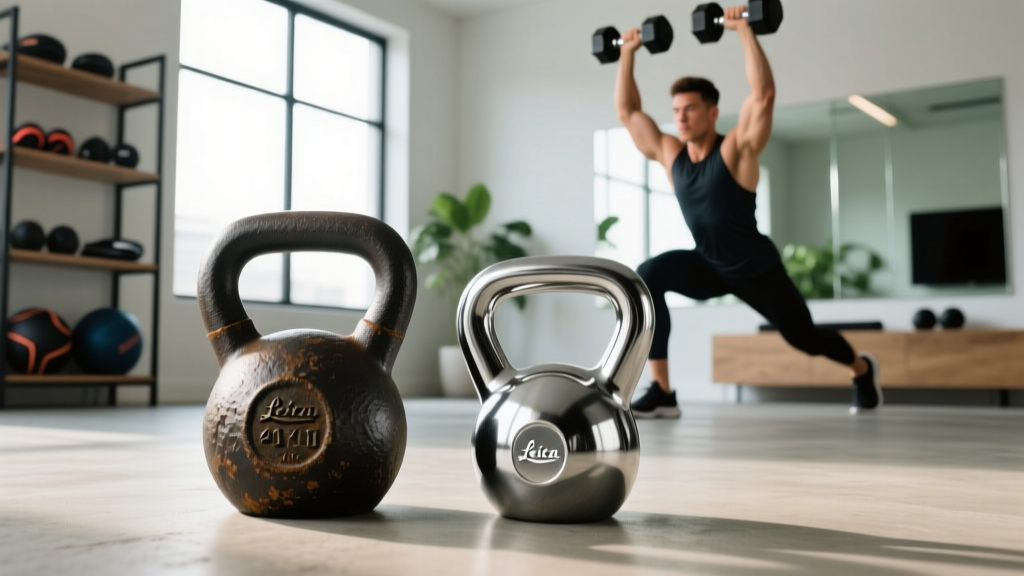
Iron vs Bumper Plates: Beyond How to Exercise Triceps With Dumbbells
Upgrading from learning how to exercise triceps with dumbbells to barbells? Compare bumper plate vs iron plate costs, value, and 2026 pricing.

The Home Gym Progression: From Isolation to Heavy Loads
When you first start building a home gym, the financial barrier to entry seems remarkably low. You might spend your initial weeks researching how to exercise triceps with dumbbells, perfecting your overhead extensions, and executing skull crushers on a basic flat bench. A high-quality pair of adjustable dumbbells and a sturdy bench might cost you between $350 and $500 in the 2026 market. At this stage, your budget is focused on isolation work, joint health, and light hypertrophy.
However, the moment you decide to transition to heavy barbell compound movements—squats, deadlifts, cleans, and snatches—the financial calculus changes dramatically. You are no longer buying $30 neoprene dumbbells; you are buying hundreds of pounds of cast iron or vulcanized rubber. The debate between bumper plates and cast iron plates is the single most critical budget decision a home gym owner will make. In this comprehensive value analysis, we break down the exact cost-per-pound, failure modes, and long-term ROI of both plate types to help you maximize your equipment budget.
Cast Iron Plates: The Budget Purist's Choice
Cast iron plates are the traditional standard for powerlifting, bodybuilding, and general strength training. Manufactured from solid cast iron and typically finished with a baked enamel or matte powder coat, these plates offer unmatched density and cost-efficiency.
2026 Pricing and Value Metrics
As of 2026, the market rate for high-quality cast iron plates hovers between $1.50 and $2.25 per pound. Budget brands like Titan Fitness or CAP Barbell often sell 45-pound plates for around $70 to $85 each. Premium machined iron plates, such as the Rogue Deep Dish or Urethane-coated variants, can push closer to $2.50 per pound, but the raw cast iron remains the undisputed king of budget-friendly mass.
Iron Plate Pros & Cons
- Pro: Unbeatable cost-per-pound ratio.
- Pro: Thinner profile allows for maximum sleeve capacity (easily loading 600+ lbs on a standard Olympic bar).
- Pro: Zero 'dead bounce' or unpredictable recoil when dropped.
- Con: Will crack, chip, or shatter if dropped on unprotected concrete.
- Con: Extremely loud; unsuitable for shared-wall garages or apartments.
- Con: Prone to surface rust if stored in unclimate-controlled, humid environments.
Bumper Plates: Paying for Protection and Performance
Bumper plates are constructed with a steel inner hub encased in dense rubber. They are designed specifically to be dropped from overhead or shoulder height without destroying the barbell, the floor, or the plate itself. According to guidelines reviewed by experts at BarBend, bumpers are non-negotiable for Olympic weightlifting and high-rep CrossFit-style metcons.
Material Grades and Pricing Tiers
Not all rubber is created equal. The 2026 bumper plate market is segmented into three distinct tiers:
- Crumb Rubber (Recycled): The cheapest option ($2.50 - $3.50/lb). These are thick, bouncy, and smell strongly of tires. They degrade faster and are not recommended for precise lifting.
- Virgin Rubber: The sweet spot for most home gyms ($3.50 - $5.00/lb). The Rogue Echo Bumper Plates are the industry benchmark here, featuring a high durometer (Shore A 85-90) rating that ensures a 'dead bounce' and high durability.
- Urethane / Competition: Premium tier ($6.00 - $10.00+/lb). Used in sanctioned meets, featuring calibrated weights and minimal thickness.
Expert Insight: When evaluating virgin rubber bumpers, always check the durometer rating. A rating below 80 Shore A means the plate will bounce dangerously off the floor when dropped from a deadlift lockout, posing a severe safety hazard to your shins and knees.
2026 Cost & Value Comparison Matrix
To visualize the budget breakdown, here is a direct comparison based on outfitting a standard home gym with 250 pounds of weight (excluding the barbell).
| Feature | Cast Iron Plates | Virgin Rubber Bumpers |
|---|---|---|
| Average Cost Per Pound | $1.60 - $2.25 | $3.75 - $5.00 |
| Cost for 250 lbs (Approx) | $400 - $562 | $937 - $1,250 |
| Thickness of 45lb Plate | ~1.5 inches | ~2.75 inches |
| Drop Tolerance | Low (Requires thick mats) | High (Safe for rubber flooring) |
| Primary Use Case | Powerlifting, Bodybuilding | Olympic Lifting, CrossFit |
| Maintenance Required | Wire brushing for rust prevention | Wiping down, avoiding UV sunlight |
The Hybrid Strategy: Maximizing ROI in Your Rack
You do not have to choose just one. The smartest budget allocation for a well-rounded home gym in 2026 is the Hybrid Plate Method. This approach bridges the gap between the isolation work you started with (like learning how to exercise triceps with dumbbells) and the heavy, dynamic barbell work you are progressing toward.
How to Execute the Hybrid Method
Step 1: Buy Cast Iron for your heavy, non-dropped loads. Purchase your 45lb and 35lb plates in iron. You rarely drop a heavy 400lb back squat or a slow-controlled deadlift from the lockout. Iron saves you hundreds of dollars here and saves crucial barbell sleeve space.
Step 2: Buy Virgin Rubber Bumpers for your 10lb, 15lb, and 25lb plates. These are the weights you will use for power cleans, snatches, and jerks—movements where the barbell is routinely dropped from overhead. Furthermore, thin iron 10lb plates are notorious for bending or cracking if dropped; rubber bumpers solve this failure mode entirely.
Hidden Costs and Real-World Failure Modes
When calculating your budget, the sticker price of the plates is only half the equation. You must factor in the secondary costs associated with your choice of iron or rubber.
Flooring and Infrastructure
If you opt for cast iron, you must invest in heavy-duty flooring. Dropping iron plates on bare concrete will result in catastrophic failure—the concrete will crack, and the iron will shatter. You will need to budget $150 to $300 for 3/4-inch thick horse stall mats to absorb the kinetic energy. Bumper plates, while safer, still require at least standard 3/8-inch interlocking rubber tiles to protect your concrete from the steel barbell sleeves.
Barbell Sleeve Capacity
A standard Olympic barbell has roughly 16.3 inches of loadable sleeve space. Because bumper plates are nearly twice as thick as iron plates, you will max out your sleeve capacity much faster. If your goal is to deadlift 500+ pounds, thick crumb rubber bumpers simply will not fit on the bar. Iron plates allow you to load 6 to 7 plates per side, making them mandatory for elite-level strength progressions.
Frequently Asked Questions
Can I mix iron and bumper plates on the same barbell?
Yes, but with a strict rule: always put the bumper plates on the inside, closest to the barbell collar. The bumper plate acts as a shock absorber. If you drop the bar and the iron plate is on the outside, the iron will hit the floor first, transferring all the shock into the plate (which may crack) and the barbell sleeve (which may bend).
Are urethane plates worth the extra cost over rubber?
For 95% of home gym owners, no. Urethane is virtually indestructible, odorless, and highly resistant to UV and moisture damage, but it costs upwards of $7.00 per pound. Unless you are running a commercial facility where plates are abused by hundreds of members daily, high-quality virgin rubber (like Rogue Echo or Hi-Temp) provides the best long-term ROI.
Do I need bumper plates if I only do powerlifting?
No. If your training consists strictly of squats, bench presses, and controlled deadlifts (where you lower the bar rather than drop it), cast iron is the superior choice. It is cheaper, thinner, and provides a more satisfying tactile feedback when clanking together during heavy sets.
More gear to consider
All reviews
Best Loadable Handles to Replace 45 lbs Dumbbells (2026)
Rubber Hex vs Urethane: Maintenance & Dumbbell Press Muscles Worked

Power Rack, Squat Rack, or Stand for the Dumbbell Hang Power Clean?
Gym Setup: Barbell Knurling & Dumbbell Goblet Squat Form

Rogue Fitness Rubber Hex Dumbbells: Rack Storage & Care Guide