
Loadable Dumbbell Maintenance for Lateral Dumbbell Curls
Master loadable dumbbell maintenance to ensure safe, rattle-free lateral dumbbell curls. Expert tips on spinlock care, plate rust prevention, and longevity.

The Hidden Equipment Toll of Lateral Dumbbell Curls
When building a comprehensive home gym in 2026, loadable dumbbells with interchangeable plates remain a staple for their cost-efficiency and infinite scalability. However, specific isolation movements place unique mechanical stresses on this equipment. The lateral dumbbell curl—an advanced hybrid movement combining sagittal elbow flexion with frontal/lateral shoulder abduction—is a prime example. Unlike a standard bicep curl, the lateral deviation introduces severe off-axis torque and shear force against the dumbbell handle and collar system.
If you are using a plate-loaded setup, such as the Rogue Loadable Dumbbell Handles or a traditional 1-inch Yes4All Spinlock Set, poor maintenance doesn't just result in annoying squeaks; it creates a genuine safety hazard. A loosened collar during the abduction phase of a lateral dumbbell curl causes the plates to shift outward. This instantly alters the center of mass, forcing your wrist into sudden ulnar deviation and potentially causing severe sprains or dropped weights.
⚠️ Biomechanical Warning: During lateral dumbbell curls, the leverage multiplier on the collar increases by up to 35% compared to strict curls. Even a 2mm thread slip on a poorly maintained spinlock can result in catastrophic plate migration mid-rep.Collar and Threading Maintenance Matrix
The longevity of your loadable dumbbells hinges entirely on the collar mechanism. Interchangeable plate systems generally fall into three categories, each requiring a distinct maintenance protocol to withstand the multi-planar forces of lateral curls.
| Collar Type | Common Models | Maintenance Frequency | Shear Force Tolerance |
|---|---|---|---|
| 1-Inch Spinlock | Yes4All, CAP Barbell | Weekly (Clean threads) | Low-Medium (Prone to cross-threading) |
| 2-Inch Spring Collar | Rogue, Titan Fitness | Monthly (Check spring tension) | Medium (Can slip on polished sleeves) |
| Lever / HG Collar | Rogue HG 2.0, Lock-Jaw | Bi-Annually (Lubricate hinge) | Very High (Ideal for lateral curls) |
Restoring Spinlock Threads
For standard 1-inch loadable handles, the steel threads are highly susceptible to micro-rust and chalk buildup. According to the equipment care guidelines detailed by BarBend's maintenance experts, neglecting knurled and threaded steel leads to irreversible pitting. To restore spinlock threads:
- Dry Brush: Use a stiff nylon brush to remove chalk dust and skin cells from the thread grooves.
- Chemical Clean: Apply a light degreaser or white vinegar to a microfiber cloth and wipe the threads. Never soak the handle, as moisture will trap inside the steel bore.
- Lubrication: Apply exactly two drops of 3-IN-ONE oil or a specialized barbell oil (like Rogue's proprietary sleeve oil) to the threads. Spin the nut on and off three times to distribute the oil evenly.
Interchangeable Plate Upkeep: Stopping the 'Clank'
The mind-muscle connection required for lateral dumbbell curls is easily shattered by the 'clank' of loose iron plates. Furthermore, plate degradation alters the exact weight distribution, which is critical when performing strict, controlled isolation work.
Cast Iron vs. Rubber vs. Urethane Plates
Not all interchangeable plates age equally. As highlighted in a comprehensive 2025 equipment breakdown by Garage Gym Reviews, the material of your plates dictates your maintenance routine:
- Raw Cast Iron: Requires monthly 'seasoning' with a light coat of mineral oil to prevent oxidation. If rust appears, use bronze wool (never steel wool, which leaves behind iron particles that accelerate rust) to gently buff the surface.
- Rubber-Coated Plates: Prone to UV and ozone degradation. If your home gym receives direct sunlight, the rubber will dry out, crack, and eventually crumble. Wipe these down monthly with a water-based vinyl protectant (like 303 Aerospace Protectant) to maintain elasticity.
- Virgin Urethane: The premium choice for 2026 home gyms. Urethane is highly resistant to moisture and UV damage, requiring only a simple wipe-down with a damp microfiber cloth and mild dish soap.
If you are using 2-inch Olympic loadable handles with cast iron plates for lateral dumbbell curls, slide a heavy-duty rubber O-ring or a specialized 'silent collar' pad onto the sleeve before loading the plates. This compresses the plates together, eliminating the metallic clank and reducing shear friction against the steel sleeve during rotational movements.
Sleeve Scoring and Tension Loss
When performing lateral dumbbell curls, the plates exert a rotational drag against the dumbbell sleeve. Over time, this friction creates microscopic scoring on the steel sleeve. If you are using spring collars on a heavily scored sleeve, the collar's grip will degrade, leading to dangerous slippage during the eccentric (lowering) phase of the curl.
Inspection Protocol: Run your fingernail lightly along the length of the loadable handle's sleeve. If you feel deep grooves or burrs, the sleeve needs polishing. Use 600-grit sandpaper wrapped around the sleeve, rotating the handle to smooth out the burrs without removing the factory chrome or zinc coating. Afterward, wipe clean and apply a micro-thin layer of silicone spray to reduce future friction.
Environmental Controls and Storage Solutions
The environment in which you store your loadable dumbbells and interchangeable plates is just as critical as the physical maintenance. High humidity is the enemy of steel threads and cast iron.
'A home gym kept in a garage or basement without climate control can experience humidity swings of up to 40% in a single week. This condensation cycle will flash-rust unprotected spinlock threads in under 72 hours.'
Optimal Storage Framework
To maximize the lifespan of your plate-loaded dumbbell sets, implement the following storage hierarchy:
- Elevated Racking: Never store loaded dumbbells on the floor. Concrete floors wick moisture directly into the bottom plates. Use a dedicated tiered dumbbell rack or wall-mounted plate tree.
- Desiccant Integration: If you store your handles and plates in a closed cabinet or weight case, toss in 3-4 large silica gel packets (rechargeable via microwave) to absorb ambient moisture.
- Unloaded Resting: Never leave spinlock handles fully tightened when not in use. The constant tension on the steel threads can cause 'thread creep' and warp the nut over months of disuse. Leave the nuts threaded completely off the handle when stored.
Upgrading for Safety: When to Retire Your Gear
Maintenance can only go so far. If you are consistently performing high-torque isolation movements like lateral dumbbell curls, you must know when your equipment has reached the end of its lifecycle. Retire your loadable handles immediately if you notice:
- Stripped Thread Peaks: If the spinlock nut can be wiggled laterally when fully tightened, the thread peaks are sheared. This is a critical failure point.
- Sleeve Bend: Roll the bare handle on a flat glass or granite surface. Any wobble indicates a bent sleeve, usually caused by dropping the dumbbell with heavy plates loaded. A bent sleeve will destroy the inner diameter of your interchangeable plates.
- Spring Collar Fatigue: If a 2-inch spring collar can be removed by hand without depressing the release tabs, the internal torsion spring has fatigued and must be replaced.
By treating your loadable dumbbells with the same meticulous care as a precision Olympic barbell, you ensure that every lateral dumbbell curl is executed with perfect balance, zero distraction, and maximum safety. For more insights on optimizing your free weight setup, explore our comprehensive guides on premium loadable handle specifications and home gym environmental controls.
More gear to consider
All reviews
Best Loadable Dumbbells 2026 & Seated Shoulder Press GIF Form Guide

Bumper Plate vs Iron Plate Comparison & Weider Dumbbells Review
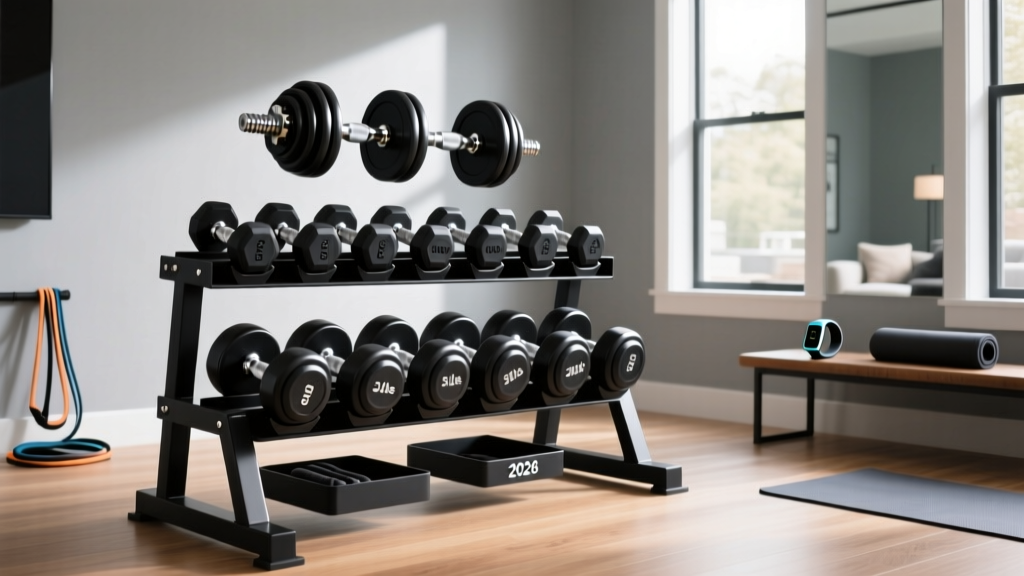
Dumbbell Man Maker Setup: 2026 Adjustable Dumbbell Comparison
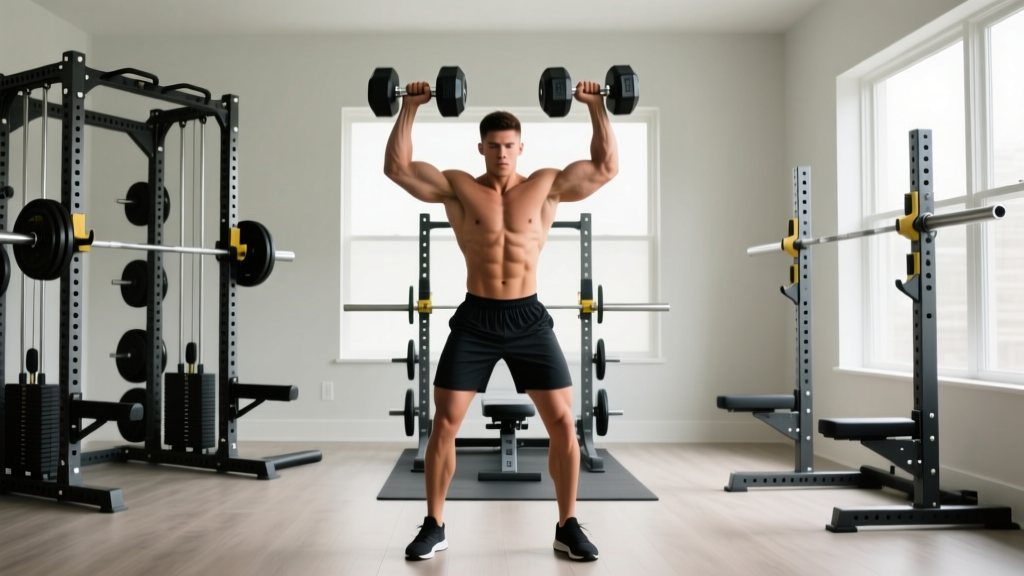
Dumbbell Push Jerk Setup: Power Rack vs Squat Rack vs Squat Stand

Cast Iron vs Competition Kettlebells: Sumo Squat with Dumbbells 2026
