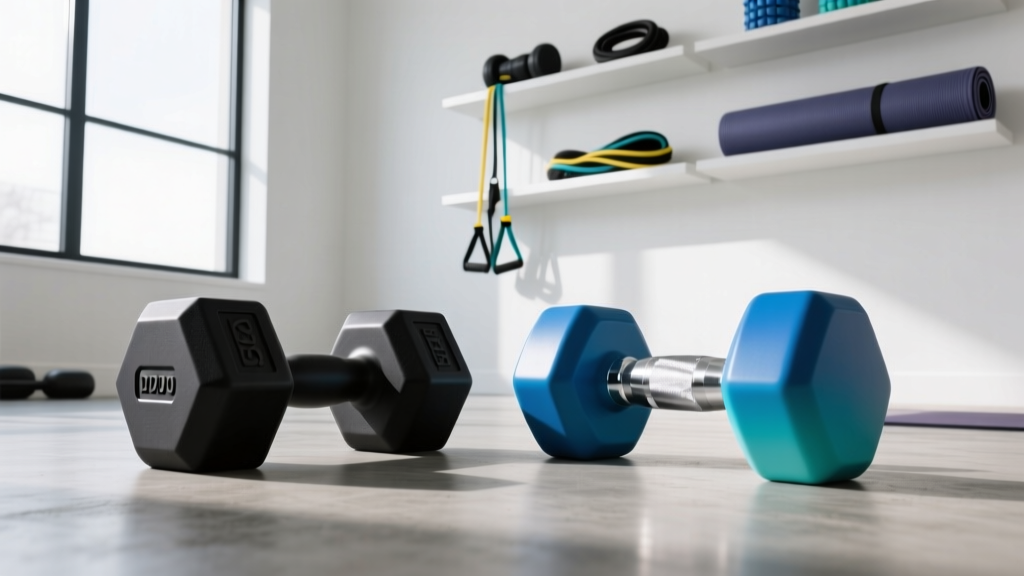
4 Day Dumbbell Workout Split: Cast Iron vs Competition Kettlebells
Analyze cast iron vs competition kettlebells to upgrade your 4 day dumbbell workout split. Deep budget breakdown, pricing, and programming tips.

The Hybrid Approach: Upgrading Your 4 Day Dumbbell Workout Split
For lifters committed to a 4 day dumbbell workout split, adjustable or fixed dumbbells are the undisputed kings of hypertrophy and unilateral pressing. However, traditional dumbbells fall short when programming high-repetition ballistic hinge movements, offset core loading, and complex flow sequences. This is where the kettlebell bridges the gap. But as you look to add a bell to your home gym arsenal in 2026, you are immediately faced with a critical purchasing decision: do you invest in traditional cast iron or precision-machined competition kettlebells?
Integrating kettlebells into a standard upper/lower or push/pull dumbbell split requires understanding the biomechanical differences between bell types. According to the American Council on Exercise (ACE), kettlebell training uniquely recruits the posterior chain and stabilizer muscles due to the displaced center of mass. Yet, not all kettlebells deliver this stimulus equally. This guide breaks down the exact budget, metallurgical differences, and long-term value of cast iron versus competition bells specifically for lifters supplementing a dumbbell-centric routine.
Metallurgy and Mechanics: Cast Iron vs. Competition Steel
To evaluate value, we must first look past the paint and examine the physical geometry. The structural differences between a standard cast iron bell and a competition steel bell dictate how they perform in specific exercises.
Handle Geometry and Window Clearance
Cast iron kettlebells are typically poured into molds where the handle thickness and the 'window' (the space between the handle and the bell's body) scale up as the weight increases. A 12kg cast iron bell might feature a 30mm handle with ample window space for two-handed swings. However, a 32kg cast iron bell often balloons to a 38mm+ handle with a cramped window, making two-handed ballistics nearly impossible and heavily taxing your grip during high-rep sets.
Competition kettlebells, governed by international sport standards, maintain identical dimensions regardless of weight. Every bell from 8kg to 32kg shares a 210mm height, 210mm width, and a strict 28mm (or 33mm for specific heavy sport variants) handle diameter. As noted by StrongFirst instructors, this uniformity ensures that your wrist placement during cleans and snatches remains identical whether you are warming up with a 16kg or maxing out with a 24kg, drastically reducing forearm bruising and grip fatigue.
Base Machining and Stability
If your 4 day dumbbell workout split includes renegade rows, deficit push-ups, or goblet squats, the base of the kettlebell matters. Premium cast iron bells (like those from Rogue or Rep Fitness) feature machined flat bases. Budget cast iron bells often have rounded or uneven pour-seams, making them unstable for floor-based exercises. Competition bells are universally machined flat and feature a slightly wider, more stable footprint relative to their uniform size.
Warning on Powder Coating: In the current 2026 market, many budget brands use thick powder coats on cast iron bells to hide poor casting quality. This fills in the handle knurling and creates a slippery surface when chalk or sweat is introduced. Always prioritize e-coated or bare machined cast iron handles for secure grip during heavy dumbbell-split accessory work.2026 Budget Breakdown: Cost Per Kilogram and Long-Term Value
When analyzing the budget, we must look at the cost-to-utility ratio. Competition bells command a premium due to the CNC machining required to hollow out the steel shell and maintain uniform dimensions. Cast iron is cheaper to produce but varies wildly in quality.
| Metric | Premium Cast Iron (e.g., Rogue, Onnit) | Competition Steel (e.g., Kettlebell Kings, Eleiko) |
|---|---|---|
| Average Price (16kg / 35lb) | $75 - $95 | $120 - $150 |
| Average Price (24kg / 53lb) | $110 - $140 | $160 - $195 |
| Cost Per Pound (Approx) | $2.20 - $3.00 / lb | $3.80 - $5.50 / lb |
| Dimensional Consistency | Variable (Scales with weight) | 100% Uniform (210mm x 210mm) |
| Handle Thickness | 30mm - 40mm+ | Strict 28mm or 33mm |
| Best Use Case | Grinds, Presses, Goblet Squats | Snatches, Cleans, High-Rep Ballistics |
The Value Verdict for Dumbbell Lifters
If your primary goal is to supplement heavy pressing and squatting in your 4 day dumbbell workout split, cast iron offers the highest ROI. A $130 investment in a single 24kg cast iron bell will provide all the resistance you need for heavy goblet squats, single-arm floor presses, and weighted carries.
However, if you are utilizing the kettlebell to introduce sport-style conditioning, high-rep snatches, or complex flows to your conditioning days, the competition bell is a mandatory investment. The $60 premium saves your wrists from the repetitive impact of a thickening cast-iron handle and ensures your motor patterns do not have to adjust as you progress in weight.
Programming Kettlebells into Your 4 Day Dumbbell Workout Split
According to the ExRx Exercise Directory, kettlebells excel in multi-planar movements that dumbbells struggle to replicate safely at high velocities. Here is how to seamlessly integrate your new bell into a standard 4-day upper/lower split without overtaxing your central nervous system.
- Day 1: Upper Push (Dumbbell Focus)
Use the kettlebell for bottoms-up presses and halos. The offset center of mass of the KB forces intense rotator cuff activation, pre-habbing your shoulders for heavy dumbbell bench presses. - Day 2: Lower Pull (Posterior Chain)
Replace traditional dumbbell RDLs with heavy kettlebell swings. The ballistic nature of the swing builds explosive hip extension that translates directly to heavier dumbbell deadlifts and lunges. - Day 3: Upper Pull (Back & Biceps)
Utilize the kettlebell for single-arm rows and tactical pull-ups. The thicker handle of a cast iron bell here acts as a natural grip trainer, making your dumbbell rows feel significantly easier. - Day 4: Lower Push (Quads & Calves)
Implement heavy kettlebell goblet squats and cossack squats. The anterior load of the kettlebell forces an upright torso, targeting the quads and thoracic extensors differently than dumbbell front squats.
Edge Cases and Failure Modes
'The most common mistake lifters make when transitioning from dumbbells to kettlebells is treating the bell like a dumbbell. You cannot muscle through a kettlebell snatch with a cast iron bell that has a 38mm handle; you will tear your calluses and bruise your forearms within three sets. Respect the geometry of the tool.' — Elite Strength Coaching Standards
Another frequent failure mode is buying adjustable kettlebells to save money. While adjustable dumbbells are a staple of the home gym, adjustable kettlebells (which use pins or dials) alter the center of mass and introduce mechanical fragility. For ballistic movements like swings and snatches, a solid piece of cast iron or steel is non-negotiable for safety.
Frequently Asked Questions
Can I do a 4 day dumbbell workout split using only kettlebells?
While possible, kettlebells are limited in maximum load for pressing movements. Most home gyms cap out at 32kg or 48kg kettlebells, which is insufficient for advanced lifters performing strict presses or floor work. Dumbbells remain superior for pure hypertrophy, while kettlebells serve as the ultimate conditioning and hinge-movement supplement.
Do I need chalk for competition kettlebells?
Yes. Competition bells are typically painted with a smooth, uniform enamel or bare steel finish to allow the bell to slide smoothly against the forearm during cleans and snatches. Without chalk, the 28mm handle will slip during high-rep swings, especially if you are sweating heavily after a dumbbell superset.
What is the best starting weight for a male lifter adding KBs to a DB split?
A 16kg (35lb) bell is the universal starting point for men with prior dumbbell training experience. It is heavy enough to provide a stimulus for goblet squats and single-arm presses, but light enough to safely learn the mechanics of the kettlebell swing and snatch without compromising the lower back.
More gear to consider
All reviews
Olympic Barbell Guide: Weight, Knurling & Seated Dumbbell Hammer Curl
Power Rack vs Squat Stand: Best Rig for Your Dumbbell Back Workout

EZ Curl Bar vs Straight Bar: Budget Guide & Dumbbell Rows on Bench

Cast Iron vs Competition Kettlebells & Walking with Dumbbells in Hands
Dumbbell Snatch Muscles Worked: Beginner Guide for Neoprene Weights