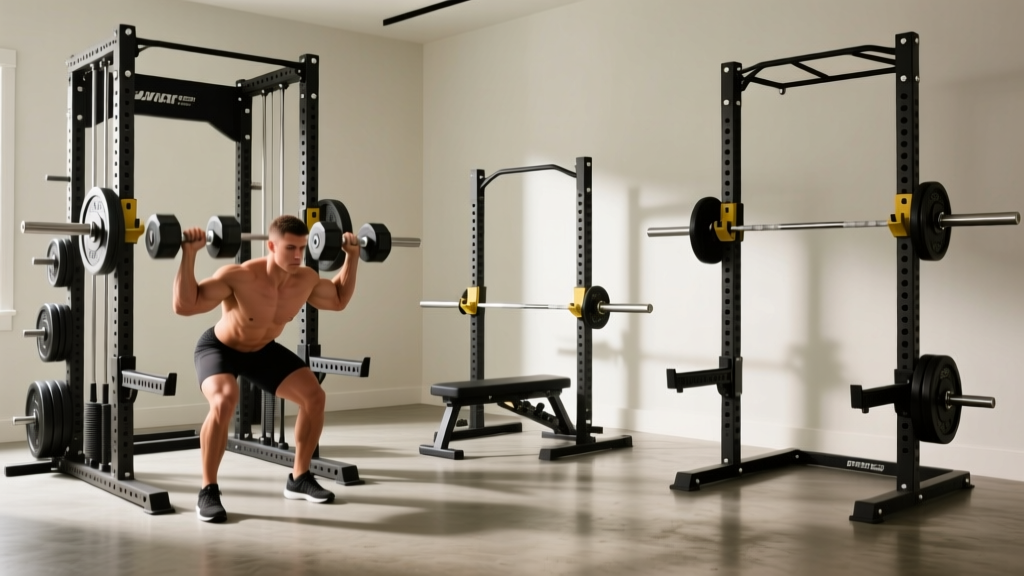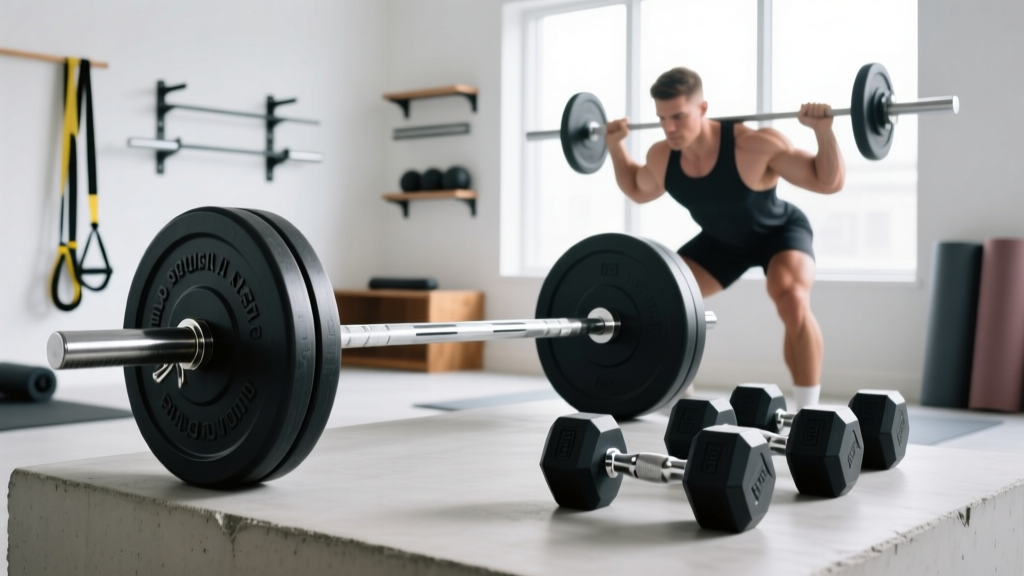
Barbell Knurling Guide & Benefits of Dumbbell Shoulder Press
Master Olympic barbell weight and knurling specs for your 2026 home gym, plus a biomechanical breakdown of barbell vs. dumbbell shoulder pressing.

2026 Buyer's Quick-Start Summary
Building a complete overhead pressing arsenal requires understanding both your primary implement (the barbell) and your supplementary tools (dumbbells). This guide decodes Olympic barbell tensile strength, shaft diameters, and knurling profiles, while exploring the biomechanical advantages of integrating dumbbell variations into your hypertrophy and mobility blocks.
The Foundation of Overhead Strength: Selecting Your Barbell
The barbell remains the undisputed king of absolute load progression. When outfitting a home or commercial gym in 2026, the sheer volume of barbell options can paralyze even seasoned lifters. While the squat and deadlift often dominate purchasing discussions, the strict overhead press (OHP) places unique demands on a barbell's shaft diameter, whip, and knurling pattern. A bar that feels perfect in the rack pull might tear up your collarbones during a heavy clean and jerk or cause grip fatigue during high-volume pressing blocks.
To build a resilient shoulder girdle and maximize central nervous system (CNS) adaptation, you must match your barbell's engineering to your biomechanics. Furthermore, elite programming requires knowing exactly when to step away from the barbell to leverage the unique benefits of dumbbell shoulder press movements for joint longevity and unilateral development.
Decoding Barbell Weight, Whip, and Tensile Strength
The standard men's Olympic barbell weighs 20kg (44 lbs) and measures 28mm to 29mm in shaft diameter. However, the internal metallurgy dictates how the bar behaves under the stress of a heavy military press.
The PSI Threshold: Tensile vs. Yield Strength
Tensile strength measures the maximum stress a barbell can withstand before fracturing, measured in pounds per square inch (PSI). Yield strength measures the point at which the bar bends and fails to return to its original straight form. For overhead pressing and general strength work, you want a high tensile strength to ensure longevity, but a moderate whip (flex) to aid in the initial drive off the chest.
- Under 165,000 PSI: Avoid. These bars will permanently bend if dropped or loaded heavily over time.
- 190,000 PSI (The Sweet Spot): Ideal for multi-purpose bars. Offers enough stiffness for heavy overhead presses but retains a slight whip for Olympic lifts.
- 215,000+ PSI: Found in elite power bars. Extremely stiff, which is excellent for squats but can feel jarring on the wrists and elbows during strict barbell pressing.
Shaft Diameter and Grip Fatigue
For the overhead press, shaft diameter is critical. A 29mm power bar shaft forces the wrist into excessive extension and taxes the forearm flexors, limiting your ability to generate force through the pressing plane. A 28mm or 28.5mm shaft allows the bar to sit securely in the heel of the palm, directly stacking the radius and ulna bones under the load for optimal force transfer.
The Knurling Matrix: Finding Your Grip
Knurling is the diamond-patterned machining cut into the steel shaft to increase friction. The depth, width, and shape of these cuts drastically alter how the bar feels in your hands, especially when chalk and sweat are introduced during high-volume hypertrophy work.
| Knurl Profile | Geometry | Best Application | Overhead Press Feel |
|---|---|---|---|
| Hill | Shallow valleys, rounded peaks | Beginner / High-Rep Fitness | Slippery; requires excessive grip crushing |
| Mountain | Sharp, aggressive peaks | Deadlifts / Powerlifting | Tears calluses; painful for front rack |
| Volcano | Peaks with a small crater in the center | Multi-Purpose / Oly Lifting | Excellent surface area; grips without tearing |
| Deep Volcano | Pronounced craters, sharp rims | Heavy Squats / Elite Pulling | Aggressive; can irritate collarbones |
Note on Center Knurling: If your primary focus is the strict overhead press and bench press, opt for a bar without a center knurl. Center knurling is designed to grip the back of the shirt during squats, but it will severely abrade the skin on your neck and collarbones during cleans, front squats, and overhead rack positions.
Overhead Pressing: Barbell Mechanics vs. The Benefits of Dumbbell Shoulder Press
While the barbell is unmatched for moving absolute maximum loads and taxing the central nervous system, a well-rounded 2026 training cycle must incorporate unilateral and free-moving implements. Understanding the specific benefits of dumbbell shoulder press variations is crucial for managing shoulder impingement and correcting bilateral deficits.
The Biomechanical Edge of Dumbbells
The barbell locks your hands into a fixed, linear path. For lifters with poor thoracic mobility or narrow acromion spaces, this fixed path can force the humerus into internal rotation at the top of the movement, increasing the risk of subacromial impingement. According to kinesiological data mapped by ExRx, dumbbells allow for a natural, convergent pressing path.
Expert Insight: The convergent path of the dumbbell shoulder press allows the lifter to bring the weights together at the apex of the movement. This aligns the resistance vector directly with the muscle fibers of the anterior deltoid, providing a peak contraction that a fixed-width barbell simply cannot replicate.
Key Advantages of the Dumbbell Variation
- Increased Range of Motion (ROM): Dumbbells allow you to lower the weight past the plane of the chin, stretching the anterior deltoid and upper pec fibers under load, which is highly stimulative for hypertrophy.
- Scapular Freedom: Unlike the barbell, dumbbells permit natural scapular upward rotation and protraction, preserving the health of the rotator cuff and serratus anterior.
- Unilateral Deficit Correction: The American Council on Exercise (ACE) highlights that unilateral pressing forces the core and obliques to work in overdrive to prevent lateral flexion, building a more robust, functional midsection.
2026 Elite Barbell Recommendations
Based on current market pricing, metallurgical consistency, and knurling quality, here are the top multi-purpose and pressing-focused barbells for the year.
| Model | Shaft / PSI | Knurl Profile | 2026 Est. Price |
|---|---|---|---|
| Rogue Ohio Bar (Black Zinc) | 28.5mm / 190k PSI | Volcano (Dual) | $295.00 |
| American Barbell California Bar | 28mm / 190k PSI | Mountain (Mild) | $285.00 |
| Kabuki Strength New Gen Multi | 28.5mm / 200k PSI | Deep Volcano | $389.00 |
| Eleiko Öppen Power Bar | 29mm / 215k+ PSI | Proprietary Mild | $1,150.00 |
Maintenance Protocol for Longevity
Even the most expensive Olympic barbell will degrade if neglected. Sweat is highly corrosive, particularly to bare steel and black zinc finishes. To maintain the integrity of the knurling and prevent oxidation:
- Brush After Every Session: Use a stiff brass brush (never stainless steel, which can strip zinc and cerakote coatings) to remove chalk and dead skin from the knurl valleys.
- Monthly Oiling: Apply a light coat of 3-in-One oil or mineral oil to the shaft and sleeve bushings. Wipe off the excess with a microfiber cloth.
- Climate Control: If your garage gym experiences high humidity, consider investing in a stainless steel or hard chrome-finished barbell, as these materials offer vastly superior corrosion resistance compared to standard zinc.
By carefully selecting a barbell with the correct shaft diameter and knurling profile, and intelligently programming the benefits of dumbbell shoulder press variations to protect your joints, you will build an overhead pressing game that is both immensely strong and structurally bulletproof.
More gear to consider
All reviews
Best Neoprene Dumbbells for a Home Dumbbell Shoulder Routine
Kettlebell Halos vs Dumbbell Arm Circle: Cast Iron & Competition
Racking & Maintaining the Best Chest Workout Dumbbells

Master the 90 Pound Dumbbell Bench Press & EZ vs Straight Bar

Triangle Dumbbells and Olympic vs Standard Weight Plate Mistakes