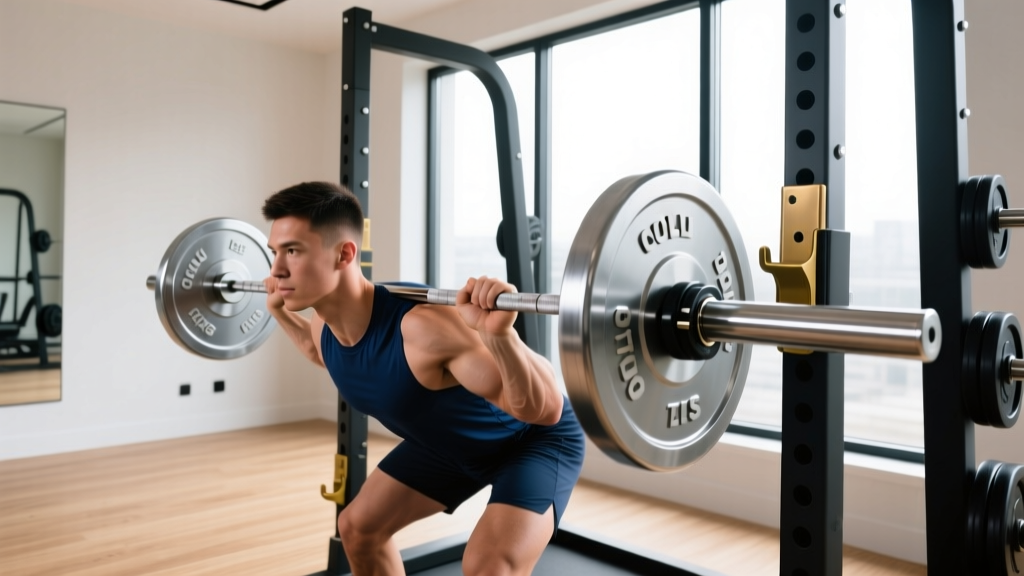
Dumbbell Press Machine Alternatives: Barbell Collar Mistakes
Transitioning from a dumbbell press machine to free weights? Avoid these critical barbell collar mistakes and clamp failures to lift safely.

The Shift from Machines to Free-Weight Multi-Grip Bars
The commercial dumbbell press machine—most notably the Hammer Strength ISO-Lateral or Prime Fitness converging-arc models—has long been a staple for chest hypertrophy. These machines allow for unilateral loading, a natural converging range of motion, and reduced stabilizer fatigue. However, as lifters progress or transition to home gym setups in 2026, many seek free-weight alternatives to replicate this biomechanical stimulus. The most common solution is utilizing specialty barbells, such as Swiss bars, football bars, or multi-grip cambered bars, which allow for neutral or semi-neutral pressing grips.
While these specialty bars successfully mimic the joint-friendly angles of a high-end dumbbell press machine, they introduce a hidden variable that most lifters overlook: sleeve geometry and collar compatibility. A standard Olympic barbell features a 16.3-inch loadable sleeve. In contrast, most multi-grip bars max out at 10.5 to 12 inches of loadable sleeve space. This drastic reduction in real estate completely changes the physics of barbell retention, turning your choice of barbell collar from a minor afterthought into a critical safety component.
⚠️ Critical Safety Warning: Using standard spring collars on short-sleeve specialty bars during heavy unilateral pressing is a leading cause of gym floor accidents. When the collar lacks sufficient surface area to grip the sleeve, the lateral shift of weight plates during a converging press can cause the collar to pop off, resulting in a catastrophic plate dump.Barbell Collar and Clamp Types: The Troubleshooting Matrix
To troubleshoot your equipment setup, you must first understand the mechanical limitations of the four primary collar categories available on the market today. According to comprehensive equipment reviews by Barbend, grip force and material durability vary wildly across these types.
| Collar Type | Avg. Grip Force | Min. Sleeve Req. | Primary Failure Mode | 2026 Price Range |
|---|---|---|---|---|
| Spring (Standard) | 40 - 60 lbs | 14+ inches | Tension loss after ~500 cycles; slips on short sleeves. | $8 - $15 |
| Clamp (Nylon/Aluminum) | 120 - 180 lbs | 8+ inches | Nylon hinge cracking in cold environments (<40°F). | $25 - $45 |
| Lever (Competition) | 250+ lbs | 10+ inches | Over-tightening damages urethane plate inserts. | $85 - $120 |
| Screw / Spinlock | 300+ lbs | Requires threaded sleeve | Thread stripping; incompatible with Olympic bars. | $15 - $30 |
4 Common Mistakes When Mimicking Machine Presses
When athletes attempt to recreate the isolated, heavy-loading environment of a commercial dumbbell press machine using free-weight specialty bars, they frequently make the following collar-related errors.
1. Relying on Spring Collars for Unilateral Multi-Grip Pressing
The converging arc of a machine press allows you to load one side heavily while the other remains light or empty to address muscle imbalances. If you attempt this on a Swiss bar using spring collars, the asymmetrical load creates intense lateral torque. Spring collars only grip the outer millimeter of the sleeve. When the barbell tilts during a unilateral press, the plates slide outward, compressing the spring collar until it yields. The Fix: Always use aluminum clamp collars (like the Lockjaw Pro or Rogue Aluminum Collars) for unilateral work on specialty bars, as their 360-degree internal friction lining prevents lateral migration.
2. Ignoring Sleeve Tolerance Stack-Up
Not all 50mm Olympic sleeves are exactly 50mm. Budget multi-grip bars often feature sleeves machined to 49.6mm or 49.8mm. Conversely, premium urethane grip plates often have inner steel inserts calibrated to exactly 50.2mm. When you pair a slightly undersized sleeve with a rigid clamp collar, the collar fails to make full circumferential contact. This creates a 'micro-wobble' that degrades the collar's locking mechanism over a 12-week training block. Measure your specialty bar's sleeve diameter with digital calipers before purchasing competition lever collars.
3. Temperature-Induced Nylon Clamp Brittleness
Many lifters training in unheated garage gyms during winter months experience sudden clamp failures. The structural integrity of the nylon hinges found on mid-tier clamp collars drops significantly when ambient temperatures fall below 40°F (4°C). The plastic loses its tensile flexibility and snaps under the clamping pressure required to secure heavy bumper plates. If your gym space is not climate-controlled, you must upgrade to forged aluminum collars with steel hinge pins.
4. Overlooking Collar Weight in Micro-Loading
When transitioning from a pin-loaded dumbbell press machine (which allows for 2.5 lb micro-jumps) to free weights, lifters often forget to account for the weight of the collars themselves. Standard spring collars weigh roughly 0.25 lbs each, but heavy-duty aluminum clamps weigh 0.55 lbs each, and Eleiko competition lever collars weigh up to 2.5 lbs each. Failing to calculate this dead weight can inadvertently add 5 lbs to your working set, disrupting progressive overload protocols and increasing joint strain during high-rep hypertrophy work.
Step-by-Step Troubleshooting: Fixing Mid-Set Slippage
If your plates are shifting laterally during your pressing movements, follow this diagnostic protocol to identify and resolve the issue immediately.
- Degrease the Sleeve: Factory anti-oxidant oils and accumulated hand chalk create a lubricated barrier between the steel sleeve and the collar. Wipe the loadable sleeve with 70% isopropyl alcohol and a microfiber cloth before every heavy session.
- Inspect the Knurling Boundary: On many multi-grip bars, the center knurling or the weld joint of the cage bleeds into the smooth sleeve. If a plate or collar sits even 2mm onto the knurling, it will not seat flush, creating a lever arm that pries the collar loose during the eccentric phase of the press.
- Alternate Collar Orientation: If using dual clamp collars for extreme unilateral loads, place the inner collar flush against the plate, and the outer collar facing the opposite direction. This creates opposing friction vectors that lock the plates in place.
- Check Urethane Plate Inserts: Cheap urethane plates often have raised metal lips around the center hole. This prevents the collar from sitting perfectly flush against the plate face. Sand down raised lips or switch to precision-machined cast iron plates for machine-replicate pressing.
Expert Investment Guide: Securing Your Free-Weight Setup
To safely replicate the heavy, controlled stimulus of a top-tier dumbbell press machine using free weights, you must invest in retention hardware that matches the quality of your barbell. Based on current 2026 market availability and durability testing, here are the definitive recommendations:
"The collar is the only thing standing between a successful hypertrophy stimulus and a shattered wrist. Treat your retention hardware with the same scrutiny as your barbell's tensile strength."
- The Everyday Workhorse: Rogue Aluminum Collars ($25 - $30). Machined from 6061 aircraft aluminum with a high-density rubber inner lining, these provide exceptional grip on both standard 16-inch Olympic sleeves and shorter 10-inch Swiss bar sleeves without adding excessive dead weight.
- The Heavy-Duty Unilateral Solution: Lockjaw Pro Olympic Clamps ($35 - $40). Featuring a reinforced glass-nylon resin body and a wider clamping surface area, these are ideal for lifters performing heavy single-arm presses on specialty bars where lateral torque is highest.
- The Competition Standard: Eleiko Training Lever Collars ($90 - $110). If you are using a high-end cambered bar and loading it with calibrated steel plates to mimic the exact weight distribution of a commercial machine, the mechanical advantage of the Eleiko lever system provides over 250 lbs of lateral grip force, ensuring zero plate migration.
Ultimately, leaving the guided rails of a dumbbell press machine to embrace the stabilizing demands of free-weight specialty bars is a fantastic evolution for your training. However, this evolution requires a meticulous approach to equipment safety. By matching the correct collar type to your specific barbell's sleeve geometry and your gym's environmental conditions, you ensure that your focus remains entirely on muscle contraction, rather than equipment failure.
More gear to consider
All reviews
Barbell Collar Comparison & Dumbbell Silicone Coatings

Pec Deck Fly with Dumbbells: Neoprene Grip & Form Troubleshooting
Lat Pull Down Dumbbell Layouts: Cast Iron vs Competition Kettlebells

Bumper Plate vs Iron Plate Comparison and Farmer's Carry Dumbbells
Olympic vs Standard Plates: Shoulder Workouts with Dumbbells Women
