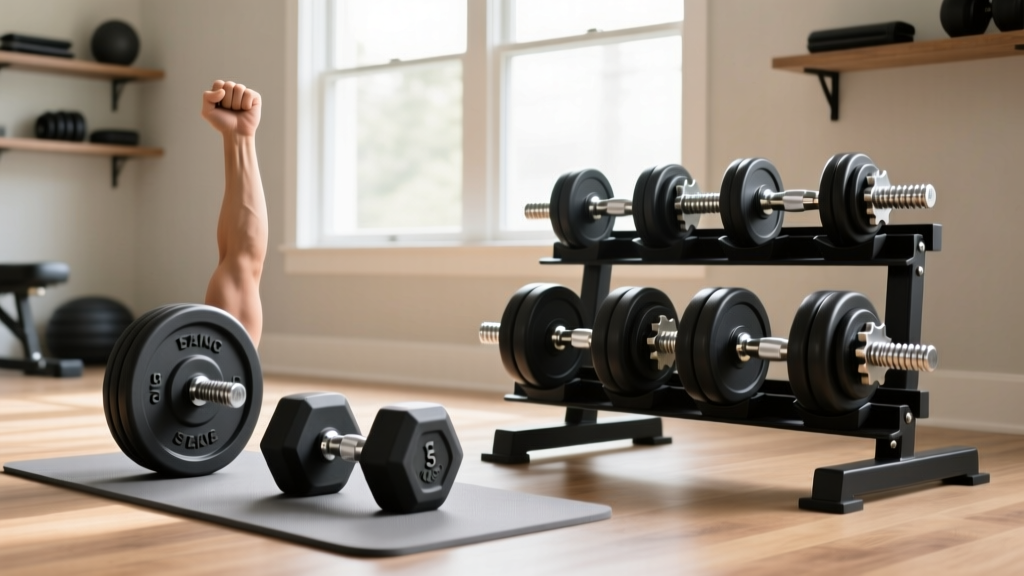
Dumbbell Thrusters Squat to Press: A Beginner's Neoprene Guide
Learn the dumbbell thrusters squat to press with our beginner guide. Discover why neoprene coated dumbbells are the best home gym choice for this move.

The Ultimate Home Gym Movement: Dumbbell Thrusters Squat to Press
When building a functional home gym, few exercises deliver the full-body metabolic and strength benefits of the dumbbell thrusters squat to press. This compound movement seamlessly blends a deep front squat with an overhead press, recruiting the quadriceps, glutes, anterior deltoids, and triceps in one fluid motion. However, for beginners practicing this dynamic movement at home, the type of equipment you choose is just as critical as your form. Specifically, the neoprene coated dumbbell for home use has emerged as the gold standard for beginners tackling high-repetition metabolic conditioning in residential spaces.
In this comprehensive 2026 guide, we will break down exactly why neoprene is the superior coating for home thruster workouts, how to select the right weight and handle diameter, and provide a step-by-step biomechanical guide to mastering the squat to press safely.
Why Neoprene Dumbbells Dominate Home Thruster Workouts
Performing the dumbbell thrusters squat to press requires a secure grip, especially as heart rates elevate and sweat accumulates. Furthermore, home gym environments usually feature hardwood floors, laminate, or standard concrete slabs that are vulnerable to impact damage. Neoprene (a synthetic polychloroprene rubber) offers a unique matrix of benefits that bare cast iron and harder urethane rubbers simply cannot match for the beginner home athlete.
| Feature | Neoprene Coated | Urethane / Hard Rubber | Bare Cast Iron Hex |
|---|---|---|---|
| Grip Texture | Matte, sweat-resistant, tactile | Smooth, can become slippery | Knurled metal, harsh on hands |
| Floor Safety | Excellent (shock absorbing) | Good (but heavy bounce) | Poor (chips floors easily) |
| Noise Dampening | High (ideal for apartments) | Moderate | Low (loud clanking) |
| 2026 Avg Price/lb | $1.60 - $2.20 | $2.50 - $4.00 | $1.00 - $1.50 |
Buying Guide: Sizing Your Neoprene Dumbbells for Thrusters
Not all neoprene dumbbells are created equal. When preparing for the dumbbell thrusters squat to press, you must consider both the weight increment and the handle diameter. According to biomechanical data cataloged by the ExRx.net Exercise Directory, the front rack position required for thrusters places significant extension torque on the wrist.
Handle Diameter and Grip Fatigue
Most standard neoprene dumbbells (like those from CAP Barbell or Yes4All) feature a contoured handle that is thicker than a standard Olympic barbell. While a barbell is 28mm, neoprene dumbbell handles often range from 35mm to 40mm at the center grip. For beginners with smaller hands, this thickness can cause premature forearm fatigue during the 'rack' phase of the thruster. If you have smaller hands, look for brands that specifically advertise a 'compact' or 'ergonomic' grip, or opt for lighter weights to compensate for the grip demand.
Weight Recommendations for Beginners
- Absolute Beginners (Focus on Form): 5 lbs to 10 lbs per hand. The goal here is to master the timing of the hip drive into the press without shoulder strain.
- Novice Lifters (Some Gym Experience): 15 lbs to 25 lbs per hand. This is the sweet spot for metabolic conditioning and elevating the heart rate.
- Intermediate Home Athletes: 30 lbs to 40 lbs per hand. At this weight, the neoprene coating is crucial, as a dropped 40lb iron dumbbell will easily crack a residential subfloor.
Step-by-Step Execution: The Squat to Press
Mastering the dumbbell thrusters squat to press requires a seamless transfer of kinetic energy from the floor, through the hips, and out through the fingertips. The ACE Fitness Exercise Library emphasizes the importance of the 'stretch-shortening cycle' in this movement. Here is your step-by-step technical breakdown.
- The Front Rack Setup: Clean the dumbbells to your shoulders. Keep a neutral grip (palms facing each other). The dumbbell heads should rest lightly against your anterior deltoids. Keep your elbows pointed forward and slightly up, not flared out to the sides.
- The Descent (Squat): Initiate the movement by breaking at the hips and knees simultaneously. Keep your torso as upright as possible. Descend until your hip crease drops just below your knee joint (full depth). Cue: Keep your elbows high so the dumbbells don't crush into your thighs at the bottom of the squat.
- The Drive (Hip Extension): This is where beginners fail. Do not press with your arms yet. Drive explosively through your mid-foot and heels, extending your hips and knees violently. The momentum generated by your lower body should make the dumbbells feel 'weightless' for a split second.
- The Press (Overhead Lockout): As the dumbbells naturally float upward from the hip drive, punch your hands toward the ceiling. Lock out your elbows directly over your ears. Your biceps should be brushing your ears at the top of the movement.
- The Return: Lower the dumbbells back to the front rack position under control, immediately absorbing the impact by rolling into your next squat descent.
Troubleshooting Common Form Breakdowns
Even with the ergonomic grip of a neoprene coated dumbbell for home use, beginners frequently encounter mechanical failures during high-rep sets. Here is how to diagnose and fix them.
1. 'Pressing Too Early' (The Arm-Press Thruster)
The Error: You begin pushing with your triceps and shoulders before your hips have fully extended from the squat. This turns a full-body power movement into an isolated, grueling shoulder press.
The Fix: Practice 'squat-pause-press'. Drop into the squat, hold the bottom position for one full second to kill all momentum, stand up completely, and then press. Once you understand the separation of the two movements, blend them back together.
2. Wrist Dumping
The Error: The heavy, bulky heads of the neoprene dumbbells pull your wrists backward into extreme extension, causing joint pain and energy leaks.
The Fix: Squeeze the handle tightly and imagine punching your knuckles toward the ceiling. The thicker 38mm handle of most neoprene dumbbells requires a 20% harder grip squeeze than a bare steel handle to maintain a neutral wrist alignment.
15-Minute Beginner Home Thruster Routine
Ready to put your neoprene dumbbells to work? This EMOM (Every Minute on the Minute) structure, aligned with metabolic conditioning principles advocated by the National Academy of Sports Medicine (NASM), is perfect for building work capacity without sacrificing form.
The 12-Minute Neoprene Thruster EMOM
Equipment: 1 pair of light-to-moderate neoprene dumbbells (10-20 lbs).
Structure: Set a timer for 12 minutes. At the start of every minute, perform the prescribed reps. Rest for the remainder of the minute.
- Minute 1: 10 Dumbbell Thrusters Squat to Press + 5 Burpees
- Minute 2: 15 Dumbbell Thrusters Squat to Press
- Minute 3: 12 Dumbbell Thrusters Squat to Press + 10 Mountain Climbers
- Minute 4: Rest / Active Recovery (Light stretching)
Repeat this 4-minute cycle three times total.
Final Thoughts on Your Home Gym Setup
The dumbbell thrusters squat to press is a cornerstone exercise for anyone looking to build functional strength, cardiovascular endurance, and explosive power in a limited space. By investing in a high-quality neoprene coated dumbbell for home use, you are protecting your floors, reducing acoustic noise for your household, and securing a sweat-resistant grip that will keep you safe as fatigue sets in. Start light, master the hip-drive timing, and respect the thickness of the neoprene handle. Your home gym journey is built on the foundation of smart equipment choices and flawless execution.
More gear to consider
All reviews
2026 Bumper Plate vs Iron Plate Trends & Back Flyes Dumbbell Setups

Standard vs Olympic Weight Plates: Setup & Dumbbell Drag Curl Tips

Cast Iron vs Competition Kettlebells & Bicep Dumbbell Value
Best Budget Dumbbell Racks for Standing Dumbbell Rows in 2026

Olympic vs Standard Plates: Chest and Arms Dumbbell Workout Setup