
Shoulder Exercises with Dumbbells: Neoprene Home Mistakes & Fixes
Fix common form and gear mistakes when doing shoulder exercises with dumbbells at home. Troubleshoot neoprene grip, weight jumps, and joint pain.

The Hidden Biomechanical Costs of Neoprene Dumbbells
As home gym setups continue to evolve in 2026, neoprene-coated dumbbells remain the most popular entry-level free weight on the market. Brands like Yes4All and CAP Barbell dominate the space, offering floor-friendly, color-coded weights that typically cost between $1.20 and $1.60 per pound. However, when it comes to executing precise shoulder exercises with dumbbells, this specific coating and casting design introduce unique friction, grip, and progression problems that most lifters completely overlook.
The glenohumeral (shoulder) joint is the most mobile joint in the human body, but also the most unstable. According to ExRx.net's kinesiology database, the deltoid complex requires highly specific angles of pull to isolate the anterior, lateral, and posterior heads. The exaggerated hexagonal heads and thick, contoured handles found on lighter neoprene dumbbells can subtly alter your natural bar path, leading to compensatory movements and eventual joint impingement.
Top 4 Gear & Form Mistakes (And How to Troubleshoot Them)
1. The 'Death Grip' on Oversized Handles
The Problem: To accommodate the casting molds and the thick neoprene dipping process, lighter dumbbells (5 lb to 15 lb)—which are the exact weights used for lateral raises and rear delt flyes—often feature handle diameters between 38mm and 42mm. For context, a standard Olympic barbell is 28mm. This massive diameter forces your forearm flexors into overdrive, causing grip fatigue long before your lateral deltoids reach mechanical failure.
The Fix: Stop trying to white-knuckle the thick handles. Use standard cotton lifting straps for high-rep lateral raises to remove the grip bottleneck. Alternatively, if you are buying new gear in 2026, look for 'ergonomic-grip' neoprene models that taper the handle back down to 32mm, or switch to bare cast-iron or urethane hex dumbbells for isolation work.
2. Ignoring the 50% Micro-Progression Gap
The Problem: Neoprene dumbbell sets usually increment by 2.5 lbs or 5 lbs. When you are pressing 40 lbs, moving to 45 lbs is an 11% increase. But when you are doing lateral raises with 10 lb dumbbells, jumping to 15 lbs is a 50% load increase. This massive jump forces you to use momentum (swinging the torso) to move the weight, completely removing tension from the medial deltoid and shifting it to the upper traps.
The Fix: Implement 'fractional loading.' Since you cannot easily add micro-plates to a thick neoprene handle, wrap a 1/2 lb or 1 lb resistance band around the dumbbell handle and anchor it under your foot. This provides accommodating resistance that smooths out the strength curve and bridges the gap between fixed weight increments.
3. 'Pouring the Pitcher' and Subacromial Impingement
The Problem: An outdated fitness myth suggests that at the top of a lateral raise, you should internally rotate your shoulder (pinky up) like 'pouring a pitcher of water.' When holding bulky neoprene dumbbells, this internal rotation causes the greater tubercle of the humerus to jam against the acromion process.
The Fix: Maintain a neutral grip (thumbs slightly higher than pinkies) or a slight external rotation. As noted in the Cleveland Clinic's guide on shoulder impingement syndrome, repetitive narrowing of the subacromial space leads to severe rotator cuff inflammation. Let the dumbbell rest naturally in your palm; do not artificially twist your wrist at the top of the movement.
4. The Sweat-Slick Neoprene Hazard
The Problem: Neoprene (chloroprene rubber) is highly hydrophobic. It does not absorb moisture; it repels it. During intense overhead presses or high-rep Arnold presses, sweat pools directly on the surface of the handle. By your third set, the dumbbell becomes dangerously slick, increasing the risk of dropping a heavy weight on your face or clavicle.
The Fix: Keep a microfiber gym towel and liquid chalk nearby. Unlike bare iron, which absorbs a degree of moisture and tackiness, neoprene requires an external drying agent to maintain a safe coefficient of friction during overhead movements.
⚠️ Warning: The 2026 Neoprene Degradation Factor
If you store your neoprene dumbbells in a garage or sunroom, be aware of UV and ozone degradation. Over 2 to 3 years, exposure to sunlight breaks down the chloroprene bonds, causing the coating to chalk, flake, and peel. When performing overhead presses, these micro-flakes can easily fall directly into your eyes. If your dumbbells are leaving black or colored residue on your hands, it is time to strip the coating with a wire brush or replace them with cast iron.
Gear Troubleshooting Matrix: Coating Types for Shoulder Work
Not all home gym weights are created equal. Here is how neoprene stacks up against other common materials specifically for shoulder isolation and pressing mechanics.
| Material / Brand Example | Handle Diameter (Light Weights) | Sweat Resistance | Best Shoulder Application | Avg Cost / lb (2026) |
|---|---|---|---|---|
| Standard Neoprene (e.g., Yes4All) | 38mm - 42mm (Thick) | Poor (Slick when wet) | Rear Delt Flyes, Front Raises | $1.20 - $1.50 |
| Urethane (e.g., Rogue, Rep Fitness) | 28mm - 32mm (Standard) | Excellent (Tacky grip) | Heavy Overhead Press, Lateral Raises | $2.50 - $3.50 |
| Hex Rubber (e.g., CAP Barbell) | 30mm - 35mm (Medium) | Moderate | Arnold Press, Seated DB Press | $1.80 - $2.20 |
Step-by-Step Form Corrections for the 'Big Three'
The Seated Overhead Press
- Setup: Use an adjustable bench set to 75 or 80 degrees, not a perfectly vertical 90 degrees. A 90-degree backrest forces the lumbar spine into extension and limits the natural scapular upward rotation required for safe pressing.
- The Arc: Press the neoprene dumbbells up and slightly back. The weights should finish directly over your ears, not in front of your nose.
- Elbow Tuck: Keep your elbows tucked at roughly a 30-degree angle from your torso (the scapular plane). Flaring the elbows straight out to the sides grinds the rotator cuff tendons.
The Lateral Raise
- Lead with the Elbow: Imagine a string is pulling your elbow to the ceiling. The dumbbell head should never rise higher than your wrist joint during the concentric phase.
- Scapular Plane: Do not raise the dumbbells directly out to your sides (the frontal plane). Bring them about 15 to 20 degrees forward into the scapular plane. This aligns with the natural orientation of the shoulder joint and prevents impingement.
'When performing shoulder exercises with dumbbells, the path of least resistance is rarely the path of optimal muscle recruitment. The bulky nature of home neoprene weights often forces lifters into a wider, less biomechanically sound grip. Consciously tucking the elbows into the scapular plane negates the awkward geometry of the equipment.'
The Chest-Supported Rear Delt Fly
Rear delts are notoriously difficult to isolate, and swinging is the primary culprit. Set an incline bench to 45 degrees. Lie face down, letting the neoprene dumbbells hang straight down with a neutral grip (palms facing each other). Initiate the movement by squeezing the shoulder blades together, then raise the weights out to the side. The chest support completely eliminates lower-back momentum, forcing the posterior deltoids and rhomboids to do 100% of the work.
Frequently Asked Questions (Troubleshooting)
Why do my forearms burn before my shoulders during lateral raises?
This is almost always a handle-diameter issue. Lighter neoprene dumbbells have disproportionately thick handles. Your forearm flexors are failing isometrically before the lateral deltoid fails concentrically. Switch to lifting straps, or use a cable machine with a D-handle attachment to bypass the grip limitation entirely.
Can I drop neoprene dumbbells on my garage floor after a heavy set?
No. While neoprene is marketed as 'floor-friendly,' the coating is relatively thin (usually 2-3mm). Dropping a 50 lb cast-iron core from waist height will easily crack the neoprene, shatter the cast iron inside, or damage concrete flooring. Always lower them with control or invest in a 3/4-inch thick rubber horse-stall mat for your lifting zone.
How do I know if my shoulder pain is muscle soreness or joint impingement?
Delayed Onset Muscle Soreness (DOMS) in the deltoids feels like a dull, widespread ache that peaks 24-48 hours after training and improves with light movement. Impingement or rotator cuff strain presents as a sharp, localized pain deep inside the joint, particularly when reaching overhead or behind your back. If you experience sharp pain, consult a physical therapist and review the Mayo Clinic's guidelines on rotator cuff injuries for clinical red flags.
More gear to consider
All reviews
EZ Curl Bar vs Straight Bar or Dumbbell Sets for Beginners?

Cast Iron vs Competition Kettlebells & Dumbbell Exercises for Rounded Shoulders
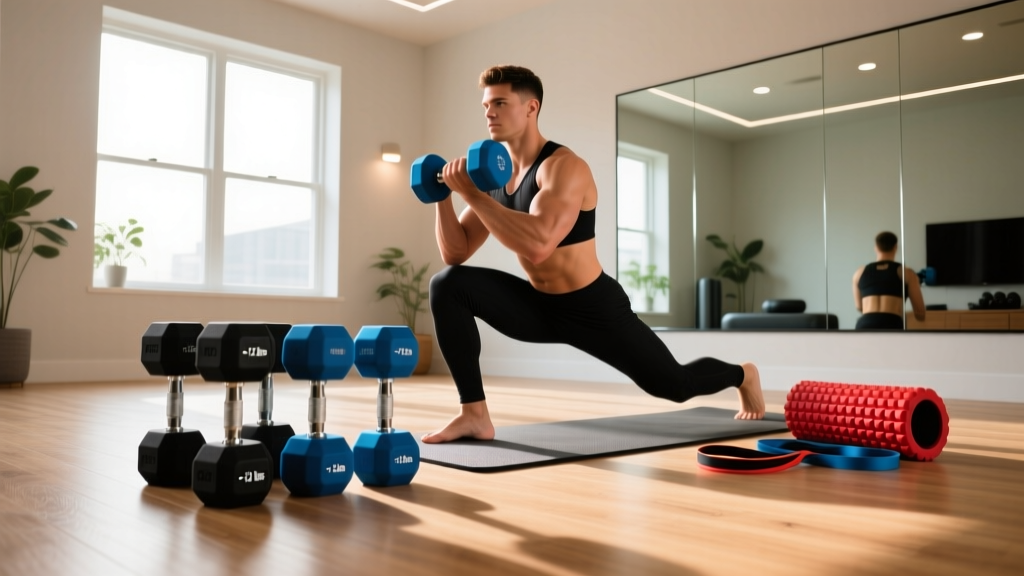
Bulgarian Split Squat Dumbbell Weight: Neoprene Guide

Budget Storage for Dumbbell Chest Workouts With Bench: 2026 Guide

Best Adjustable Dumbbells for Armpit Fat Exercises: 2026 Review
