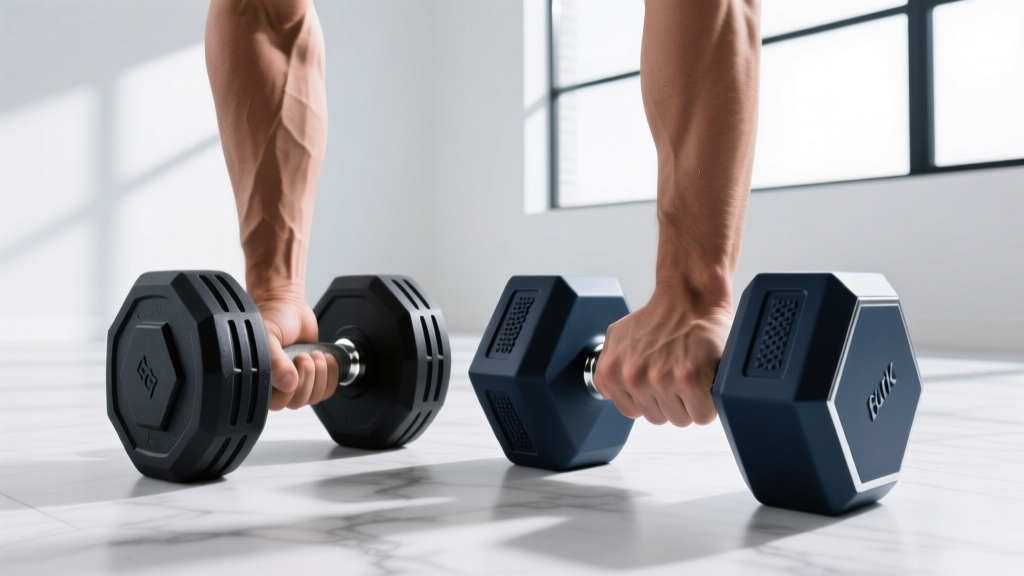
Urethane vs Rubber Hex Dumbbells: Care for Pronated Dumbbell Curls
Maximize dumbbell lifespan for pronated dumbbell curls. Compare rubber hex vs urethane, covering knurling maintenance, drop tolerance, and care tips.

The Biomechanical Toll of the Pronated Dumbbell Curl on Equipment
The pronated dumbbell curl (commonly known as the reverse curl) is a foundational movement for targeting the brachioradialis and brachialis muscles. However, from an equipment longevity perspective, this specific exercise places unique and often accelerated wear on your dumbbells. According to biomechanics data from ExRx.net, the overhand grip inherently reduces your mechanical lifting capacity compared to a supinated grip. Because lifters are operating closer to their absolute grip-strength ceiling, they tend to squeeze the handle with significantly more force, generating excess friction and accelerating knurling degradation.
Furthermore, the pronated grip is highly susceptible to slipping when sweat accumulates. This leads to increased use of lifting chalk, which packs into the knurling valleys, trapping moisture and promoting handle oxidation. Finally, when forearm failure occurs during a heavy set of pronated curls, lifters frequently drop the dumbbells from waist height. How your dumbbells survive this repetitive abuse depends entirely on whether you are using rubber hex or urethane models.
Expert Insight: Grip fatigue during pronated curls often leads to 'micro-drops' where the dumbbell slips an inch or two in the hand before being re-secured. This micro-friction acts like sandpaper on chrome or stainless steel handles, making routine knurling maintenance non-negotiable for high-volume arm training.Rubber Hex vs. Urethane: Material Breakdown & Failure Modes
When outfitting a gym in 2026, the choice between rubber hex and urethane dumbbells usually comes down to budget versus lifespan. While both serve the same fundamental purpose, their molecular structures react very differently to the rigors of daily training, environmental factors, and impact stress.
| Feature | Virgin Rubber Hex (e.g., Rogue Rubber Hex) | Premium Urethane (e.g., Rogue / Eleiko Urethane) |
|---|---|---|
| 2026 Avg. Cost | $1.75 - $2.20 / lb | $3.80 - $5.00+ / lb |
| Drop Tolerance | Moderate (Corners are weak points) | Exceptional (High shock absorption) |
| UV / Ozone Resistance | Low (Degrades and chalks over time) | High (Resists environmental breakdown) |
| Handle Insert Risk | High (Rubber can tear away from steel) | Low (Often friction-pressed or welded) |
| Estimated Lifespan | 3 - 5 Years (Commercial use) | 10 - 15+ Years (Commercial use) |
The Hex Geometry Problem
Hexagonal dumbbell heads are designed to prevent rolling, which is a safety necessity for exercises like renegade rows or when setting weights down mid-set. However, the sharp corners of a rubber hex dumbbell are its Achilles' heel. When a lifter fails a heavy set of pronated dumbbell curls and drops the weight, it rarely lands perfectly flat. Impacting a rubber hex corner concentrates the kinetic energy into a small surface area. Over time, this causes the rubber to split, exposing the inner steel core and eventually leading to the handle insert tearing loose from the head.
Urethane, specifically high-durometer cast urethane, distributes impact forces far more efficiently. While urethane dumbbells are also often molded in a hex or multi-gon shape, the material's tear strength is exponentially higher than vulcanized rubber, meaning corner impacts result in minor scuffs rather than catastrophic splits.
Handle & Knurling Maintenance: The Grip Factor
Because the pronated dumbbell curl demands aggressive chalk usage and high grip tension, the handle is the first component to show signs of neglect. Chalk (magnesium carbonate) is hygroscopic—it absorbs moisture from the air and your sweat. When packed into the knurling, it creates a corrosive paste that will pit and rust chrome or bare steel handles within weeks.
Step-by-Step Knurling Restoration Protocol
To maintain the aggressive bite required for overhand curls, implement this bi-weekly maintenance routine:
- Dry Brush: Use a stiff nylon brush (never a steel wire brush on chrome, as it will strip the finish) to aggressively scrub the knurling in a circular motion. This dislodges the top layer of compacted chalk.
- Deep Clean: Spray the handle with a non-corrosive degreaser or a 50/50 mix of white vinegar and water. Let it sit for 60 seconds to break down sweat oils and chalk binders.
- Scrub and Wipe: Scrub again with the nylon brush, then wipe completely dry with a microfiber towel. Moisture left in the knurling valleys guarantees flash rust.
- Lubricate: Apply 3-4 drops of 3-IN-ONE oil or a dedicated barbell oil to the handle. Rub it in with a clean rag, ensuring a micro-thin layer coats the knurling peaks and valleys to displace future moisture.
Coating Longevity: Preventing Environmental Degradation
While the handle takes the mechanical abuse, the dumbbell heads face environmental threats. The care protocols for rubber and urethane differ significantly based on their chemical makeup.
Caring for Rubber Hex Dumbbells
Rubber is highly susceptible to UV radiation and ozone exposure. If your gym features large windows or you train in a garage with the door open, UV rays will break down the polymer chains in the rubber. This manifests as a chalky, grayish film on the surface, followed by dry rot and cracking.
- Conditioning: Every three months, wipe down rubber hex dumbbells with a water-based vinyl/rubber protectant (avoid petroleum-based products like Armor All, which can degrade certain recycled rubber compounds).
- Temperature Control: Rubber becomes brittle in cold environments. If your garage gym drops below 40°F (4°C) in the winter, allow the dumbbells to acclimate to room temperature before subjecting them to heavy drops, as the cold rubber is highly prone to shattering or tearing at the hex corners.
Caring for Urethane Dumbbells
Urethane is virtually impervious to UV light, ozone, and temperature fluctuations, which is why premium brands like Rogue Fitness utilize it for their top-tier commercial lines. However, urethane is not immune to cosmetic damage.
- Scuff Removal: Urethane can pick up paint transfer or scuff marks from metal racks. These can be removed using a melamine sponge (Magic Eraser) lightly dampened with water.
- Chemical Avoidance: Never clean urethane heads with harsh solvents, bleach, or alcohol-based cleaners. These can strip the factory matte finish and leave the surface permanently sticky or discolored.
Storage Solutions to Maximize Lifespan
How you store your dumbbells between sets of pronated curls directly impacts their structural integrity. Tossing them haphazardly onto a flat rack or the floor accelerates wear on both the coating and the handle inserts.
Warning: Storing heavy rubber hex dumbbells (50+ lbs) vertically on their ends for prolonged periods can cause the rubber to compress and deform, especially in warmer climates. Always store them horizontally on a tiered rack.Invest in a tiered dumbbell rack with polyurethane-lined cradles. The lining prevents the steel core of the dumbbell handle from grinding against the steel rack frame, preserving the knurling on the ends of the handles. For home gyms where space is limited, vertical dumbbell trees are acceptable, but ensure the pegs are spaced adequately so the hex heads do not grind against one another when being removed or replaced.
Frequently Asked Questions
Can I use liquid chalk for pronated dumbbell curls to save my knurling?
Liquid chalk (magnesium carbonate suspended in isopropyl alcohol) is actually worse for knurling longevity than loose block chalk. The alcohol dries out the skin, but the liquid binder seeps deep into the knurling valleys and hardens like cement, making it incredibly difficult to brush out. Stick to high-quality loose block chalk and clean your handles weekly.
Is it worth upgrading from rubber hex to urethane just for arm days?
If your primary focus is high-volume arm training involving heavy pronated dumbbell curls and triceps extensions where grip slip is a factor, the upgrade is justified. Urethane handles (often featuring stainless steel or hard chrome with aggressive knurling) maintain their bite years longer than the standard chrome found on budget rubber hex sets, reducing the frequency of deep-cleaning maintenance.
How do I fix a loose handle insert on a rubber hex dumbbell?
Once the steel handle insert begins to wobble or separate from the rubber head, the dumbbell is structurally compromised. While some attempt to inject marine-grade epoxy into the seam, this is a temporary fix. The dynamic load of a pronated curl—where the wrist torques the handle at the top of the movement—will quickly break the epoxy bond. For safety, retire the dumbbell or contact the manufacturer for a warranty replacement if the failure occurred prematurely.
More gear to consider
All reviews
EZ Curl Bar vs Straight Bar & Xult Dumbbells Review

Space-Saving Kettlebells & Chest Supported Dumbbell Row Alternative
Bumper vs Iron Plates & Dumbbell Hammer Curls: 2026 Trends
Best Adjustable Dumbbells for Incline Dumbbell Curls: 2026 Review

Cast Iron vs Competition Kettlebells & Pec Workout with Dumbbells
