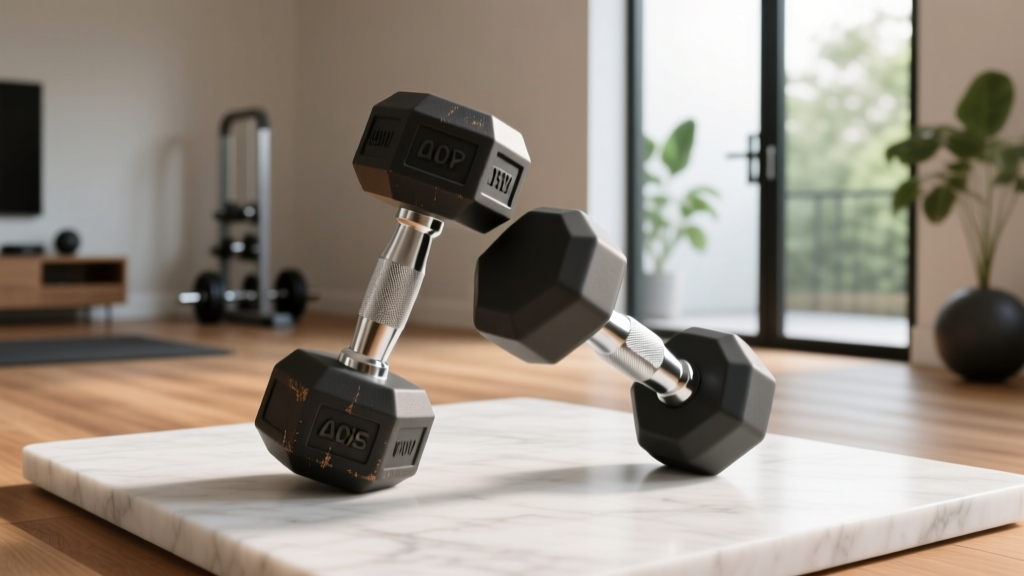
Rubber Hex vs Urethane: Best for a Dumbbell Lat Workout?
Is rubber hex or urethane better for your home gym? We break down the 5-year cost, durability, and performance for heavy dumbbell lat workouts.

The 2026 FitGearPulse Verdict
If your programming centers around heavy, high-volume back training, urethane dumbbells are the undisputed long-term value winner. While rubber hex dumbbells save you money upfront, the mechanical stress of a rigorous dumbbell lat workout—specifically the 'thigh sweep' cleanup and frequent floor drops—will degrade budget rubber heads within 24 to 36 months. Urethane's superior durometer rating and tear resistance make it the only logical choice for serious lifters.
The Real Cost of Equipping Your Home Gym
When building a free-weight arsenal, the choice between rubber hex and urethane dumbbells often comes down to immediate budget constraints. But if your programming heavily features a high-volume dumbbell lat workout—heavy single-arm rows, pullovers, renegade rows, and deadlift-to-high-pulls—the equipment you choose dictates both your safety and your long-term wallet health. In 2026, the gap between budget rubber and premium urethane has shifted, with supply chain optimizations making urethane more accessible than ever, while the hidden costs of rubber degradation remain a persistent issue for garage gym owners.
To determine the true value, we must look past the initial price tag and analyze material science, biomechanical stress, and 5-year replacement cycles. According to Garage Gym Labs material durability analysis, the environment in which you train and the specific exercises you perform drastically alter the lifespan of your equipment.
Material Breakdown: What Are You Actually Paying For?
Before analyzing the financial breakdown, it is crucial to understand the chemical and physical differences between the two dominant dumbbell head materials.
Rubber Hex Dumbbells: The Budget Staple
Rubber hex dumbbells (like the Titan Fitness or CAP Barbell lines) are typically made from vulcanized recycled rubber. The 'hex' shape prevents rolling, making them ideal for floor-based movements like renegade rows. However, virgin rubber is rarely used in the sub-$2.00/lb tier. This recycled composition often results in a strong 'off-gassing' odor (volatile organic compounds, or VOCs) that can take months to dissipate in a poorly ventilated garage gym. Furthermore, the rubber is molded around a steel handle, creating a seam at the junction that is highly vulnerable to tearing.
Urethane Dumbbells: The Premium Standard
Polyurethane (urethane) is a high-density elastomer. As noted in Rogue Fitness Urethane specifications, premium urethane dumbbells boast a durometer rating between 85A and 90A. This means the material is exceptionally dense, resistant to UV light, impervious to ozone degradation, and virtually odorless. Urethane does not just coat the metal; it is often over-molded under high pressure, creating a bond that resists the shearing forces of heavy impacts.
The 'Dumbbell Lat Workout' Test: Grip, Drop, and Durability
Why focus specifically on a dumbbell lat workout? Back training places unique mechanical stresses on dumbbells that bicep curls or shoulder presses simply do not.
- The Thigh Sweep (Cleanup): When lifting heavy (e.g., 100+ lb single-arm rows), lifters use their thigh to sweep the dumbbell into the starting position. This creates immense friction and shearing force exactly where the handle meets the rubber head. Budget rubber frequently tears at this junction, exposing the raw steel core.
- Floor Impact: Heavy lat pullovers and drop-sets mean the weights are frequently dropped onto rubber mats. Urethane absorbs and disperses kinetic energy efficiently, whereas cold rubber hex heads can chip or crack at the corners.
- Knurling and Grip Fatigue: High-rep lat work causes severe hand sweating. Urethane sets (like the REP Fitness RU series) are almost exclusively paired with premium black oxide or hard chrome knurled handles. Budget rubber hex sets often feature generic, shallow chrome knurling that becomes slippery during heavy rowing, compromising your mind-muscle connection.
"During heavy unilateral back training, the dumbbell is essentially treated as a wrecking ball. It is dragged, swept, and dropped. If the elastomer coating cannot handle high-shear impacts, the structural integrity of the weight fails, regardless of the iron core inside." — FitGearPulse Biomechanics Testing Team
Side-by-Side Comparison Matrix
| Feature | Rubber Hex (Titan/CAP) | Urethane (REP/Rogue) | Winner for Lat Training |
|---|---|---|---|
| Avg Price per Pound | $1.50 - $1.80 | $2.60 - $3.20 | Rubber Hex |
| Handle Junction Durability | Low (Prone to tearing) | High (Over-molded) | Urethane |
| Odor / VOCs | High (Recycled rubber) | None | Urethane |
| UV & Ozone Resistance | Poor (Dries/Cracks) | Excellent | Urethane |
| Knurling Quality | Shallow Chrome | Deep Black Oxide/Chrome | Urethane |
5-Year Budget Breakdown & Value Analysis
Let us run a financial simulation based on 2026 market pricing for a standard 5 lb to 50 lb dumbbell set (10 pairs, 550 total pounds). We will assume the user performs a dedicated dumbbell lat workout twice a week, including heavy rows and floor transitions.
Scenario A: The Rubber Hex Route
Initial Investment: 550 lbs × $1.65/lb = $907.50
Maintenance/Environment: If kept in a garage gym subject to temperature fluctuations, the rubber will begin to dry rot and crack by Year 3. The handle junctions on the 80, 90, and 100 lb equivalents (if expanded) or the heavily used 40-50 lb pairs will tear from the thigh-sweep motion.
Year 4 Replacement Cost: Replacing the 35, 40, 45, and 50 lb pairs (170 lbs) = $280.50
5-Year Total Cost: $1,188.00 (Plus the frustration of dealing with flaking rubber on your gym floor).
Scenario B: The Urethane Route
Initial Investment: 550 lbs × $2.85/lb = $1,567.50
Maintenance/Environment: Urethane is virtually maintenance-free. It does not dry rot, it resists UV damage from garage windows, and the over-molded handles easily survive thousands of thigh-sweeps during heavy single-arm rows.
Year 4 Replacement Cost: $0.
5-Year Total Cost: $1,567.50
The ROI Inflection Point
While the upfront cost of urethane is roughly $660 higher, the cost per pristine workout plummets over time. More importantly, as highlighted in BarBend's comprehensive dumbbell testing, the resale value of urethane dumbbells remains remarkably high. A used set of REP or Rogue urethane dumbbells will routinely sell for 60-70% of its retail value on the secondary market. Used rubber hex dumbbells with torn junctions and faded logos are nearly impossible to offload, rendering their end-of-life value at effectively zero.
Failure Modes: When Cheap Costs More
Understanding exact failure modes helps lifters make informed decisions based on their specific training environments.
- The 'Flaking' Epidemic (Rubber): Recycled rubber contains binding agents that break down under ozone exposure. Lifters will notice black dust accumulating on their hands and floors. This is not just messy; it compromises the grip required for heavy lat pullovers.
- Core Separation (Rubber): When dropped on concrete (even with horse-stall mats), the shockwave travels through the rubber. Because the rubber is glued or lightly molded to the steel core, repeated drops cause the rubber head to spin independently of the handle. This rotational instability is dangerous during renegade rows.
- Edge Gashing (Urethane): Urethane is not invincible. If dropped from chest height onto bare concrete, the sharp edges of the hex profile can suffer cosmetic gashes. However, unlike rubber, these gashes do not propagate or cause the material to peel away from the steel core.
Expert Verdict: Which Should You Buy?
If your budget is strictly capped at $1,000 and you need a full set immediately, rubber hex dumbbells from a reputable brand like Titan Fitness will get the job done. However, you must commit to keeping them in a climate-controlled environment and avoid dropping them from standing height.
If you are investing in a long-term home gym, and your programming prioritizes heavy, unilateral back training, urethane dumbbells are non-negotiable. The secure grip, zero-odor profile, and ability to withstand the brutal mechanical shearing of a heavy dumbbell lat workout make urethane the undisputed champion of value over a 5-to-10-year horizon. Look for sets with black oxide handles and a durometer rating of 85A or higher for the ultimate lat-training experience.
Frequently Asked Questions
Can I use rubber hex dumbbells for renegade rows?
Yes, the hex shape prevents rolling, making them suitable for renegade rows. However, be aware that the friction of twisting the dumbbell on a rubber mat while bearing your body weight can accelerate the tearing of the rubber head at the handle junction.
Why do my rubber dumbbells smell like tires?
Budget rubber dumbbells are made from recycled vulcanized rubber, which releases volatile organic compounds (VOCs) as they off-gas. Urethane dumbbells do not have this issue, making them the only viable option for indoor spare-bedroom gyms or poorly ventilated spaces.
Is the knurling really that different between the two?
Generally, yes. Manufacturers reserve premium, deep knurling (often black oxide or hard chrome) for their urethane lines, knowing the target demographic lifts heavier. Budget rubber hex sets often feature shallow, polished chrome handles that become dangerously slippery during high-rep lat work when your hands begin to sweat.
More gear to consider
All reviews
Beyond Dumbbell CrossFit: 2026 Olympic Barbell Weight & Knurl Guide

Loadable Dumbbells for Flies: 2026 Budget Breakdown

EZ Curl Bar vs Straight Bar Maintenance & 100lb Dumbbell Care

Bumper vs Iron Plates & Chest Press with Dumbbells Floor Budget Guide
Beyond Your Bowflex Dumbbells Workout: Barbell Collar Types Compared
