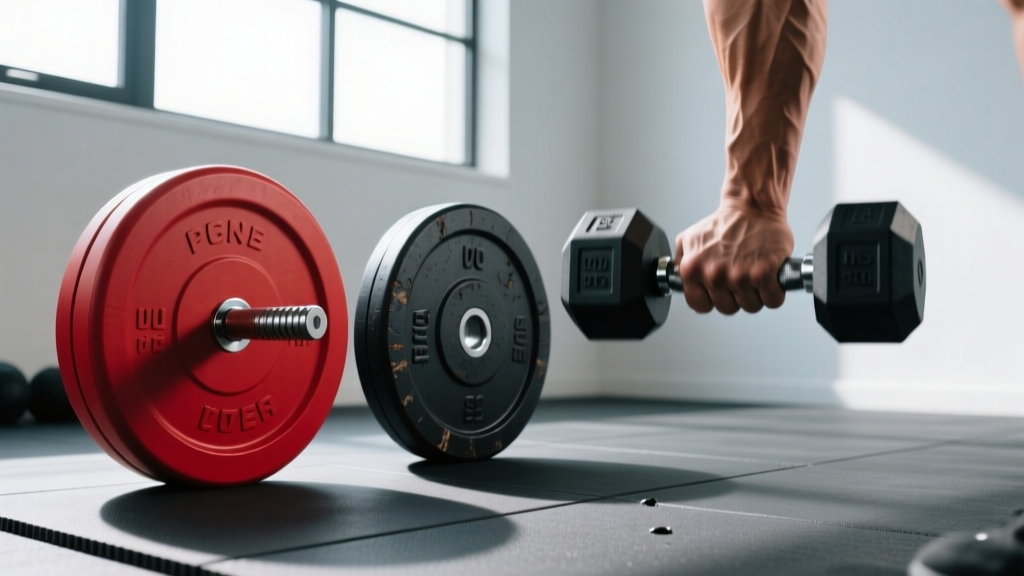
Bumper vs Iron Plate Care for the Heavy Bent Over Dumbbell Row
Master bumper plate vs iron plate maintenance to maximize longevity, specifically tailored for the heavy impacts of the bent over dumbbell row.

When building a home gym in 2026, the debate between bumper plates and cast iron plates usually centers around Olympic lifting or deadlifts. However, a critical and often overlooked application for plate maintenance involves loadable dumbbell handles. If you utilize loadable handles—like the Rogue Loadable Dumbbell Handle or the Titan T3 Loadable Dumbbell—to perform the heavy single-arm bent over dumbbell row, your plates endure unique, punishing mechanical stresses. During a heavy rowing set, the dumbbell is frequently lowered to the floor, tapped against rack uprights, or dropped at an angle upon muscular failure. This specific movement pattern accelerates edge chipping on iron plates and hub-warpage on bumper plates.
Understanding the distinct maintenance protocols for cast iron versus virgin rubber bumpers is essential for protecting your investment. Below, we break down the exact chemical and mechanical care routines required to maximize the lifespan of your plates when subjected to the rigors of heavy unilateral rowing.
The Biomechanics of Plate Wear During Rows
Why does the bent over dumbbell row destroy poorly maintained plates? Unlike a barbell deadlift where the weight drops flat and parallel to the floor, a single-arm row often ends with the dumbbell being lowered with a slight rotational twist. When the plates make contact with a rubber mat or concrete floor, the impact is rarely perfectly flat.
⚠️ Equipment Warning: Dropping loadable dumbbells loaded with standard cast iron plates at an angle concentrates thousands of pounds of localized force onto a single millimeter of the plate's outer lip. This causes micro-fractures in enamel coatings and immediate chipping in machined iron.Conversely, if you are using bumper plates on your loadable handles, that same rotational drop applies lateral torque to the steel center insert (the hub). Over time, this torque can cause the steel hub to 'mushroom' or separate from the rubber matrix, rendering the plate unsafe for use.
Cast Iron Maintenance: Fighting Rust and Edge Chipping
Cast iron plates, particularly bare machined iron like the Rogue LB Training Plates, are highly susceptible to oxidation. When performing the bent over dumbbell row, your sweat inevitably drips onto the plates, and the iron repeatedly contacts the moisture-trapping surface of your gym flooring. According to BarBend's equipment maintenance guidelines, neglecting bare iron for even a few weeks in a humid garage gym can lead to deep surface pitting.
The 4-Step Iron Refurbishment Protocol
If your iron plates have developed surface rust or chalk buildup from heavy rowing sessions, follow this exact restoration process:
- The Vinegar Bath: Submerge the rusty plates in a plastic tub filled with a 50/50 mixture of standard white vinegar and water. Let them soak for 24 to 48 hours. The acetic acid breaks down iron oxide without eating into the healthy base metal.
- Brass Wire Brushing: Remove the plates and scrub them vigorously with a brass-bristle wire brush. Never use a steel wire brush, as steel is harder than cast iron and will gouge the surface, creating new pockets for future rust to form.
- Alkaline Neutralization: Rinse the plates and immediately submerge them in a baking soda and water bath for 15 minutes. This neutralizes the residual acid from the vinegar, halting the chemical reaction.
- Sealing and Oiling: Dry the plates completely with a microfiber towel and apply a thin, even coat of 3-IN-ONE Multi-Purpose Oil or WD-40 Specialist Corrosion Inhibitor. Wipe off the excess. This creates a hydrophobic barrier against sweat and floor moisture.
Bumper Plate Longevity: Protecting the Hub and Rubber Matrix
Bumper plates are the preferred choice for loadable dumbbell rows because they absorb the angled floor impacts inherent to the movement. However, virgin rubber requires specific environmental and mechanical care. As noted in Garage Gym Reviews' comprehensive plate comparison, the primary failure point for bumpers isn't the rubber itself, but the bond between the rubber and the steel hub.
Hub Mushrooming and Torque Stress
When you drop a loadable dumbbell after a grueling set of rows, the steel sleeve of the dumbbell handle strikes the inside of the plate's steel hub. Over hundreds of reps, this peening effect can cause the edges of the steel hub to flare outward—a phenomenon known as 'mushrooming.' If left unchecked, a mushroomed hub will make it impossible to slide the plate off the dumbbell handle.
The Fix: Inspect the steel inserts of your bumper plates every 90 days. If you notice flaring, place a block of wood against the hub and gently tap it back into flush alignment with a rubber mallet. Furthermore, regularly apply a dry PTFE lubricant to your dumbbell handles to reduce the friction and impact force transferred to the plate hub during loading and unloading.
Preventing Rubber Desiccation
Virgin rubber bumpers (like the Rogue Echo Bumpers) will dry out, fade, and eventually crack if exposed to UV light and ozone. To maintain the plasticizers in the rubber, clean your bumpers monthly with a mild dish soap solution, avoiding harsh degreasers. Once a year, apply a UV-protectant rubber conditioner, such as Meguiar's Ultimate Black Plastic Restorer, to keep the rubber supple and resistant to the micro-tears caused by floor drag during rowing setups.
Maintenance Matrix: Iron vs. Bumper for Rowing Impacts
| Feature | Machined Cast Iron Plates | Virgin Rubber Bumper Plates |
|---|---|---|
| Primary Failure Mode | Edge chipping, surface oxidation (rust) | Steel hub mushrooming, rubber tearing at insert |
| Ideal Cleaning Agent | White vinegar (rust), mineral oil (sealant) | Mild dish soap, UV rubber conditioner |
| Impact Tolerance (Angled Drops) | Low (High risk of floor and plate damage) | High (Absorbs rotational rowing drops) |
| Maintenance Frequency | Oiling every 3-6 months | Hub inspection every 90 days |
| Avg Cost per LB (2026) | $1.40 - $1.80 / lb | $2.80 - $4.00 / lb |
Financial Breakdown: Refurbishing vs. Replacing
In the current 2026 fitness equipment market, the price gap between iron and bumpers remains significant. A 230-pound set of premium machined iron plates will cost roughly $350, whereas a comparable set of high-density virgin rubber bumpers will push past $750.
However, when calculating the total cost of ownership for a lifter whose primary heavy floor movement is the bent over dumbbell row, iron plates incur hidden costs. Replacing chipped enamel plates or spending hours executing the vinegar rust-removal protocol adds 'time-cost' to your gym. Bumper plates, while requiring a higher initial capital outlay, generally offer a 7-to-10-year lifespan under heavy unilateral dropping conditions, provided the steel hubs are monitored and maintained. If you frequently train to failure on rows and drop the dumbbells, the premium paid for bumpers acts as an insurance policy for both your equipment and your garage floor.
Frequently Asked Questions
Can I use crumb rubber bumper plates for loadable dumbbell rows?
While crumb rubber bumpers are cheaper, they are highly porous and prone to shedding. The repeated lateral stress and floor-drag associated with setting up for a bent over dumbbell row will accelerate the breakdown of the crumb matrix. For loadable handles, solid virgin rubber or urethane bumpers are strongly recommended for longevity.
Will silicone spray damage the steel insert on my bumper plates?
No. In fact, applying a light mist of 100% silicone spray to the rubber face of your bumpers can prevent them from drying out. Just ensure you do not spray the inside of the steel hub, as this will make loading the plates onto your dumbbell handles slippery and dangerous.
What is the best flooring to protect iron plates during rows?
If you insist on using cast iron plates for heavy rows, you must use, at minimum, 3/4-inch thick vulcanized rubber horse stall mats. However, to truly protect the edges of machined iron from angled drops, placing a dedicated high-density crash pad or thick EVA foam mat specifically in your rowing zone is the most effective mitigation strategy.
More gear to consider
All reviews
Kettlebell vs Dumbbell: Beginner's Adjustable Dumbbell Guide

Are Dumbbells Better Than Machines? The Neoprene Home Gym Guide

Barbell Collar Setup: From Single Dumbbell Lunges to Heavy Squats

Optimizing the Dumbbell Fly Workout: Top Loadable Dumbbell Picks for 2026

Budget Dumbbell Racks: Optimize Your Dumbbell Static Lunge Flow
