
The Complete Home Gym Setup Guide for Dumbbell Lat Pulls
Master your home gym setup for dumbbell lat pulls. Learn structural anchoring, neoprene dumbbell selection, and biomechanics for maximum lat growth.

Demystifying the Dumbbell Lat Pull in a Home Gym Context
When building a comprehensive back day in a home gym, the 'lat pulldown' is a staple. However, not everyone has the ceiling height, budget, or structural capacity for a full cable-stack lat pulldown machine. This is where dumbbell lat pulls come into play. In free-weight terminology, dumbbell lat pulls primarily refer to the dumbbell pullover, the bent-over straight-arm pull, and the lying straight-arm pulldown. These movements isolate the latissimus dorsi without requiring a cable stack.
To execute these movements safely and effectively, your home gym requires a specific setup: a stable, properly anchored flat or adjustable bench, adequate overhead clearance, and the right free weights. For high-repetition isolation work and burnout sets, neoprene-coated dumbbells have become the gold standard for home use. In this complete setup and installation walkthrough, we will cover everything from structural anchoring to selecting the right neoprene gear for your 2026 home gym build.
Phase 1: Structural Assessment and Space Planning
Before purchasing equipment, you must evaluate your space. Dumbbell lat pulls (particularly pullovers) require a significant range of motion. When lying on a bench and extending a dumbbell behind your head, you need a minimum of 36 inches of clearance from the top of the bench pad to the floor to accommodate the dumbbell's path and your arm length.
CRITICAL WARNING: Never anchor overhead band pulleys or heavy-duty wall mounts into drywall alone. The dynamic force of a lat pull can exceed 250 lbs of peak tension. Always anchor directly into wooden wall studs or concrete block using appropriate hardware.Required Hardware for Anchor Points
If you are supplementing your dumbbell lat pulls with resistance band pulldowns anchored to a wall or pull-up bar, you need the right hardware. Standard drywall anchors will rip out of the wall under load.
- For Wood Studs (16" or 24" on-center): Use 3/8" x 3" galvanized lag screws with 1/2" steel washers.
- For Concrete Walls: Use 3/8" x 3" wedge anchors or sleeve anchors. You will need a hammer drill and a 3/8" masonry bit.
- Pilot Hole Sizing: When drilling into standard SPF lumber studs, use a 7/32" drill bit for your pilot holes to prevent the wood from splitting when driving the 3/8" lag screws.
Phase 2: Step-by-Step Bench and Anchor Installation
A proper dumbbell lat pull requires a bench that does not wobble during the eccentric (lowering) phase of the movement. A 14-gauge steel frame bench, such as the Fitness Reality 1000 Super Max, is a reliable choice.
- Locate and Mark Studs: Use a magnetic or electronic stud finder to locate the center of two adjacent wall studs. Mark the center points at a height of 78 inches from the floor (standard clearance for overhead band anchors).
- Drill Pilot Holes: Using your 7/32" bit, drill 2.5 inches deep into the marked stud centers. Keep the drill perfectly level.
- Mount the Anchor Bracket: Align your wall-mounted pulley or heavy-duty band anchor bracket. Insert the 3/8" x 3" lag screws with washers and tighten with a socket wrench until the bracket is flush and immovable.
- Position the Bench: Place your flat bench exactly 24 inches away from the wall anchor. This specific distance allows for the optimal 45-degree angle of pull when combining band work with your dumbbell lat pulls.
- Lay Down Protective Matting: Neoprene dumbbells are durable, but dropping them on bare concrete or hardwood will degrade the coating over time. Lay down 3/8" thick interlocking EVA foam tiles or a dedicated 4x6 ft rubber horse stall mat beneath the bench zone.
Phase 3: Selecting Neoprene Dumbbells for Lat Isolation
Why choose neoprene for dumbbell lat pulls? The latissimus dorsi responds exceptionally well to high-repetition, time-under-tension protocols (typically 12-20 reps). Neoprene coating provides a tacky, sweat-resistant grip that prevents the dumbbell from slipping out of your hands during overhead extensions, which is a common failure point with bare cast iron or smooth rubber hex dumbbells.
As of early 2026, the market for neoprene-coated dumbbells has stabilized. According to comprehensive home gym equipment trackers like Garage Gym Reviews, you can expect to pay between $1.40 and $1.90 per pound for high-quality neoprene sets. Brands like CAP Barbell and Yes4All dominate this space.
Material Comparison: Neoprene vs. Rubber vs. Urethane
| Material | Grip Tackiness | Floor Protection | Odor / Off-gassing | Best Use Case |
|---|---|---|---|---|
| Neoprene | High (Sweat-resistant) | Excellent | None | High-rep dumbbell lat pulls, pullovers |
| Virgin Rubber | Moderate | Very Good | Moderate (Initial) | Heavy pressing, general lifting |
| Urethane | Low (Smooth) | Excellent | None | Commercial gyms, heavy drops |
| Bare Cast Iron | Low (Requires chalk) | Poor | None | Budget setups, powerlifting |
Phase 4: Biomechanics and Execution of the Dumbbell Lat Pull
Setting up the gear is only half the battle; executing the movement correctly is where the actual muscle is built. The latissimus dorsi is a massive muscle with four distinct attachments: spinous, iliac, costal, and scapular. To properly target the costal and iliac fibers (the lower and mid-lats) during a dumbbell lat pull (pullover variation), you must manipulate your shoulder and elbow angles.
"To maximize latissimus dorsi activation over the pectoralis major during a pullover, the elbows must remain tucked inward, and the shoulder extension must be driven by depressing the scapula, not just moving the humerus."
For a deep dive into the exact kinesiology and joint mechanics of this movement, refer to ExRx.net's kinesiology breakdown of the dumbbell pullover. Proper form dictates that you lie perpendicular across a flat bench (upper back supported, hips dropped slightly) to increase the stretch on the lats at the bottom of the movement.
Common Execution Failures to Avoid
- Flaring the Elbows: This shifts the load from the lats to the triceps long head and the chest.
- Using Too Heavy a Weight: Dumbbell lat pulls are an isolation movement. Using a 70 lb dumbbell when your lats can only handle 40 lbs will result in shoulder impingement. Stick to the 15-30 lb neoprene dumbbells for strict, controlled reps.
- Ignoring the Eccentric Phase: The lats experience the most micro-tearing during the stretch (when the dumbbell is behind your head). Take a full 3 seconds to lower the weight.
Phase 5: Equipment Maintenance and Longevity
Neoprene is incredibly durable, but it is not invincible. Prolonged exposure to direct UV sunlight will cause the neoprene coating to dry out, crack, and eventually peel away from the cast iron core. Always store your neoprene dumbbells indoors, away from direct window light or garage doors that are frequently left open.
Furthermore, according to general fitness and strength training guidelines outlined by institutions like the Mayo Clinic, maintaining a clean and sanitary workout environment is crucial for long-term health. Neoprene is porous enough to trap dead skin cells and bacteria if not cleaned. After every high-rep lat pull session, wipe down the handles and heads of your neoprene dumbbells with a mixture of 70% isopropyl alcohol and water. Avoid bleach-based cleaners, as bleach will break down the synthetic rubber compounds in the neoprene, causing it to become sticky and degrade prematurely.
Final Thoughts on Your Home Lat Pull Station
Building a dedicated station for dumbbell lat pulls using neoprene-coated weights is one of the most cost-effective and space-efficient ways to develop a wide, thick back at home. By ensuring your structural anchors are drilled into studs, utilizing a stable 14-gauge bench, and respecting the biomechanics of the latissimus dorsi, you can achieve commercial-gym-level back development without the footprint of a massive cable machine. Stick to the 12-20 rep range, focus on the deep stretch, and let the tacky grip of your neoprene dumbbells keep the focus entirely on the muscle, not your grip strength.
More gear to consider
All reviews
Olympic vs Standard Plates: What Fits Your Dumbbell Hand & Bar?
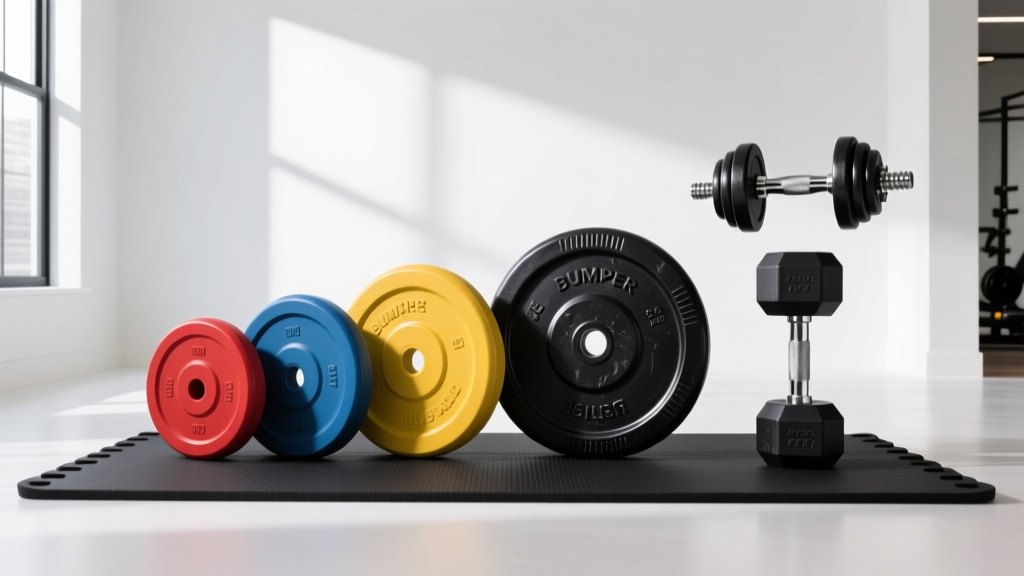
Bumper vs Iron Plate Comparison: Beyond Standard Dumbbell Weights

Dumbbell Split Stance RDL Mistakes & Adjustable Dumbbell Reviews

EZ vs Straight Bar: Upgrading Upper Arm Workouts With Dumbbells

How Much Do Adjustable Dumbbells Cost? 2026 Head-to-Head Review
