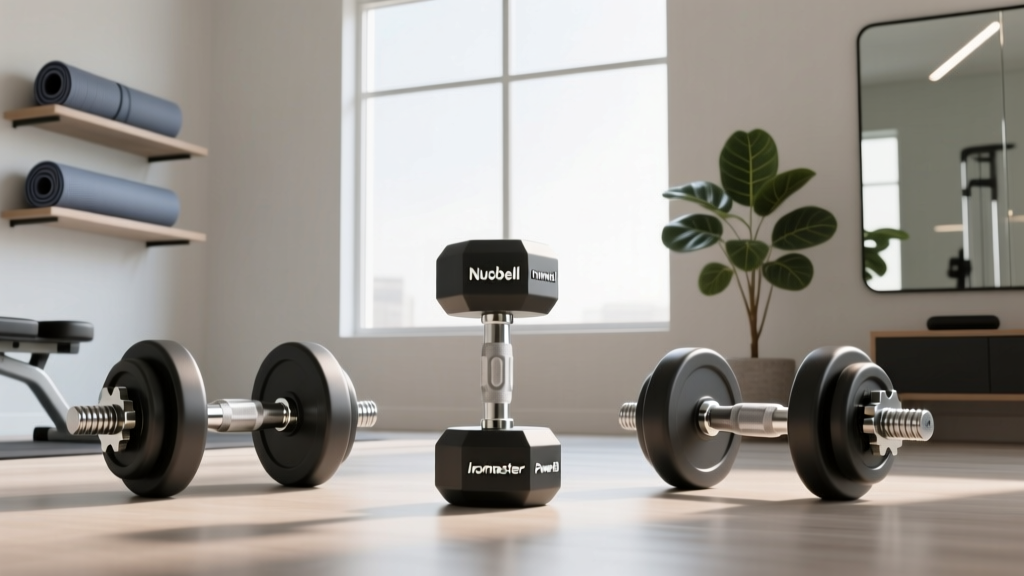
Best Adjustable Dumbbells for Deltoid Muscle Exercises (2026)
Discover the best adjustable dumbbells for deltoid muscle exercises in 2026. We compare Nuobell, Ironmaster, and PowerBlock for optimal shoulder growth.

The Biomechanics of Shoulder Training: Why Dumbbell Design Matters
The shoulder joint is the most mobile and complex articulation in the human body, requiring a delicate balance of stability and multi-planar movement. When executing deltoid muscle exercises with dumbbells, the physical dimensions, handle knurling, and weight increment precision of your equipment dictate your success. Unlike the pecs or lats, which can handle massive loads and large weight jumps, the three heads of the deltoid (anterior, lateral, and posterior) are relatively small, multi-pennate muscles that demand surgical precision in progressive overload.
According to the biomechanics data cataloged by ExRx.net, the lateral deltoid is primarily responsible for shoulder abduction, while the anterior head handles flexion and the posterior head manages transverse abduction. This anatomical reality creates a massive problem for standard adjustable dumbbells. If the dumbbell head is too bulky, it will collide with your thighs during strict lateral raises or pinch your wrists at the top of an overhead press. If the weight increments are too large (e.g., jumping from 15 lbs to 20 lbs), you are forcing a 33% load increase on a small muscle group, virtually guaranteeing a plateau or rotator cuff strain.
In this 2026 in-depth buying guide, we evaluate the top adjustable dumbbells on the market specifically through the lens of shoulder hypertrophy and joint health. We will break down exact pricing, mechanical failure modes, and the ideal use case for each model.
2026 Adjustable Dumbbell Comparison Matrix
Below is our structured comparison of the leading adjustable dumbbells, ranked by their suitability for specific shoulder movements. Note: 2026 street prices reflect current market averages for a single pair.
| Model | Weight Range | Increments | Head Profile | 2026 Price | Best Deltoid Move |
|---|---|---|---|---|---|
| Nuobell 80 LB | 5 - 80 lbs | 5 lbs | Compact / Round | $429 | Lateral Raises |
| Ironmaster Quick-Lock V2 | 5 - 75 lbs | 2.5 lbs (w/ add-on) | Blocky / Wide | $449 | Overhead Press |
| PowerBlock Elite USA | 5 - 70 lbs | 2.5 lbs (w/ add-on) | Caged / Block | $389 | Rear Delt Flyes |
| Bowflex SelectTech 552 | 5 - 52.5 lbs | 2.5 lbs (under 25) | Bulky / Long | $399 | Front Raises |
In-Depth Reviews: Top Picks for Deltoid Muscle Exercises with Dumbbells
1. Nuobell 80 LB: The Lateral Raise Specialist
The Nuobell 80 has revolutionized the adjustable dumbbell market by mimicking the exact dimensions and feel of a commercial-grade hex dumbbell. For lateral raises, this is the undisputed champion in 2026. The compact, rounded urethane heads do not rub against your thighs at the bottom of the movement, nor do they clank together at the top when you bring them overhead for a press-raise combination.
- Handle Dynamics: The smooth, hard-chrome steel handle lacks aggressive knurling. While powerlifters might dislike this for heavy deadlifts, it is a massive advantage for high-rep lateral raises where grip fatigue and skin tearing often precede deltoid failure.
- Failure Mode & Edge Cases: The twisting dial mechanism relies on precise internal grooves. If you use liquid chalk or heavy magnesium carbonate and fail to clean the handle, chalk dust will accumulate in the dial tracks, eventually causing the weight plates to slip or the dial to jam.
- Verdict: At $429, it is an investment, but for isolation movements targeting the medial deltoid, the ergonomic superiority is unmatched.
2. Ironmaster Quick-Lock V2: The Overhead Press Powerhouse
When targeting the anterior deltoid with heavy seated or standing overhead presses, you need a dumbbell that can survive being dropped and offers micro-loading capabilities. The Ironmaster Quick-Lock V2 is essentially an indestructible steel and urethane brick. It feels exactly like a traditional pro-style dumbbell, complete with aggressive knurling that locks your hands in place during heavy, low-rep pressing sets.
- Micro-Loading Capability: With the included micro-plate add-on kit, you can make 2.5 lb jumps. This is critical for the overhead press, where stalling at 45 lbs per hand is a common intermediate plateau.
- Failure Mode & Edge Cases: The screw-in locking knob takes roughly 12 to 15 seconds per dumbbell to adjust. This completely eliminates the possibility of performing mechanical drop-sets or rapid rest-pause sets on shoulder day. Furthermore, the wide, blocky heads make strict lateral raises awkward, as the inner plates will collide before your arms reach full abduction.
- Verdict: Priced around $449, this is the ultimate tool for heavy, compound anterior deltoid work, provided you do not mind the manual adjustment time.
3. PowerBlock Elite USA: The Rear-Delt Flye Favorite
The posterior deltoid is notoriously underdeveloped in most lifters, largely because rear-delt flyes require strict form and precise loading. The PowerBlock Elite USA features a unique caged, rectangular design. While this blocky shape is highly unorthodox, it offers a distinct advantage for bent-over rear-delt flyes: the flat sides rest securely against your thighs when setting up, and the caged handle allows your hand to sit deep inside the weight block, altering the center of gravity and reducing wrist strain during transverse abduction.
- Space & Efficiency: The compact footprint of the PowerBlock cage means you can easily maneuver them around a crowded home gym without the long handles of traditional dumbbells catching on benches or racks.
- Failure Mode & Edge Cases: The internal selector pin is a known vulnerability. If you drop a PowerBlock dumbbell from overhead height onto a hard surface (even thick rubber horse stall mats), the impact can bend the internal pin, rendering the adjustment mechanism useless. Treat them with care.
- Verdict: At $389, it offers excellent value and unparalleled stability for posterior chain and rear-delt isolation work.
The Micro-Loading Imperative for Medial Deltoid Hypertrophy
One of the most overlooked aspects of shoulder programming is the necessity of micro-loading. Research highlighted by Stronger By Science consistently demonstrates that mechanical tension is the primary driver of hypertrophy. However, for smaller muscle groups like the lateral deltoid, the threshold for 'effective tension' is much narrower than it is for the glutes or quads.
If your adjustable dumbbells only allow for 5 lb increments (e.g., jumping from 15 lbs to 20 lbs on a lateral raise), you are forcing the muscle to adapt to a massive 33% increase in load. This often results in the lifter compensating by using momentum (swinging the torso) rather than isolating the medial head. When shopping for adjustable dumbbells specifically for shoulder isolation, prioritize models that offer 2.5 lb increments, or be prepared to purchase fractional magnetic plate adapters to bridge the gap between standard weight jumps.
Programming Framework: Matching the Dumbbell to the Movement
To maximize your shoulder development, consider adopting a hybrid approach to your equipment selection based on the specific head of the deltoid you are targeting:
- Anterior Deltoid (Overhead Press, Arnold Press): Use Ironmaster or traditional fixed hex dumbbells. You need aggressive knurling, heavy load capacity, and a wide base for stability in the rack position.
- Lateral Deltoid (Strict Lateral Raises, Upright Rows): Use Nuobell or compact urethane dumbbells. You need a short handle, rounded heads to prevent thigh friction, and smooth grips to delay forearm fatigue.
- Posterior Deltoid (Chest-Supported Flyes, Bent-Over Raises): Use PowerBlock or light neoprene-coated fixed dumbbells. The focus here is purely on the stretch and squeeze; heavy loads are counterproductive and invite trap dominance.
Frequently Asked Questions (FAQ)
Can I build massive shoulders using only adjustable dumbbells?
Absolutely. The deltoids respond to mechanical tension and progressive overload, regardless of whether the resistance comes from a barbell, machine, or adjustable dumbbell. In fact, dumbbells allow for a greater range of motion and independent limb tracking, which can reduce shoulder impingement risks compared to fixed-barbell overhead pressing.
Why do my wrists hurt during lateral raises with adjustable dumbbells?
Wrist pain during lateral raises is often caused by the excessive length of the dumbbell handle. Models like the Bowflex 552 have long, bulky handles that shift the center of gravity away from your wrist joint, creating excessive torque. Switching to a compact model like the Nuobell or choking up on the handle can immediately alleviate this joint stress.
How often should I train my deltoids for optimal growth?
The deltoids are highly active in almost all upper-body pushing and pulling movements. According to guidelines from the American Council on Exercise (ACE), training them directly 2 to 3 times per week with adequate volume (10-15 working sets per week) and varying intensities is optimal for hypertrophy while allowing the rotator cuff sufficient recovery time.
More gear to consider
All reviews
Top Loadable Dumbbells for Home Dumbbell Exercises (2026)
Barbell Collar & Clamp Types Comparison: Securing Dumbbell Step Downs

Cast Iron vs Competition Kettlebells: Supinating Dumbbell Curl Grip

2026 Barbell Collar Guide & Dumbbell Exercises for Female Beginners

Bumper vs Iron Plates: Gym Layouts & Dumbbell Shoulder Raises
