
After Dumbbell Exercises for Shoulder Pain: Barbell Collar Comparison
Transitioning from dumbbell exercises for shoulder pain to barbell lifts? Compare spring, clamp, and lock-jaw collars to protect your joints and shins.

The Biomechanical Reality: Why Collar Choice Impacts Shoulder Health
When recovering from a rotator cuff strain, impingement, or labral tear, physical therapists routinely prescribe targeted dumbbell exercises for shoulder pain to rebuild unilateral stability and isolate the glenohumeral joint. According to the Mayo Clinic, controlled, symmetrical loading is paramount during the remodeling phase of tissue healing. Dumbbells allow each arm to work independently, preventing the dominant side from compensating. However, as you progress from light 15-pound dumbbells to a 45-pound Olympic barbell for heavy compound movements like the overhead press and bench press, the physics of the lift change dramatically.
If a 45-pound bumper plate slips off one side of a barbell mid-rep because of a failed collar, the sudden asymmetrical load creates a violent shear force. For a healing shoulder, this unexpected torque can instantly re-tear a labrum or strain the supraspinatus tendon. Therefore, securing your plates is not just about protecting your shins from dropped iron; it is a critical joint-protection strategy. In this 2026 head-to-head comparison, we break down the three dominant barbell collar types to ensure your transition back to heavy bilateral lifting is safe, secure, and seamless.
⚠️ Safety Warning: The Asymmetrical Load Hazard
A standard Olympic barbell sleeve is 16.3 inches long. If a single 45lb plate slides just 4 inches outward during an overhead press, the moment arm shifts drastically. This requires the contralateral shoulder to absorb an immediate, unbalanced rotational force. Never use worn spring clips for heavy overhead or bench movements.
Traditional Spring Clips: The False Economy
Spring clips (often called snap rings or muscle clips) are the default collar found in most commercial gyms and cheap home gym bundles. Constructed from bent spring steel, they rely entirely on the material's natural tension to grip the 50mm Olympic sleeve.
Pros & Cons
- Pros: Extremely cheap ($8-$12 per pair), lightweight (under 0.2 lbs each), and fast to apply for light warm-up sets.
- Cons: Highly prone to metal fatigue. Repeated stretching permanently deforms the steel, drastically reducing clamping force over time. They also struggle to grip heavily chalked or worn barbell sleeves.
The Verdict: Spring clips are acceptable for empty-bar warm-ups or light accessory work. However, once you graduate from dumbbell exercises for shoulder pain and begin loading the barbell past 135 lbs, spring clips become a severe liability. The risk of a plate shifting during a slow eccentric bench press is simply too high for a compromised joint.
Lever-Action Clamp Collars: The Gold Standard
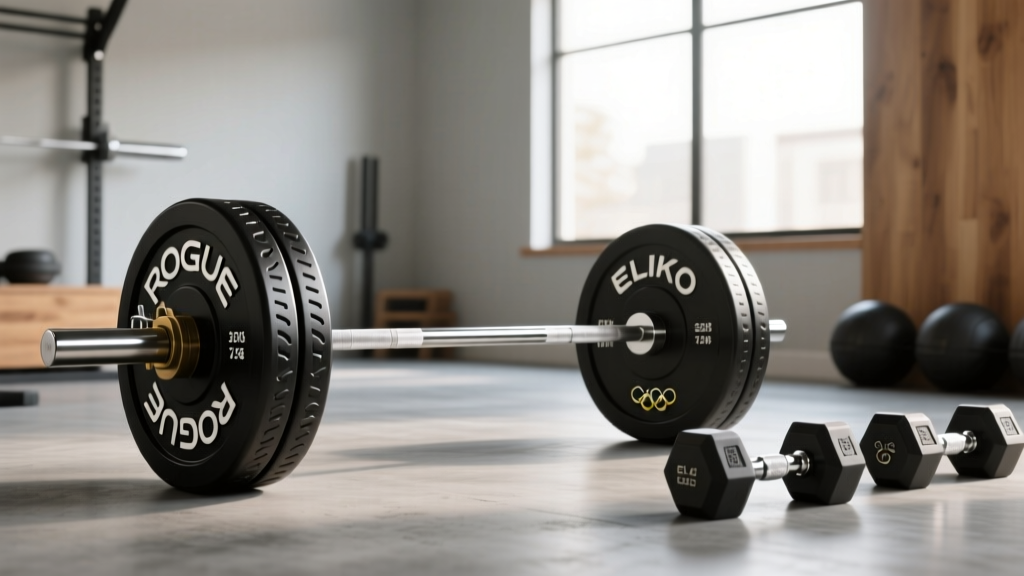
Clamp collars, such as the widely adopted Rogue AH-1 or the Eleiko Olympic Weightlifting Collars, utilize a mechanical cam-and-lever system. When you flip the lever shut, it pulls a steel band or machined aluminum housing tight against the barbell sleeve, creating immense lateral friction.
Technical Specifications & Pricing
Most premium aluminum clamp collars weigh exactly 0.5 lbs each (allowing for precise load calculation) and cost between $35 and $55 per pair in 2026. The cam mechanism generates over 200 lbs of lateral clamping force, effectively welding the plates to the sleeve.
'For powerlifters and Olympic weightlifters, lever-action clamps are non-negotiable. The zero-slip guarantee allows the lifter to focus entirely on motor unit recruitment rather than worrying about shifting iron.' — Garage Gym Reviews
Failure Mode: The primary failure point of clamp collars is the hinge pin. If dropped repeatedly on concrete from a height of 6 feet, the 6061 aircraft-grade aluminum housing can crack near the lever pivot. However, for controlled bench pressing, squatting, and strict overhead pressing, they are virtually indestructible.
Lock-Jawz and Pro-Loc: The Drop-Test Champions
Made from glass-reinforced nylon or high-density polymers, collars like Lock-Jawz and Pro-Loc clamp onto the sleeve using a dual-clip mechanical locking system. They are the undisputed champions of high-volume CrossFit environments where barbells are dropped from overhead repeatedly.
Pros & Cons
- Pros: Incredible impact resistance. They will bounce off a rubber floor without cracking. They also grip tightly even on sleeves caked in thick gym chalk due to their aggressive internal teeth.
- Cons: Heavier and bulkier (approx. 0.75 lbs each). The locking tabs can become brittle in freezing garage gyms during winter months, and the hard plastic teeth can wear down the zinc coating on your barbell sleeves over years of aggressive use.
The Verdict: If your training involves high-rep Olympic lifts where the barbell is crashed to the floor, polymer collars are excellent. For strict shoulder rehabilitation and slow-tempo hypertrophy work, they offer fantastic security, though their bulk can occasionally interfere with the grip on shorter specialty bars like an EZ-curl or Swiss bar.
Head-to-Head Comparison Matrix
| Feature | Spring Clips | Lever Clamps (e.g., Rogue AH-1) | Polymer Locks (e.g., Lock-Jawz) |
|---|---|---|---|
| Avg. Price (Pair) | $10 | $45 | $35 |
| Weight (Each) | 0.15 lbs | 0.50 lbs | 0.75 lbs |
| Clamping Force | Low (Degrades over time) | Extremely High (>200 lbs) | High (Mechanical lock) |
| Drop Durability | High (But bends) | Low (Hinge can snap) | Very High |
| Best Use Case | Empty bar warm-ups | Powerlifting, Heavy Pressing | CrossFit, Olympic Drops |
Real-World Failure Modes & Edge Cases
Understanding how collars fail in the real world is crucial for protecting your joints. Here are the most common edge cases we observe in home and commercial gyms:
- The Chalked Sleeve Slip: Lifters using magnesium carbonate chalk often get residue on the barbell sleeves. Spring clips will glide right over chalked steel. Lever clamps and polymer locks bite through the chalk layer to grip the bare metal.
- The Eccentric Tear-Down: During a 4-second eccentric bench press, the barbell tilts slightly at the bottom of the movement. Gravity pulls the plates outward against the collar. If the collar lacks lateral tension, the plates will inch outward rep by rep, altering your center of gravity and putting uneven stress on the acromioclavicular (AC) joint.
- The Freezing Garage Gym: If you train in an unheated garage in the winter, polymer collars like Lock-Jawz can become brittle. Dropping a barbell with frozen nylon collars can result in the locking tabs snapping off entirely, leaving the bar unprotected.
Expert Verdict: Securing the Lift
Transitioning from targeted dumbbell exercises for shoulder pain back to heavy, bilateral barbell work is a major milestone in any lifter's rehabilitation journey. To protect the structural integrity of your rotator cuff and labrum, you must eliminate asymmetrical load risks entirely. Throw away the bent spring clips from your local big-box store. Invest $45 in a pair of machined aluminum lever-action clamp collars. The precision, the 0.5 lb weight accuracy, and the absolute zero-slip guarantee make them the undisputed champions for heavy pressing, squatting, and strict overhead work in 2026.
Frequently Asked Questions
Can I use dumbbell collars on a barbell?
No. Dumbbell handles typically have a diameter of 25mm to 30mm, while Olympic barbells require 50mm collars. Using an incorrectly sized collar will result in zero clamping force and immediate plate slippage, which is highly dangerous for healing joints.
Do heavier collars affect my lift calculations?
Yes. If you are tracking your 1-rep max or following a percentage-based rehab program, remember to account for collar weight. A pair of Rogue AH-1 clamps adds exactly 1 lb to the bar, while heavy polymer collars can add up to 1.5 lbs.
How often should I replace my barbell collars?
Spring clips should be replaced every 6 to 12 months as metal fatigue inevitably sets in. High-quality aluminum lever clamps and polymer locks will easily last 5 to 10 years with normal use, requiring only occasional hinge lubrication and cleaning.
More gear to consider
All reviews
Top Loadable Dumbbells for Dumbbell Bench Back Exercises (2026)

What Happens If I Do Dumbbells Everyday? Olympic vs Standard Plates

Best Neoprene Dumbbells for Dumbbell Chest Flyes: 2026 Comparison
Barbell Knurling & Forearm Workouts with Dumbbells: Rogue vs Eleiko
Bumper vs Iron Plate Care & How to Build Triceps Using Dumbbells
