Maintaining a 60 lb Dumbbell vs Cast Iron & Competition Kettlebells
Learn how to maintain a heavy 60 lb dumbbell alongside cast iron and competition kettlebells. Expert longevity tips, rust prevention, and coating care.

The Heavy Free Weight Longevity Protocol
Outfitting a serious home gym or commercial facility requires a significant capital investment, particularly when purchasing heavy free weights. As of 2026, premium urethane dumbbells average $2.50 to $3.20 per pound, while competition-grade kettlebells routinely exceed $140 per bell. Whether you are racking a heavy 60 lb dumbbell for bilateral pressing or swinging a 32kg competition kettlebell, the kinetic energy and environmental exposure these tools endure will rapidly degrade them if improperly maintained. This guide bridges the gap between a traditional kettlebell buying guide (cast iron vs competition) and the daily maintenance care required to maximize the lifespan of your heaviest iron and steel.
The 60 lb Dumbbell: Managing Mass and Coating Degradation
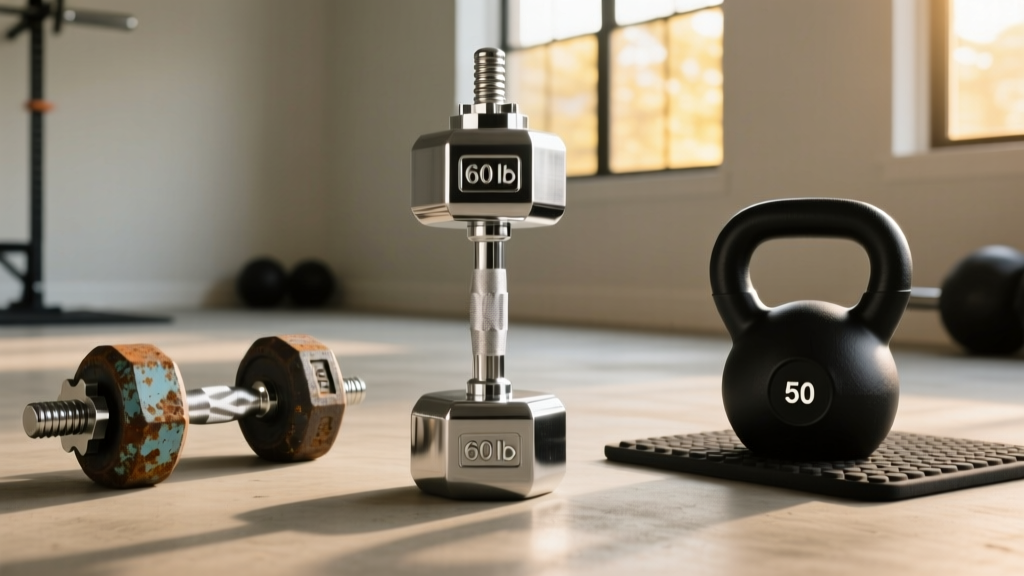
A 60 lb dumbbell generates immense force when dropped, even from a low height. The longevity of this equipment depends almost entirely on its head coating and handle metallurgy. When selecting or maintaining heavy dumbbells, you are generally dealing with rubber, urethane, or bare cast iron hex heads.
Urethane vs. Rubber: The UV and Impact Factor
High-end Rogue Urethane Dumbbells utilize a 90A durometer polyurethane that resists tearing and absorbs shock far better than traditional recycled rubber. However, urethane is susceptible to hydrolysis and UV degradation. If your gym receives direct sunlight, the urethane heads on your 60 lb dumbbells will eventually chalk, fade, and split at the edges. Conversely, cheap rubber dumbbells off-gas volatile organic compounds (VOCs) and oxidize, leaving a permanent black residue on your hands and racks.
Pro-Tip for Urethane Care: Never clean urethane dumbbell heads with bleach or ammonia-based solvents. These chemicals break down the polymer chains. Use a mild dish soap and warm water solution, and apply a UV-protectant spray (like 303 Aerospace Protectant) every six months to prevent micro-cracking.Handle Knurling and Rust Prevention
The handle of a 60 lb dumbbell is typically made from cold-rolled steel with aggressive knurling. Sweat, which is highly acidic and chloride-rich, pools in the knurling valleys. Within 48 hours, flash rust will form. To maintain the handle, use a brass wire brush (never steel, as steel bristles embed iron particles that accelerate rust) to scrub the knurling weekly. Follow this by wiping the handle with a rag lightly dampened with 3-in-One oil or boiled linseed oil to displace moisture.
Cast Iron Kettlebells: Preserving the Powder Coat
When navigating a kettlebell buying guide, cast iron is the most common and cost-effective option. However, cast iron is highly porous. If moisture penetrates the outer coating, it becomes trapped in the iron's microscopic voids, leading to subsurface rust that blisters and flakes the exterior finish.
Powder Coat vs. E-Coat: A Maintenance Perspective
From a longevity standpoint, always choose powder-coated cast iron over e-coated or bare iron. E-coating (electrocoating) is incredibly thin—often less than 1.0 mil—and will wear through to the bare iron on the handle within months of heavy use. Powder coating is electrostatically applied and baked on at 400°F, creating a durable shell measuring 2.0 to 3.0 mils thick. Brands like Kettlebell Kings utilize a textured powder coat that withstands high-rep snatches and cleans without smoothing out prematurely.
The Paint Chip Protocol
Even the best powder coat will chip if two kettlebells clash during double cleans or if dropped on concrete. According to the Kettlebell Kings Maintenance Guide, ignoring a chip guarantees a rust bloom within a week. The Fix: Lightly sand the chipped area and the immediate surrounding rust with 120-grit sandpaper. Wipe clean with isopropyl alcohol, and apply two thin coats of a rust-inhibiting matte clear enamel (such as Rust-Oleum Matte Clear). Do not use glossy paints, as they become dangerously slippery when chalked.
Competition Kettlebells: Weld Seams and Hollow Core Care
Competition kettlebells are engineered to exact dimensional standards (280mm height, 210mm width, 33mm handle diameter) regardless of weight. Unlike solid cast iron, competition bells feature a hollow steel shell filled with steel shot, lead, or concrete to achieve the target mass. This construction introduces unique failure modes and maintenance requirements.
Weld Seam Integrity
The handle of a competition kettlebell is TIG-welded to the bell body. When dropping a 24kg or 32kg bell from overhead during high-rep snatch tests, the deceleration force places immense shear stress on these weld seams. Over time, micro-fractures can develop. Inspect the base of the handle horns monthly. If you notice hairline cracks or hear a distinct rattling sound that indicates the internal filler has shifted or the weld is compromising, the bell must be retired immediately to prevent catastrophic handle failure.
Managing the Bare Steel Handle
Competition kettlebell handles are typically left as bare, polished steel to allow for chalk adhesion and a precise grip. Bare carbon steel (often Q235 alloy) is exceptionally prone to oxidation. After every training session, wipe the handle down with a microfiber towel to remove acidic sweat and excess chalk. If surface rust appears, remove it using a Scotch-Brite pad and a drop of mineral oil, restoring the smooth, snag-free finish required for high-volume cleans and snatches.
Free Weight Maintenance Matrix
Use the table below to quickly reference the specific care requirements for your heavy free weights based on their material and construction.
| Equipment Type | Primary Material | Common Failure Mode | Cleaning Agent | Rust Prevention |
|---|---|---|---|---|
| 60 lb Dumbbell (Urethane) | Steel / Polyurethane | UV cracking, knurling rust | Mild soap, brass brush | 3-in-One oil, UV spray |
| Cast Iron Kettlebell | Cast Iron / Powder Coat | Coating chips, subsurface rust | Damp microfiber | Clear enamel touch-ups |
| Competition Kettlebell | Carbon Steel Shell | Weld fatigue, handle oxidation | Dry microfiber, Scotch-Brite | Mineral oil polishing |
Environmental Baselines: Humidity and Storage
The most rigorous cleaning routine will fail if your gym environment is hostile to bare metals and coatings. The EPA Indoor Humidity Guidelines recommend keeping indoor relative humidity (RH) between 30% and 50%. In garage gyms or basement facilities, RH frequently exceeds 65% during summer months, creating a condensation layer on cold iron and steel that triggers flash rust overnight.
'Investing in a commercial-grade dehumidifier is not optional for serious garage gym owners. Keeping the ambient RH below 50% will extend the lifespan of your bare steel competition kettlebells and knurled dumbbell handles by decades.'
Proper Rack Storage
Never store a 60 lb dumbbell or heavy kettlebells directly on bare steel rack shelves. The metal-on-metal contact will scrape off powder coatings and urethane edges. Line your dumbbell racks and kettlebell shelves with UHMW (Ultra-High Molecular Weight) polyethylene plastic or heavy-duty rubber matting. This not only protects the equipment's coating but also dampens the acoustic shock of racking heavy weights.
Frequently Asked Questions
Can I use WD-40 to clean my 60 lb dumbbell handles?
Standard WD-40 is a solvent and water displacer, not a long-term lubricant or rust preventer. While it will remove surface grime, it evaporates quickly and leaves the knurling unprotected. Use a dedicated tool oil like 3-in-One, mineral oil, or a specialized barbell oil to coat the steel after cleaning.
Why is my cast iron kettlebell handle getting smooth?
The texture on a cast iron kettlebell handle is created by the powder coat itself, not the underlying iron. High-rep ballistic movements (snatches, cleans) create friction that slowly sands down the powder coat. To prolong the texture, use high-quality magnesium carbonate chalk and avoid dragging the bell across abrasive surfaces like concrete.
How do I fix a rattling competition kettlebell?
A rattle indicates that the internal filler (steel shot or concrete) has shifted or that the weld plug at the base of the bell has loosened. If the bell is under warranty, contact the manufacturer immediately. If out of warranty, you can carefully drill out the base plug, inject a two-part marine epoxy to re-bond the filler, and seal it with a new steel plug, though this is a temporary fix for a compromised bell.
More gear to consider
All reviews
Rubber Hex vs Urethane: Top Dumbbells for a Woman's Bench Press
Best Neoprene Dumbbells for Pull Day Dumbbell Workouts (2026)

Dumbbell Lying Rear Lateral Raise: Rubber vs Urethane Care

Rubber Hex vs Urethane: Chest and Tricep Workout with Dumbbells

Power Rack vs Squat Rack vs Squat Stand: Triceps Pushdown with Dumbbells