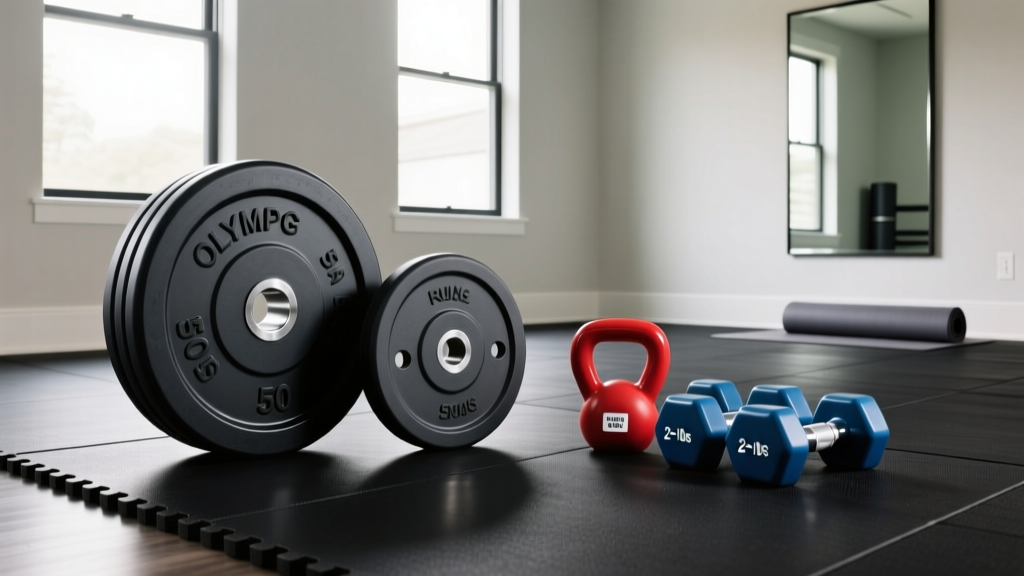
Standard vs Olympic Plates: Loading for the Hammer Dumbbell Curl
Discover the critical differences between Standard and Olympic weight plates. Learn which system best supports your hammer dumbbell curl and heavy compound lifts.

The Foundation of Iron: Standard vs. Olympic Weight Plates
When outfitting a home gym, the choice between Standard (1-inch) and Olympic (2-inch) weight plates is the single most consequential equipment decision you will make. This choice dictates not only the barbells you can use but also the ergonomics of your isolation movements. As of 2026, the fitness equipment market has fully stabilized post-supply-chain crisis, offering consumers highly specialized options across both categories. However, many buyers mistakenly assume plate selection only matters for heavy barbell squats and deadlifts. In reality, the plate system you choose profoundly impacts your ability to perform unilateral and isolation exercises, such as the hammer dumbbell curl, with proper biomechanics and joint clearance.
Expert Insight: The center hole diameter (1-inch vs. 2-inch) is just the surface-level difference. The true divergence lies in plate thickness, sleeve compatibility, and weight distribution—factors that directly dictate whether your adjustable dumbbells will support heavy arm training or become unwieldy, knuckle-scraping hazards.Anatomical Breakdown: The 1-Inch vs. 2-Inch Divide
To understand how weight plates influence your training, we must first look at the manufacturing standards governing them. According to comprehensive equipment analyses by Garage Gym Reviews, the two systems serve entirely different tiers of lifters.
Standard Weight Plates (1-Inch Center Hole)
Standard plates are the entry-level staple of commercial retail stores. They feature a 1-inch (25.4mm) center hole and are typically paired with threaded spin-lock dumbbell handles and basic solid-steel barbells. They are manufactured from cast iron or, in cheaper iterations, cement-filled vinyl. While highly accessible, standard plates suffer from severe diameter inconsistencies. A 25-pound standard plate from one brand may be 10 inches in diameter, while another brand's 25-pound plate might be 12 inches, altering the starting height of your lifts.
Olympic Weight Plates (2-Inch Center Hole)
Olympic plates feature a 50mm (roughly 2-inch) center hole designed to fit over the rotating sleeves of Olympic barbells and specialized loadable dumbbell handles. The Olympic standard mandates strict dimensional tolerances. For instance, a 45-pound (20kg) Olympic plate must have a diameter of exactly 450mm (17.7 inches) to ensure the barbell sits precisely 8.1 inches off the floor. This precision is vital for compound lifts, but as we will see, it also introduces unique considerations for dumbbell work.
The Dumbbell Factor: Knuckle Clearance and the Hammer Dumbbell Curl
Why does plate type matter for an isolation exercise? Consider the mechanics of the hammer dumbbell curl. This movement targets the brachialis and brachioradialis, requiring a strict neutral grip (palms facing each other). In a neutral grip, the webbing of your hand and your knuckles sit millimeters away from the inner edge of the weight plates.
The Standard Plate Problem
If you are using standard 1-inch spin-lock dumbbells, the sleeves are short and narrow. To load 30 pounds per hand, you might stack three 10-pound vinyl-coated standard plates. These plates are notoriously thick—often exceeding 1.5 inches in width each. When you initiate the concentric phase of the hammer dumbbell curl, the bulky inner plate will frequently scrape against your knuckles or wedge into your wrist joint, forcing you to alter your grip or limit your range of motion. This biomechanical interference ruins the isolation stimulus and increases the risk of connective tissue irritation.
The Olympic Plate Advantage (With a Caveat)
Upgrading to Olympic loadable dumbbell handles (such as the Rogue Loadable Dumbbell Handle, which features a 2-inch sleeve) solves the weight-capacity issue but introduces a new variable: sleeve thickness. If you attempt to perform a hammer dumbbell curl using an Olympic handle loaded with thick rubber bumper plates, the 2-inch sleeve diameter combined with the wide profile of the bumpers will again collide with your wrists.
The Expert Solution: To properly execute heavy hammer dumbbell curls with an Olympic system, you must pair your loadable handles with calibrated steel Olympic plates or thin urethane Olympic plates. These plates are remarkably narrow (a 10lb calibrated plate is barely 0.8 inches thick). This allows you to load up to 60+ pounds on an Olympic dumbbell sleeve while maintaining a clean, unobstructed neutral grip, preserving the perfect biomechanics required for the hammer dumbbell curl.
Head-to-Head Comparison Matrix
| Feature | Standard Plates (1-Inch) | Olympic Plates (2-Inch) |
|---|---|---|
| Center Hole | 1 inch (25.4mm) | 2 inches (50mm) |
| Max Dumbbell Load | ~40 lbs (Sleeve space limited) | 100+ lbs (With thin steel plates) |
| Knuckle Clearance | Poor (Thick plates impede grip) | Excellent (If using thin urethane/steel) |
| Diameter Consistency | Highly variable by brand | Strict 450mm standard for 45lb/20kg |
| Average Cost per Lb | $0.80 (Vinyl) to $1.25 (Iron) | $1.50 (Bumper) to $4.50 (Calibrated) |
| Resale Value | Low (Often given away) | High (Holds 70-80% of retail value) |
2026 Market Pricing and Model Breakdown
Understanding current market pricing is essential for budgeting your free weight arsenal. As detailed in BarBend's equipment analyses, the initial savings of standard plates often vanish when you factor in the cost of replacing bent 1-inch barbells or upgrading your system later.
- Standard Cast Iron (CAP Barbell): Approximately $1.20 to $1.40 per pound. A 300-pound set will cost around $360 to $420. These are best reserved for light accessory work or budget-constrained starter gyms.
- Olympic Virgin Rubber Bumpers (Titan Fitness): Roughly $1.60 to $1.90 per pound. Excellent for garage gyms where noise reduction is a priority, though the rubber thickness makes them suboptimal for loading heavy Olympic dumbbell handles for arm isolation.
- Olympic Calibrated Steel (Rogue Fitness / REP Fitness): Ranging from $3.50 to $5.00+ per pound. While expensive, these are the gold standard for serious lifters. Their ultra-thin profile is the only way to maximize sleeve real estate on loadable dumbbell handles for heavy hammer curls and lateral raises.
Failure Modes and Edge Cases to Avoid
When buying weight plates, consumers frequently fall victim to specific manufacturing flaws. Avoid these common pitfalls:
⚠️ The Standard Plate Hole Stretch
Cheaper standard cast iron plates are often cast with imprecise molds. Over time, the 1-inch hole can stretch or chip, creating a 1.1-inch gap. When loaded on a spin-lock dumbbell for a hammer dumbbell curl, this 0.1-inch variance causes the plates to 'wobble' and clang together, destabilizing the lift and risking wrist sprains.
⚠️ The Olympic Bumper Diameter Cheat
Some budget Olympic bumper plate manufacturers save money by making 10lb and 15lb bumpers smaller in diameter than the 450mm standard (often shrinking them to 350mm). If you use these for floor-based exercises or deadlifts, your barbell will sit lower to the ground, ruining your starting mechanics. Always verify that the manufacturer guarantees a 450mm diameter across all plate sizes down to 10lbs.
The Verdict: Which System Should You Buy?
If your training is strictly limited to light general fitness, and you never plan to lift more than 135 pounds on a barbell or 30 pounds per hand on a dumbbell, a Standard Cast Iron system is a cost-effective entry point.
However, if you are committed to progressive overload, care about joint longevity, and want the freedom to load heavy, biomechanically sound isolation movements like the hammer dumbbell curl without knuckle interference, Olympic plates are the undisputed winner. The initial investment in Olympic calibrated steel or thin urethane plates, paired with high-quality loadable dumbbell handles, provides a commercial-grade experience that will never require upgrading. Buy once, lift forever.
Frequently Asked Questions
Can I use Olympic plates on a standard 1-inch barbell?
No. The 2-inch hole of an Olympic plate will not fit securely on a 1-inch standard barbell. While plastic adapter sleeves exist to bridge this gap, they introduce dangerous lateral play and are highly discouraged for any serious lifting, especially dynamic movements.
Why do my knuckles bleed during heavy hammer dumbbell curls?
This is almost always a result of plate thickness. If you are using thick vinyl standard plates or wide rubber Olympic bumpers on a short dumbbell sleeve, the plates will physically strike your knuckles at the top of the curl's concentric phase. Switch to thin cast iron or calibrated steel plates to restore proper clearance.
Are urethane Olympic plates worth the premium over rubber?
Yes, particularly for home gyms and adjustable dumbbell use. Urethane is vastly more durable than virgin rubber, does not emit a toxic off-gassing odor, and is typically manufactured in thinner, more compact profiles. This thinness is crucial for maximizing weight capacity on loadable dumbbell handles.
More gear to consider
All reviews
2026 Plate Market: Bumper vs Iron & The Bottom Half Dumbbell Fly
From Dumbbell Exercise App to Barbell: Weight & Knurling Guide

EZ Curl Bar vs Straight Bar or Dumbbell Sets for Beginners?

EZ Curl Bar vs Straight Bar: Urethane Dumbbells vs Rubber Dumbbells
Olympic Barbell Guide: Knurling & Tricep Dips Dumbbell