EZ vs Straight Bar: Layouts & Workouts for Shoulders with Dumbbells
Compare EZ curl bar vs straight bar footprints. Discover space-saving storage layouts and seamless workflows for workouts for shoulders with dumbbells.

Designing a high-functioning home gym in 2026 requires a ruthless approach to spatial geometry. When outfitting a compact garage, basement, or urban apartment gym, every inch of floor and wall space dictates your equipment choices. The classic debate between the EZ curl bar and the straight barbell is usually framed around bicep biomechanics and wrist ergonomics. However, from a space optimization perspective, the physical dimensions, storage requirements, and workflow integration of these bars fundamentally alter your room's layout—especially when you need to preserve clearance for workouts for shoulders with dumbbells.
This guide breaks down the EZ curl bar vs straight bar comparison through the lens of spatial efficiency, storage solutions, and floor plan design, ensuring your arm and shoulder training zones operate without spatial friction.
The Spatial Footprint: EZ Curl Bar vs. Straight Bar
Before purchasing, you must evaluate the raw dimensional data of your primary bars. A standard Olympic straight barbell dictates the minimum width of your entire lifting zone, whereas an EZ curl bar offers extreme flexibility in tight quarters.
| Feature | Standard Straight Bar (7ft) | Compact Straight Bar (6ft) | Olympic EZ Curl Bar |
|---|---|---|---|
| Total Length | 84 - 86 inches | 72 - 73 inches | 47 - 52 inches |
| Shaft Length (Between Sleeves) | 51.5 inches | 40 - 43 inches | 25 - 28 inches |
| Unloaded Weight | 44 - 45 lbs | 30 - 35 lbs | 15 - 25 lbs |
| Wall Storage Feasibility | Poor (Requires 7ft+ horizontal rack) | Moderate (Requires 6ft horizontal shelf) | Excellent (Standard 5-inch wall hooks) |
| Primary Spatial Use | Power racks, wide-stance squats, deadlifts | Bench press, squats in narrow rooms | Isolation work, floor-based curls, upright rows |
According to equipment specifications from Rogue Fitness, a standard Olympic EZ curl bar measures roughly 47.25 inches in total length. This compact profile allows you to perform standing curls, upright rows, and skull crushers in corridors or tight alcoves where a 7-foot bar would immediately strike the drywall.
Storage Solutions for Compact Home Gyms
The way you store your bars when not in use defines your gym's usable square footage. Leaving bars on the floor is a tripping hazard and ruins the aesthetic of a curated space.
Straight Bar Storage Constraints
If your room is narrower than 8 feet, a standard 7-foot straight bar is a spatial liability. You cannot store it horizontally on a wall without it protruding into your walkway. Your two options are:
- Vertical Bar Storage: A freestanding vertical bar holder takes up roughly a 12" x 12" floor footprint but requires 86 inches of vertical clearance. This is ideal for corners.
- In-Rack Storage: Leaving the bar on the J-cups of your power rack. This monopolizes your rack, preventing you from using it for pull-ups or band work until the bar is moved.
EZ Curl Bar Storage Hacks
The EZ curl bar is the undisputed king of small-space storage. Because it weighs less than 25 lbs and spans under 4 feet, it can be mounted on heavy-duty wall hooks (rated for 50+ lbs) placed high on the wall, directly above your dumbbell rack or plate tree. This utilizes 'dead space' and keeps the floor entirely clear.
Space Optimization Tip: If you are buying a compact 6-foot straight bar to save space, verify the sleeve length. Many cheap 6-foot bars feature only 7-inch sleeves, which cannot safely hold more than two 45-lb bumper plates per side. Look for models with 10-inch sleeves to maintain safety during heavy bench pressing.Integrating Workouts for Shoulders with Dumbbells
Once you have optimized your barbell storage, the floor plan must adapt to accommodate workouts for shoulders with dumbbells. Shoulder training requires a vastly different spatial envelope than barbell curling. While arm isolation movements keep the elbows tucked close to the torso, shoulder mechanics demand expansive lateral and vertical clearance.
Clearance Metrics for Shoulder Mechanics
According to kinesiology data from ExRx.net, lateral deltoid abduction (the lateral raise) requires the arms to extend fully perpendicular to the torso. Let us break down the exact spatial math required for a 6-foot-tall lifter:
- Wingspan: Approximately 72 inches.
- Dumbbell Width: Add roughly 16 inches to account for the physical width of the dumbbells at full extension.
- Total Lateral Clearance Needed: 88 inches (7 feet, 4 inches) of unobstructed horizontal space.
If you place your adjustable bench flush against a wall, standing lateral raises or seated Arnold presses become impossible on the wall-side. You must design an 'Island Layout' for your bench, ensuring at least 44 inches of clearance on the left and right sides of the bench's centerline.
Vertical Clearance for Overhead Presses
Seated dumbbell shoulder presses require significant vertical headroom. A 6-foot lifter sitting on a standard 18-inch bench with arms fully extended overhead will reach a peak height of roughly 88 to 92 inches. If your home gym is located in a basement with standard 8-foot (96-inch) ceilings, you have less than 6 inches of margin for error. In low-ceiling environments, you must swap standing or seated overhead presses for incline bench presses or floor-based movements to avoid punching through the drywall or striking overhead joists.
The 'Tri-Zone' Workflow Layout
To seamlessly transition between EZ bar isolation work and dumbbell shoulder routines without moving heavy equipment, adopt the Tri-Zone layout strategy:
- Zone 1: The Anchor (Power Rack & Straight Bar). Positioned against the primary load-bearing wall. The 7ft or 6ft bar lives here.
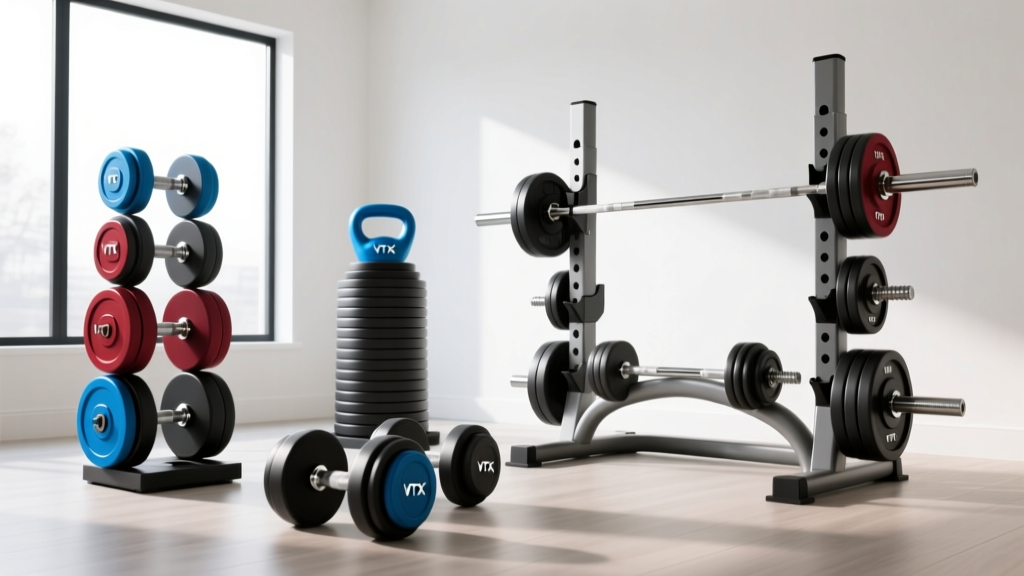
- Zone 2: The Transition Aisle (EZ Bar & Plates). A 3-foot wide walkway featuring wall-mounted EZ bar hooks and a vertical plate tree. This is where you perform standing curls and upright rows.
- Zone 3: The Dumbbell Island (Shoulder Work). An adjustable bench placed in the center of the remaining floor space, flanked by adjustable dumbbells (like the Nuobell 80lb set, which replaces 15 pairs of fixed dumbbells, saving roughly 12 square feet of rack space).
'The biggest mistake in small gym design is treating the bench as a static object. For shoulder health and spatial efficiency, your bench should be on lockable casters or easily lightweight enough to drag into the center of the room for lateral work, then pushed back into the rack for pressing.' — Home Gym Layout Principles, 2026
2026 Space-Optimized Equipment Picks
If you are outfitting a room under 150 square feet, prioritize these specific dimensions:
- The Bar: Rogue Curl Bar (47.25" length, $125). The knurling is aggressive enough for heavy rows, and the compact size allows for floor-based skull crushers in tight spaces.
- The Straight Bar Alternative: Titan Fitness 6-Foot Olympic Barbell (71.6" length, ~$100). Perfect for narrow rooms where a standard bar hits the walls during bench presses.
- The Dumbbells: PowerBlock Elite USA Adjustable Dumbbells. Their blocky, cage-like design stacks vertically and takes up less horizontal bench space than round adjustable dumbbells when resting on your thighs during heavy shoulder press setups.
Frequently Asked Questions
Can I do shoulder workouts with an EZ curl bar instead of dumbbells?
You can perform EZ bar upright rows and overhead presses, which target the anterior and lateral deltoids. However, the fixed hand position of the EZ bar limits the natural scapular plane movement required for optimal shoulder health. Dumbbells allow you to press at a 30-degree angle to the torso, reducing impingement risk. Therefore, dumbbells remain superior for comprehensive shoulder development, even if they require more floor space.
How do I store plates when doing dumbbell shoulder work?
>Use a vertical plate tree rather than a horizontal plate peg board. A vertical tree occupies a 2-foot by 2-foot floor square but keeps the plates out of your lateral wingspan. Never leave plates scattered on the floor during lateral raises, as stepping on a rolling plate is a primary cause of ankle sprains in home gyms.Is an EZ curl bar worth the space if I already have adjustable dumbbells?
Yes. While adjustable dumbbells can replicate curls, an EZ curl bar allows for rapid weight changes without the mechanical failure points of adjustable dials. Furthermore, the EZ bar is superior for heavy tricep extensions and reverse curls, providing a different resistance curve that dumbbells cannot replicate in a compact home gym setup.
More gear to consider
All reviews
Bumper vs Iron Plates: Layouts & How to Build Triceps with Dumbbells

EZ vs Straight Bar Maintenance & Dumbbell Bench Press Care
Master the Dumbbell Rows Exercise: Adjustable Dumbbell Setup & Review
Olympic Barbell Guide: Knurling & 2 Arm Seated Dumbbell Extension

Best Neoprene Dumbbells for Decline Bench Workouts: 2026 Guide