Power Rack vs Squat Rack: Basic Upper Body Workout With Dumbbells
Discover how to choose between a power rack, squat rack, and squat stand to perfectly support your basic upper body workout with dumbbells at home.

The Beginner's Dilemma: Why Your Rack Choice Matters for Dumbbell Training
When most beginners start building a home gym, they assume a basic upper body workout with dumbbells only requires a pair of adjustable weights and a flat bench. However, as you progress from 20-pound hex dumbbells to 70-pound adjustable sets, the limitations of a freestanding bench become glaringly obvious. You need a stable platform for incline presses, a safe zone for heavy overhead movements, and a structured storage solution.
This brings us to the ultimate home gym crossroads: power rack vs squat rack vs squat stand. While these structures are traditionally associated with barbell squats, they are the unsung heroes of heavy dumbbell training. In this step-by-step guide, we will break down exactly which rack configuration supports a safe, effective, and space-efficient dumbbell routine in 2026.
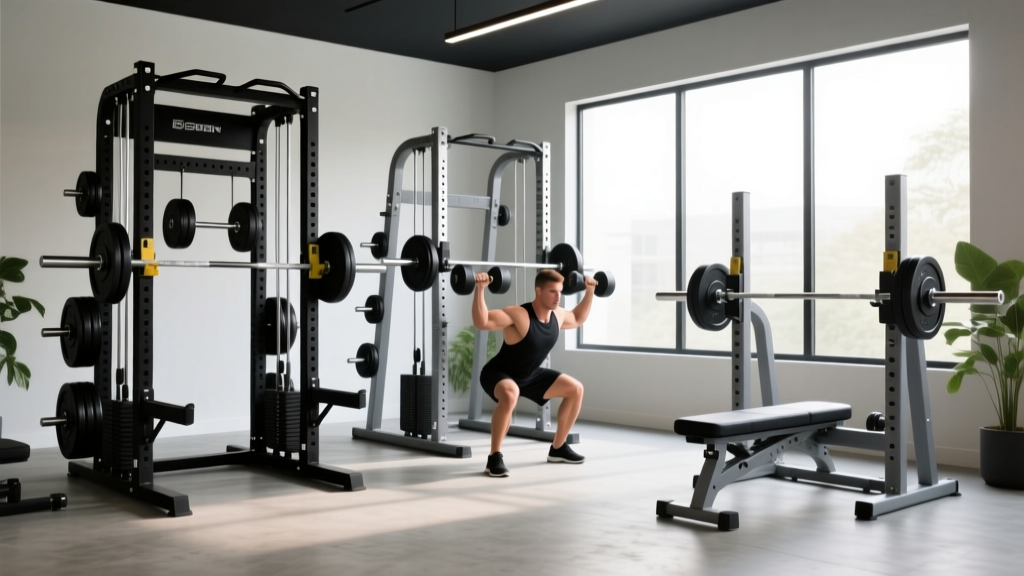
Quick Terminology Check:- Power Rack (Full Cage): A 4-post or 6-post enclosed structure with safety pins and a pull-up bar.
- Squat Rack (Half Rack): An open-front 4-post structure, offering more interior space but less enclosure.
- Squat Stand: A minimalist 2-post system connected only at the base (or completely freestanding).
Step 1: Decoding Footprints, Budgets, and 2026 Pricing
Before mapping out your exercises, you must evaluate your physical space and financial budget. The footprint of your rack dictates where your dumbbell storage will live and how much room you have to maneuver during lateral raises or dumbbell flyes.
| Equipment Type | Average Footprint | 2026 Price Range | Best For Dumbbell Work? |
|---|---|---|---|
| Squat Stand (e.g., Rogue S-1) | 48" x 48" (Minimal) | $350 - $500 | Yes (Unrestricted movement) |
| Squat Rack (e.g., Titan T-3 Half Rack) | 48" x 48" (Open Front) | $600 - $900 | Yes (Great for wide flyes) |
| Power Rack (e.g., Rogue RM-3 Fortess) | 49" x 43" to 53" x 53" | $1,100 - $2,500+ | Conditional (Width limits apply) |
Step 2: Executing a Basic Upper Body Workout With Dumbbells Inside Your Rack
How you interact with your rack changes drastically depending on the model you choose. Let us break down the biomechanics and spatial requirements of three foundational movements in a basic upper body workout with dumbbells.
1. The Incline Dumbbell Press (Clearance is King)
If you own a standard power rack with an interior width of 43 inches, you must account for the length of your dumbbells. For example, a pair of 80lb PowerBlock Elite dumbbells measures roughly 12 inches in length. When you lie on an 18-inch wide adjustable bench centered inside a 43-inch rack, you have exactly 12.5 inches of space on each side. During the eccentric (lowering) phase of the press, your dumbbells will physically strike the steel uprights before your chest is fully stretched.
The Solution: If you use blocky adjustable dumbbells, opt for a Squat Stand or a Half Rack where you can pull the bench slightly forward, eliminating the lateral steel barriers. If you insist on a Power Rack for safety, you must use compact urethane hex dumbbells rather than long adjustable models.
2. Seated Overhead Dumbbell Shoulder Press (Upright Height Matters)
Pressing heavy dumbbells overhead requires a high-back adjustable bench. Many beginners buy 72-inch tall squat stands, only to realize that the top crossmember hits the backrest of their bench, preventing a true 90-degree seated position. According to ACE Fitness guidelines, proper spinal alignment during overhead presses is critical to avoid lumbar compensation. Always opt for 82-inch or 90-inch uprights if your primary goal is heavy seated dumbbell pressing inside the cage.
3. Single-Arm Dumbbell Rows (Stability and Storage)
When performing heavy single-arm rows, you need a stable surface to brace your non-working hand. A 4-post power rack or half rack provides a rock-solid crossmember to grip. Conversely, a lightweight 2-post squat stand can actually tip forward if you lean your body weight onto the upright while rowing a 100lb dumbbell. Always bolt 2-post stands to a concrete floor or a reinforced wooden platform if rows are a staple in your routine.
Step 3: Safety Protocols and Spotter Arm Configurations
A common misconception is that spotter arms are only for barbell benching. The Mayo Clinic emphasizes that having a safe bailout strategy is essential for any heavy resistance training to prevent joint and muscle trauma. But how do you set up spotter arms for dumbbells?
⚠️ Critical Safety Warning: Dumbbell Spotter PlacementUnlike a barbell, which rests on a single plane, dumbbells move independently. If you fail a rep, you cannot simply drop the weights onto a narrow center pin. You must set your spotter arms wider than your torso, positioned to catch the bottom of the dumbbells or your wrists. Never set spotter arms so high that they restrict your natural range of motion, and always use arms with UHMW plastic liners to prevent the dumbbell handles from slipping off the steel upon impact.
Step 4: Weight Storage and Spatial Efficiency
A basic upper body workout with dumbbells often involves drop sets or pyramid schemes, meaning you need multiple pairs of weights nearby. Power racks excel here; many 6-post models (like the REP PR-5000) feature integrated weight storage horns on the rear uprights, keeping your floor clear. However, storing round or hex dumbbells requires specialized tray attachments or a dedicated 3-tier dumbbell rack. If your room is smaller than 10x10 feet, a squat stand paired with a compact, wall-mounted dumbbell shelf is the most spatially efficient choice.
Step 5: Making Your Final Purchase Decision
To synthesize your options, use this rapid decision framework based on your specific training environment:
- Choose a Squat Stand if: You are on a strict budget (under $500), have low ceilings (under 80 inches), use long adjustable dumbbells, and need unrestricted lateral movement for flyes.
- Choose a Half Rack if: You want the open-front freedom of a squat stand but require the heavy-duty stability and plate storage of a 4-post system.
- Choose a Power Rack if: You plan to integrate cable attachments for tricep pushdowns and lat pulldowns into your upper body routine, and you primarily use compact, fixed-weight hex dumbbells.
Frequently Asked Questions
Can I do a basic upper body workout with dumbbells without any rack?
Yes, for the first few months. However, as your strength increases, getting heavy dumbbells into position for an incline press without a rack to brace against becomes a significant injury risk. A rack provides the structural support needed to safely kick heavy weights into position.
Do I need to bolt my rack to the floor for dumbbell training?
According to Cleveland Clinic fitness safety recommendations, securing your equipment is vital to prevent tipping. While heavy power racks rarely tip during dumbbell work, lightweight squat stands must be bolted down, especially if you are doing dynamic movements or leaning against the uprights during rows.
What is the best bench height for dumbbell work inside a rack?
Look for a bench with a seat height of 17 to 18 inches. This aligns perfectly with the standard J-cup heights on most commercial racks, allowing you to easily slide the bench in and out without catching the dumbbells on the safety pins.
More gear to consider
All reviews
Budget Breakdown: Loadable Dumbbells for Triceps Extensions (2026)

Stop the Dumbbell Drag: Budget Rack & Storage Guide
Olympic vs Standard Plates & Decline Dumbbell Press Machine Mistakes

Adjustable Dumbbells for Dumbbell Scapular External Rotation (2026)

Collar Clamp Types Compared: Barbells vs. Dumbbell Power Cleans