Walking Pad vs. NordicTrack EXP 7i Treadmill Review & Error Fixes
Compare top walking pads with our NordicTrack EXP 7i treadmill review. Learn common buyer mistakes, spec differences, and step-by-step error fixes.

The Compact Cardio Dilemma: Walking Pads vs. Traditional Foldables
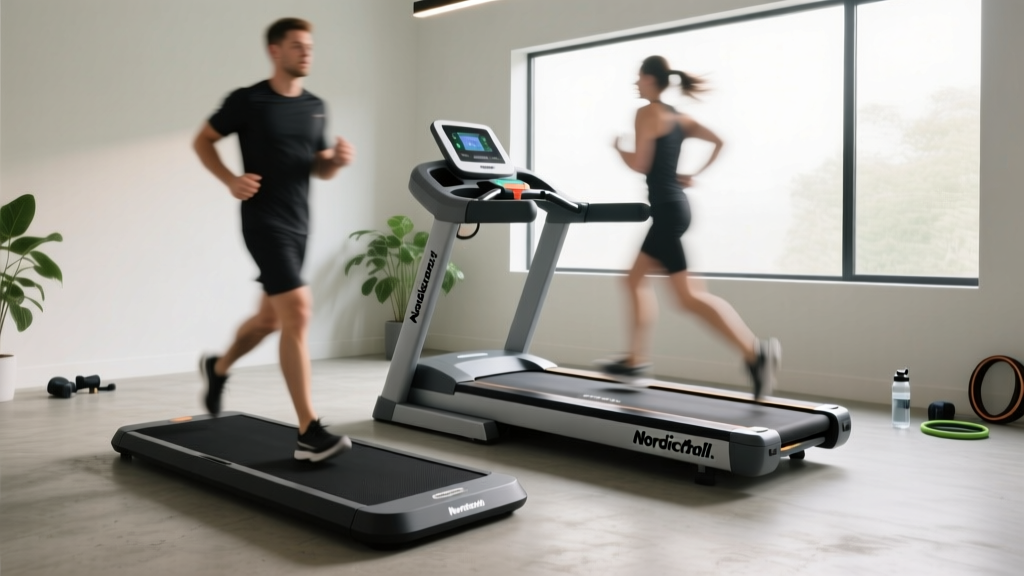
As home gym footprints continue to shrink in 2026, the debate between ultra-compact walking pads and foldable traditional treadmills has reached a fever pitch. Consumers are constantly cross-shopping sleek, under-desk walking pads against space-saving traditional models. In this comprehensive guide, we will conduct a deep-dive walking pad comparison while anchoring our analysis with a detailed NordicTrack EXP 7i treadmill review. Whether you are trying to hit the American Heart Association's recommended 150 minutes of weekly moderate cardio, or you are simply trying to avoid common purchasing mistakes, understanding the mechanical and practical differences between these two categories is critical.
Quick Decision Framework
- Choose a Walking Pad if: You strictly walk (under 4.5 mph), have less than 15 square feet of dedicated floor space, and want a machine you can slide under a sofa or bed.
- Choose the NordicTrack EXP 7i if:
NordicTrack EXP 7i Treadmill Review: Core Specs & Real-World Performance
The NordicTrack EXP 7i occupies a unique middle ground in the 2026 cardio market. Priced typically around $799 (excluding the $39/month iFIT subscription), it is not a walking pad, but it is one of the most compact traditional treadmills available. Let us break down the exact specifications that separate it from the walking pad category.
Motor and Belt Dynamics
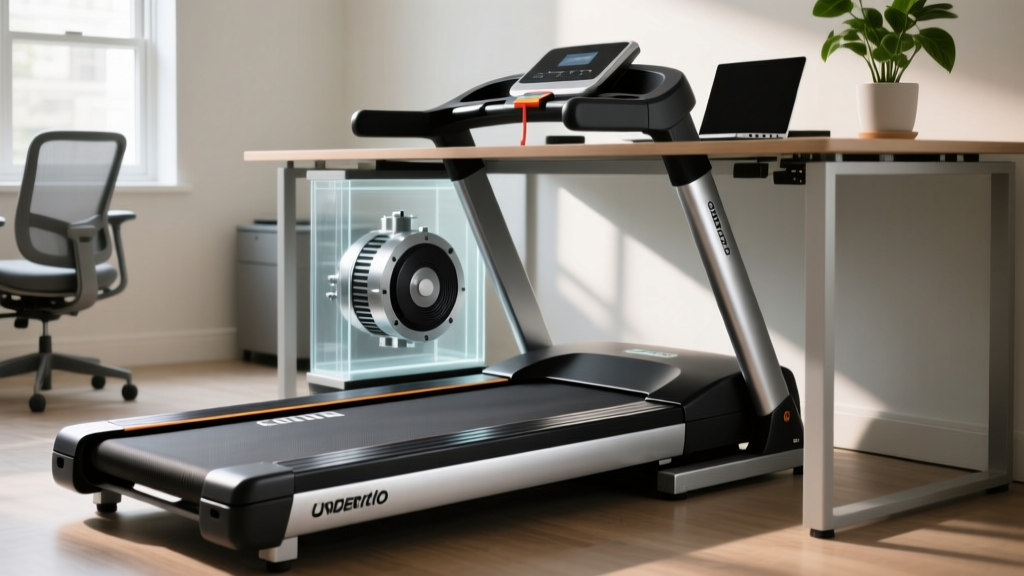
The EXP 7i features a 2.6 CHP (Continuous Horsepower) Mach Z motor. Unlike the 'Peak HP' ratings often deceptively marketed on walking pads, a 2.6 CHP motor can sustain a 150-pound runner at 6.0 mph indefinitely without overheating the internal PWM motor controller. The belt measures 20 inches wide by 55 inches long. According to biomechanics experts and guidelines from the American Academy of Orthopaedic Surgeons, maintaining a natural gait width is crucial for preventing hip and knee strain; a 20-inch width provides the necessary margin of error for natural arm swing and foot placement, something a 15-inch walking pad simply cannot offer.
Incline and Software Integration
Unlike 95% of walking pads on the market, the EXP 7i offers a motorized 0% to 10% incline. This allows users to increase cardiovascular demand and engage the posterior chain (glutes and hamstrings) without increasing impact forces on the joints. Furthermore, the built-in 5-inch LCD screen syncs seamlessly with iFIT, allowing for automatic incline and speed adjustments during global workout routes.
Walking Pad Comparison: UREVO Strol 2E vs. WalkingPad R2
To provide a fair comparison against the EXP 7i, we must look at the premium end of the walking pad market. Below is a spec-to-spec matrix comparing the top-tier walking pads against the NordicTrack EXP 7i.
| Feature | NordicTrack EXP 7i | WalkingPad R2 | UREVO Strol 2E |
|---|---|---|---|
| Motor Type | 2.6 CHP | 2.5 HP (Peak) | 2.5 HP (Peak) |
| Belt Dimensions | 20" x 55" | 17.3" x 47.2" | 15" x 41.3" |
| Max Speed | 10.0 mph | 7.5 mph | 7.6 mph |
| Weight Capacity | 300 lbs | 240 lbs | 240 lbs |
| Incline | 0 - 10% Motorized | None | None |
| Est. Price (2026) | $799 + Sub | $499 | $250 |
Common Mistakes Buyers Make When Choosing Compact Cardio
When analyzing thousands of user returns and support tickets, several glaring mistakes consistently emerge when consumers attempt to substitute walking pads for traditional treadmills.
Mistake 1: Confusing Peak HP with Continuous HP (CHP)
Walking pads frequently advertise '2.5 HP' motors. However, this is almost always Peak Horsepower—the maximum output the motor can achieve for a few seconds before tripping the thermal breaker. The EXP 7i's 2.6 CHP rating means it delivers that power continuously. If a 200-pound user attempts to jog at 5.5 mph on a Peak HP walking pad, the motor will over, the belt will stutter, and the internal MOSFETs on the motor controller board will eventually fry.
Mistake 2: Ignoring the Biomechanics of Belt Width
A 15-inch wide belt requires a highly constrained, tightrope-style gait. According to research highlighted by the Mayo Clinic regarding walking mechanics and joint stress, altering your natural stride width to avoid stepping off the edge of a narrow belt can lead to IT band friction and hip flexor strain over long durations. The 20-inch belt on the EXP 7i allows for a natural, biomechanically sound gait.
Expert Insight: Never use a walking pad without the handrail deployed if you are walking faster than 3.5 mph. Without peripheral visual cues of a moving landscape, the brain's vestibular system struggles to maintain lateral balance on a narrow, moving surface, increasing the risk of a side-step fall.
Troubleshooting Guide: Fixing Common Treadmill & Walking Pad Errors
Whether you opt for the EXP 7i or a walking pad, mechanical hiccups are inevitable. Below is a masterclass in troubleshooting the most common errors encountered in 2026 compact cardio machines.
NordicTrack EXP 7i Specific Error Codes
Error 1: Speed Sensor / Reed Switch Failure
The console displays 'Error 1' and the belt abruptly stops. This happens when the console loses the RPM signal from the front roller.
- Unplug the treadmill from the wall and remove the safety key.
- Use a Phillips-head screwdriver to remove the 6 screws securing the plastic motor hood at the front of the deck.
- Locate the reed switch (a small black plastic component with a wire) positioned next to the front roller pulley.
- The magnetic wheel on the roller must pass exactly 1/8 inch (approx. 3mm) from the sensor. If the gap is too wide, the signal fails.
- Loosen the mounting screw, slide the sensor closer to the magnet, retighten, and test.
Error 3: Incline Motor / Potentiometer Desync
The treadmill is stuck at an incline, or the console displays 'Error 3' during a workout.
- Stand on the side rails, not the belt.
- Press and hold both the Speed + and Incline + buttons simultaneously for 5 seconds.
- The console will beep, initiating 'Calibration Mode'.
- The treadmill will automatically drive the lift actuator to its maximum 10% height, then lower it to 0%. Do not interrupt this process. Once it stops, the internal potentiometer limits are reset.
Walking Pad Calibration and Belt Slippage Fixes
Walking pads suffer from belt slippage far more often than traditional treadmills due to their smaller roller diameters and lack of heavy-duty tensioning springs.
The 1/4 Turn Rule for Belt Tension
If the walking pad belt hesitates when you step on it but spins fine when empty, the tension is too low. Locate the two adjustment bolts at the very rear of the deck (left and right).
- Use a 6mm Allen wrench.
- Turn both the left and right bolts exactly 1/4 turn clockwise.
- Walk on the pad at 2.0 mph to test.
- If it still slips, repeat the 1/4 turn. Warning: Never exceed 1 full cumulative turn. Over-tensioning a walking pad belt will cause excessive friction, melt the wax coating on the deck, and permanently destroy the motor controller board.
Final Verdict: Which Cardio Machine Belongs in Your Home Gym?
If your goal is strictly to accumulate light NEAT (Non-Exercise Activity Thermogenesis) steps while working at a standing desk, a premium walking pad like the WalkingPad R2 is a highly convenient, low-profile solution. However, if you are seeking genuine cardiovascular adaptation, interval training, and a machine that accommodates a natural, joint-safe running gait, the walking pad falls short.
Our NordicTrack EXP 7i treadmill review concludes that it remains the undisputed king of the sub-$1,000 compact treadmill market in 2026. The inclusion of a true 2.6 CHP motor, a 20-inch belt width, and a motorized 10% incline provides a biomechanically sound workout that walking pads simply cannot replicate. By understanding the mechanical differences and knowing how to perform basic troubleshooting, you can ensure your home cardio investment delivers years of reliable, injury-free performance.
More gear to consider
All reviews
Fitness Avenue FA 7966 Treadmill vs Under Desk Models: 2026 Review

Under Desk Treadmill Review: Lubricating Treadmill Belts Explained
Stair Climber vs TR1200i Treadmill: Home Use Guide 2026
NordicTrack NTL17915 Treadmill vs Rowers: Buying Guide
Stair Climber vs Treadmill: Is Incline Treadmill Good for Fat Loss