NordicTrack NTL17915 Treadmill vs Rowers: Buying Guide
Compare the NordicTrack NTL17915 treadmill with top rowers. Read our rowing machine buying guide, technique fixes, and troubleshooting tips.

The Cross-Training Pivot: Incline Trainers vs. Ergometers
Building a premium home gym in 2026 often comes down to a battle of floor space and biomechanics. Many fitness enthusiasts begin their research looking at heavy-duty incline trainers like the NordicTrack NTL17915 treadmill (widely recognized as the Commercial X22i). With its massive 22-inch HD touchscreen, 4.0 continuous horsepower (CHP) motor, and staggering -6% to 40% incline range, the NTL17915 is a lower-body and cardiovascular powerhouse. However, physical therapists and strength coaches frequently recommend pivoting to—or supplementing with—a rowing machine to mitigate repetitive joint impact and engage the posterior chain.
If joint preservation, full-body caloric expenditure, or functional athletic carryover are your primary goals, transitioning from a treadmill-centric routine to rowing requires a strategic approach. This comprehensive rowing machine buying guide and technique troubleshooting manual is designed for home gym owners who want to master the ergometer, avoid common mechanical failures, and optimize their stroke mechanics.
Rowing Machine Buying Guide: Air, Magnetic, or Water?
Unlike the NordicTrack NTL17915 treadmill, which relies on a motorized belt and deck, a rowing machine’s resistance mechanism dictates its entire feel, maintenance schedule, and noise profile. When allocating your budget (typically between $900 and $1,500 for a commercial-grade rower), you must choose the right resistance type for your environment and training goals.
| Resistance Type | Top 2026 Models | Avg. Price | Pros & Cons | Best For |
|---|---|---|---|---|
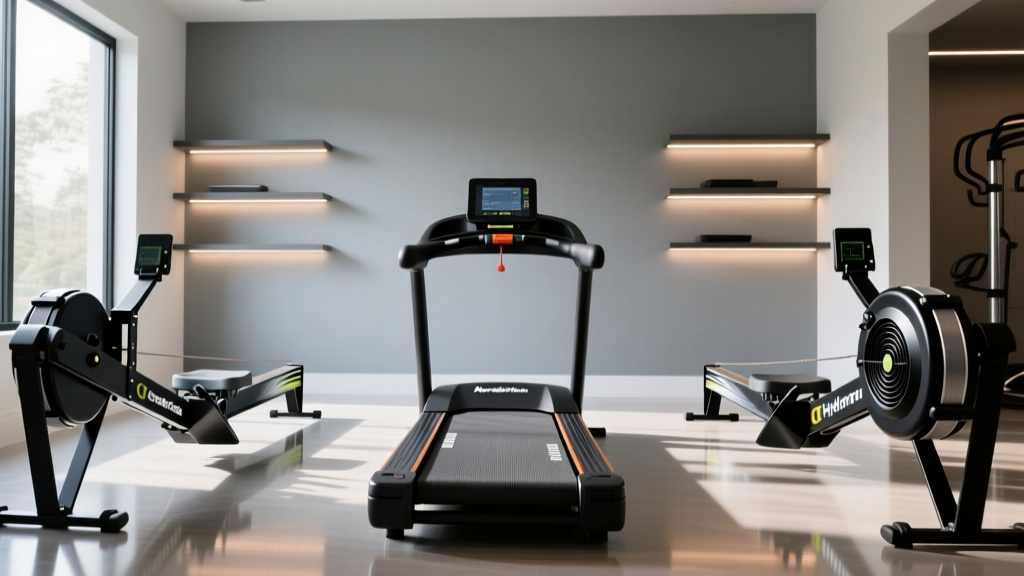
| Air | Concept2 RowErg, Assault AirRower | $990 - $1,100 | Infinite dynamic resistance; loud fan noise; requires chain oiling. | CrossFitters, competitive rowers, data-driven athletes. |
| Magnetic | NordicTrack RW900, Echelon Row | $1,199 - $1,499 | Whisper-quiet; integrated screens; lacks the 'catch' feel of air. | Apartment dwellers, interactive class followers. |
| Water | WaterRower Natural, Hydrow Rower | $1,200 - $2,400 | Aesthetic wood frame; soothing sound; heavy and difficult to move. | Design-conscious spaces, sensory-focused athletes. |
The Drag Factor Misconception
The most common buying and setup mistake beginners make is cranking the damper lever to 10. According to Concept2's official damper setting guidelines, a higher setting does not equal a better workout; it simply mimics rowing a heavy, slow wooden boat. For optimal cardiovascular conditioning and power transfer, male rowers should target a drag factor between 120 and 130 (usually a damper setting of 4-5), while female rowers should target 110 to 120. Setting the damper to 10 prematurely exhausts the lower back before the cardiovascular system is fully taxed.
5 Common Rowing Technique Mistakes (And How to Fix Them)
While the NordicTrack NTL17915 treadmill allows for a relatively natural walking or running gait, rowing is a highly technical, sequenced movement. Poor form on an ergometer doesn't just rob you of wattage; it actively invites lumbar herniations and rib stress fractures. The Concept2 technique guide emphasizes a strict sequence: Legs, Core, Arms on the drive; Arms, Core, Legs on the recovery.
⚠️ Biomechanical Warning: If you experience sharp pain in the lower back immediately following the 'catch' (the starting position), you are likely 'shooting the slide'—pushing with your legs while your torso remains hinged forward, placing massive sheer force on your lumbar discs.Mistake 1: Shooting the Slide
The Error: The seat moves backward, but the handle doesn't move, meaning your legs are extending while your back holds a static, vulnerable angle.
The Fix: Lock your torso angle during the first 30% of the drive. Imagine your arms are ropes connecting your shoulders to the handle. The handle must move in perfect tandem with the seat until your knees are nearly flat.
Mistake 2: Early Arm Pull
The Error: Bending the elbows before the legs are fully extended. This shifts the load from the massive glute and quad muscles to the tiny biceps and brachioradialis, leading to premature forearm pump and elbow tendonitis.
The Fix: Keep the arms completely straight until the handle passes the knees. Only then should you hinge the torso back and engage the lats to finish the stroke.
Mistake 3: Rushing the Recovery
The Error: Sliding forward to the catch as fast as the drive. Rowing power relies on a 2:1 or 3:1 time ratio (recovery should take twice as long as the drive).
The Fix: Control the slide. Let the fan slow down. A rushed recovery spikes your heart rate without generating actual wattage, violating core Mayo Clinic aerobic efficiency principles.
Mistake 4: Hinging at the Upper Back
The Error: Rounding the thoracic spine at the finish of the stroke instead of hinging at the hips.
The Fix: Keep your chest proud and hinge from the hip crease. Your core should act as a rigid cylinder transferring power from the legs to the handle.
Mistake 5: Over-Compressing at the Catch
The Error: Sliding so far forward that the shins break past vertical, causing the hips to tuck under (butt wink).
The Fix: Stop the slide when your shins are perfectly vertical. If you lack the ankle dorsiflexion to reach this point without heel lift, strap your feet in slightly lower or work on ankle mobility off the machine.
Troubleshooting Your Rower: Maintenance and Error Codes
Unlike motorized treadmills that require belt lubrication and deck alignment, air and water rowers demand a different maintenance protocol. Ignoring these steps leads to stuttering seats, snapped chains, and monitor failures.
- Seat Stuttering on the Monorail: Dust and microscopic metal shavings accumulate on the stainless steel rail. Solution: Wipe the rail with a damp microfiber cloth and a mild glass cleaner after every 3 sessions. Never use silicone spray or WD-40 on the rail, as this attracts grit and destroys the seat rollers.
- Chain Sag and Slippage: Over time, the nickel-plated steel chain stretches and loses tension. Solution: Every 40 hours of use, apply 1 teaspoon of purified mineral oil or 20W motor oil to a paper towel and pull the chain through it. Wipe off excess to prevent dust buildup.
- Phantom Battery Drain (PM5 Monitor): If your Concept2 monitor dies rapidly despite using fresh D-cell batteries, the issue is often corroded contacts or leaving the monitor plugged into a USB-C cable that isn't actively charging it. Solution: Remove batteries if storing the machine for more than a week, or invest in the official Concept2 USB battery pack.
- Water Tank Algae (Water Rowers Only): Green water increases drag unpredictably and degrades the polycarbonate tank. Solution: Drop one purification tablet (usually provided by the manufacturer) into the tank every 6 months. Never use chlorine bleach, which will cloud and crack the plastic.
Final Verdict: Integrating the Ergometer into Your Routine
If you already own the NordicTrack NTL17915 treadmill, adding a Concept2 RowErg or a magnetic NordicTrack RW900 creates the ultimate cardiovascular and hypertrophy synergy. Use the treadmill's 40% incline for Zone 2 low-impact walking and posterior chain activation on Mondays and Thursdays. Utilize the rower for high-intensity interval training (HIIT) and VO2 max development on Tuesdays and Fridays. By mastering the rowing stroke, respecting the drag factor, and maintaining your machine's monorail and chain, you will unlock a level of full-body conditioning that no single machine can provide on its own.
More gear to consider
All reviews
U50 Treadmill Maintenance: Small Space Longevity Guide

Is an Elliptical Machine Better Than a Treadmill for Noise?

Walking Pad vs Treadmill: Setup & Treadmill Pace Conversions Guide
Elliptical vs Treadmill: Budget Breakdown & Pregnant Treadmill Safety
LifeSmart TM4500 Treadmill Steering Gear E9 Fails? Try Compact Bikes