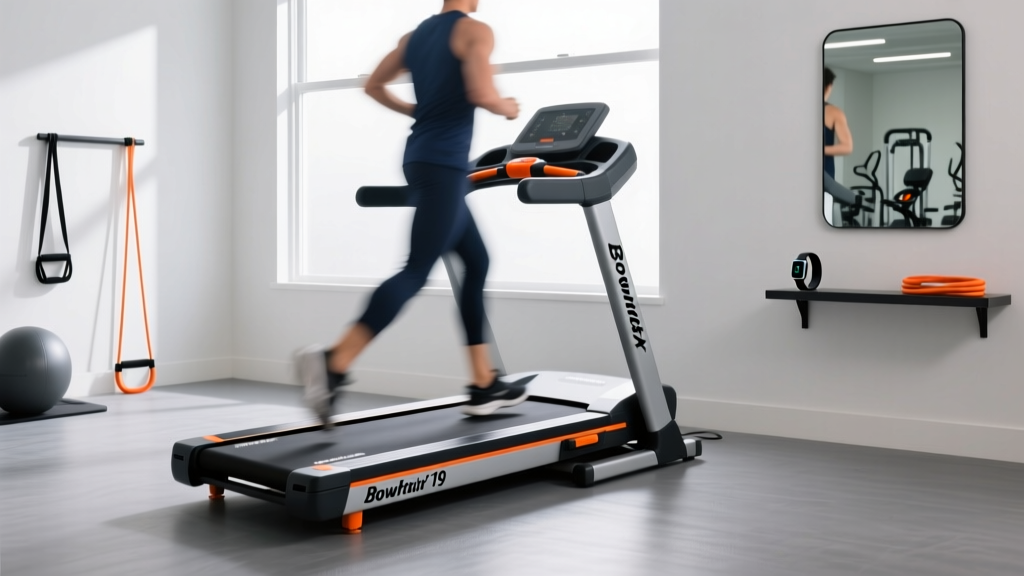
Treadmill LISS Workout Setup: Motor Size & Installation Guide
Optimize your treadmill LISS workout with our complete motor size guide and installation walkthrough. Ensure proper CHP, belt tension, and electrical setup.

The LISS Thermal Paradox: Why Low Speeds Demand High Horsepower
When configuring a home gym for a daily treadmill LISS workout (Low-Intensity Steady State), most buyers mistakenly assume that because they are only walking or lightly jogging at 2.5 to 4.0 mph, they can save money on a smaller, less powerful motor. This is a critical error that leads to premature motor failure. According to Consumer Reports treadmill buying guidelines, understanding Continuous Horsepower (CHP) versus Peak Horsepower is the most vital step in equipment selection.
The vast majority of residential treadmills utilize Direct Current (DC) motors. DC motors rely on an internal cooling fan attached directly to the rotor shaft. During a high-speed run (e.g., 8.0 mph), the rotor spins rapidly, generating immense airflow that keeps the copper windings cool. However, during a 60-minute LISS session at 3.0 mph, the rotor spins slowly. The fan moves significantly less air, yet the motor must still generate high torque to overcome the static friction of your body weight pressing down on the belt. This creates a thermal bottleneck: sustained low-speed operation generates disproportionate heat, which can trigger the Motor Control Board (MCB) thermal shutoff or permanently degrade the motor's internal insulation.
Expert Insight: A 2.0 HP Peak motor might handle 15-minute high-intensity interval sprints just fine, but it will overheat and stutter during a 45-minute steady-state LISS walk. For LISS, Continuous Horsepower (CHP) is the only metric that matters.
Sizing Your Motor: The CHP Matrix for Steady-State Cardio
The American Heart Association recommends at least 150 minutes of moderate-intensity aerobic activity per week, a target easily met through consistent steady-state cardio routines. To support this volume without mechanical degradation, your treadmill's motor must be matched to your body weight and the specific demands of low-speed, high-torque output.
| User Weight | Primary LISS Profile | Minimum Required CHP | Example Benchmark Model |
|---|---|---|---|
| Under 150 lbs | Flat Walking (2.0 - 3.5 mph) | 2.5 CHP | NordicTrack T Series 10 |
| 150 - 200 lbs | Incline Walking / Light Jog | 3.0 CHP | Horizon Fitness 7.4 |
| 200 - 250 lbs | Extended LISS (60+ mins) | 3.5 CHP | Sole F80 |
| 250+ lbs | Heavy-Duty Incline LISS | 4.0 CHP | Sole F85 / Precor TRM 731 |
Note: If your LISS routine involves sustained inclines (10% or higher), always bump up to the next CHP tier. Incline walking at low speeds maximizes torque requirements and minimizes belt momentum, placing the highest possible thermal load on a DC motor.
Pre-Installation Walkthrough: Electrical and Environmental Prep
Before unboxing the deck and uprights, you must verify the installation environment. A properly sized motor will still fail or stutter if the electrical supply cannot handle continuous amperage draw.
1. The Dedicated Circuit Rule
A 3.0 CHP treadmill performing a 60-minute LISS workout will pull a continuous 10 to 14 amps. If your treadmill shares a 15-amp circuit with an air conditioner, refrigerator, or space heater, voltage drops will occur. This causes the MCB to starve the motor of power, resulting in a 'hesitation' or 'stutter' effect underfoot. Requirement: Install the treadmill on a dedicated 15-amp or 20-amp NEMA 5-15R or 5-20R outlet.
2. Avoid GFCI Outlets
Do not plug your treadmill into a GFCI (Ground Fault Circuit Interrupter) outlet, commonly found in garages or basements. The natural electrical noise and minor ground leakage generated by a treadmill's DC motor and static friction can cause GFCI breakers to trip randomly mid-workout.
3. Thermal Clearance Mapping
Because LISS workouts generate localized heat around the motor hood, proper airflow is non-negotiable. Maintain a minimum of 24 inches of clearance on the left, right, and front of the treadmill. Do not push the motor hood directly against a wall or heavy drapery.
Step-by-Step Physical Setup for Low-Friction LISS
The physical assembly of the treadmill directly impacts how hard the motor has to work. Excessive belt friction is the number one enemy of low-speed LISS workouts. Follow this calibration sequence after assembling the uprights and console.
- Deck Leveling: Before tightening the rear roller bolts, ensure the treadmill feet are adjusted so the deck is perfectly horizontal. An unlevel deck causes the belt to track heavily to one side, creating edge friction that drains motor power.
- The Two-Finger Belt Tension Test: Reach under the walking belt at the exact midpoint of the deck (between the front and rear rollers). Lift the belt upward. You should be able to lift it exactly 2 to 3 inches off the deck. If it is tighter than 2 inches, the low-speed torque requirement will spike, frying the MCB over time. If it is looser than 3 inches, the belt will slip underfoot during your LISS walk.
- Initial Silicone Lubrication: Even if the manufacturer claims the belt is 'pre-lubricated,' the factory application is often sparse. Lift the belt and apply exactly 0.5 oz of 100% pure silicone treadmill lubricant in a zig-zag pattern on both the left and right halves of the deck. Never use WD-40 or petroleum-based products, which will destroy the PVC belt backing.
- Low-Speed Break-In Cycle: Turn the machine on and set it to 1.5 mph. Let it run unoccupied for 10 minutes. This distributes the silicone evenly across the deck and allows the motor brushes to seat properly against the commutator before bearing your body weight.
Troubleshooting Motor Strain During Steady-State Walks
Even with a 3.5 CHP motor and a perfect setup, environmental factors and wear can introduce friction. If you experience the following issues during your treadmill LISS workout, use this diagnostic matrix to protect your investment.
- Symptom: Belt stutters or pauses momentarily when your foot strikes the deck at 3.0 mph.
Diagnosis: High deck friction or loose drive belt.
Fix: Re-apply 0.5 oz of silicone lubricant. If the issue persists, remove the front motor hood and check the ribbed drive belt connecting the motor to the front roller. It should have about 1/2 inch of deflection when pressed. Tighten the motor mount bolts if it is slack. - Symptom: The console shuts off entirely after 35-40 minutes of continuous walking, but turns back on after 15 minutes.
Diagnosis: MCB Thermal Overload Protection triggered.
Fix: Your motor is overheating. This is usually caused by a degraded walking belt that has lost its wax/silicone backing, creating massive drag. The belt must be replaced, or you must upgrade to a machine with a larger CHP rating and an external cooling fan. - Symptom: A high-pitched whining noise that correlates with belt speed.
Diagnosis: Dry roller bearings or misaligned rear roller.
Fix: Use a laser level or tape measure to ensure the distance from the rear roller edge to the deck frame is identical on both the left and right sides. Uneven tracking grinds the bearings and forces the motor to compensate.
Final Thoughts on Long-Term LISS Optimization
A treadmill LISS workout is one of the most effective, joint-friendly methods for building aerobic base and improving cardiovascular health. However, the biomechanics of slow, sustained walking place a unique thermal and mechanical load on home fitness equipment. By prioritizing Continuous Horsepower over Peak Horsepower, ensuring a dedicated electrical circuit, and meticulously calibrating your belt tension and lubrication, you will extend the lifespan of your treadmill's motor and drive system by years. For more technical specifications on commercial-grade drive systems, consult the engineering whitepapers available on the Sole Fitness treadmill lineup, which remain an industry benchmark for high-torque, low-speed endurance motors.
More gear to consider
All reviews
Walking Pad Mistakes & NordicTrack Promo Code 1750 Treadmill Tips

Walmart Black Friday Treadmill Deals: Features & Setup Guide

ProForm 415 Treadmill Motor Guide: Is 2.0 HP Enough?

Under Desk Treadmills vs Sole Fitness Treadmills: Office Review

AirGo Treadmill Belt Maintenance: 2026 Market Trends