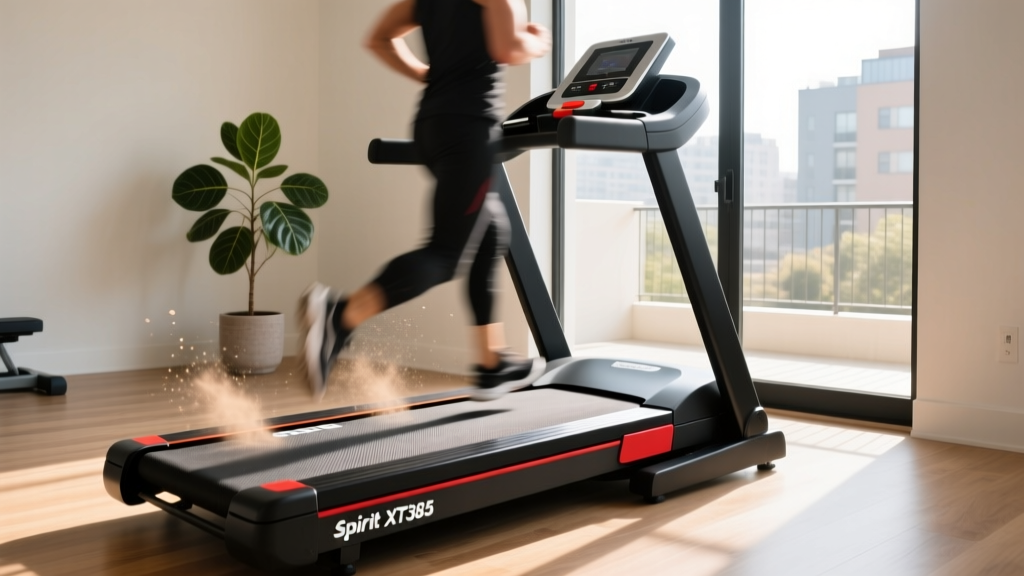
Rowing Machine Guide & Technique vs Gold's Gym Treadmill 430i
Master rowing machine technique and buying choices. We compare top rowers against the Gold's Gym Treadmill 430i to help you pick the best home cardio.

The Cardio Crossroads: Rowing vs. Budget Treadmills
When outfitting a home gym on a strict budget, fitness enthusiasts frequently gravitate toward the Gold's Gym Treadmill 430i. Priced around $250 to $299, it represents the entry-level treadmill market. However, as we move through 2026, a growing segment of home athletes is pivoting away from budget treadmills in favor of rowing machines. Why? The answer lies in biomechanical efficiency, mechanical longevity, and full-body engagement.
This comprehensive guide will dissect the rowing machine market, teach you the exact four-phase rowing technique, and directly compare the physiological and mechanical realities of using a premium or budget rower versus the Gold's Gym Treadmill 430i. Whether you are rehabilitating a joint injury or chasing a sub-20-minute 5K, understanding these modalities is critical for your long-term cardiovascular health.
💡 The Motor Limitation Reality Check: The Gold's Gym Treadmill 430i utilizes a 1.5 Continuous Horsepower (CHP) motor. While marketed with a 300 lb user weight capacity, any user over 220 lbs attempting to run will cause the motor to overheat and the 16-inch wide belt to slip. Rowing machines, conversely, are user-weight independent; a 300 lb athlete simply pulls a higher wattage without straining a motor.Rowing Machine Buying Guide: What to Look for in 2026
Unlike treadmills, where motor size and belt ply dictate quality, rowing machines are evaluated on their resistance mechanism, rail ergonomics, and monitor telemetry. Here is the definitive framework for selecting a rower.
1. Resistance Mechanisms: Air vs. Magnetic vs. Water
- Air Resistance (The Gold Standard): Utilizes a flywheel with fan blades. The harder you pull, the more drag it creates. This provides an infinite, dynamic resistance curve that perfectly mimics water. Top Pick: Concept2 RowErg ($1,000).
- Magnetic Resistance: Uses electromagnets to create drag on a metal flywheel. These are virtually silent, making them ideal for apartment living, but they lack the visceral 'catch' feel of air rowers. Top Pick: Echelon Row or ProForm 440R ($299-$499).
- Water Resistance: Features a tank of water and a paddle. It offers the most authentic sound and visual feedback but requires water purification tablets and is significantly heavier. Top Pick: WaterRower Natural ($1,200+).
- Hydraulic/Piston (Avoid): Cheap, compact rowers using gas shocks. In 2026, these are considered obsolete due to high failure rates in the piston seals and a jerky, non-linear stroke path.
2. Rail Length and Ergonomics
Your inseam dictates your required rail length. If you are taller than 6'2" (roughly a 36-inch inseam), you need a monorail that supports at least 54 inches of sliding travel. Budget rowers often cap out at 44 inches, forcing tall users to compress their shins improperly at the 'catch' phase, leading to severe lumbar strain.
Head-to-Head Comparison Matrix
How do the top rowing machines stack up against the popular budget treadmill baseline? Let's look at the hard specifications.
| Equipment Model | Type & Resistance | Footprint & Storage | Max User Weight | Est. Price (2026) |
|---|---|---|---|---|
| Gold's Gym Treadmill 430i | Treadmill (1.5 CHP Motor) | 67" x 26" (Folds up) | 300 lbs (220 lbs for running) | $259 - $299 |
| Concept2 RowErg | Rower (Air Flywheel) | 94" x 24" (Separates in 2) | 500 lbs | $1,000 |
| ProForm 440R | Rower (Magnetic) | 76" x 20" (Folds upright) | 250 lbs | $299 |
| Sunny Health SF-RW5515 | Rower (Magnetic) | 82" x 22" (Upright stand) | 250 lbs | $230 |
Mastering the Rowing Technique: The 4-Phase Stroke
According to Concept2's official biomechanics guidelines, rowing is not an upper-body pulling motion; it is a leg-driven power movement. Novices often rush the slide and pull entirely with their biceps, resulting in lower back pain and inefficient cardiovascular output. The stroke is broken down into four distinct phases.
- The Catch (The Setup): Shins are perfectly vertical (90 degrees). Arms are completely straight, shoulders relaxed and hinged forward at the 1 o'clock position. Your lats are engaged, and your core is braced. This is the moment of maximum potential energy.
- The Drive (The Power): The sequence is strictly Legs, Core, Arms. Push explosively through the mid-foot and heel. As the legs approach full extension, the hips hinge open to 11 o'clock, and finally, the arms draw the handle to the lower sternum. Legs provide 60% of the power, the core 30%, and the arms only 10%.
- The Finish: Legs are fully extended, torso leaned back slightly (11 o'clock), and the handle rests just below the pectoral line. Wrists are flat, not flexed.
- The Recovery (The Reset): The exact reverse of the drive: Arms, Core, Legs. Shoot the arms straight out, hinge forward from the hips (1 o'clock), and only once your hands clear your knees do you allow the knees to bend and slide back to the catch.
Expert Insight: The most common mistake among beginners is confusing Stroke Rate (SPM) with Power (Split Time). Rowing at 35 SPM with poor connection will yield a slower 500m split than rowing at 22 SPM with massive leg drive. Power is generated on the drive; the recovery should take twice as long as the drive to allow for aerobic flushing.
Common Form Mistakes and Biomechanical Fixes
- Shooting the Slide: When the legs push but the handle doesn't move initially. Fix: Engage the lats and brace the core at the catch so the handle moves the exact millisecond the seat moves.
- Early Arm Bend: Pulling with the biceps before the legs are down. Fix: Think of your arms as rigid ropes or chains connecting your torso to the handle. They do not bend until the hips open.
- Vertical Shins at Catch: Sliding too far forward (past vertical shins). Fix: Stop the slide the moment your shins hit 90 degrees. Going further compresses the lumbar spine and causes 'checking' the boat.
Caloric Expenditure and Cardiovascular Impact
When comparing the Gold's Gym Treadmill 430i to a rowing machine, we must look at metabolic demand. Because the 430i features a narrow 16-inch belt, users are often forced into a constrained, unnatural walking gait if they are broad-shouldered or heavy, limiting their ability to sustain high heart rates safely. Rowing recruits over 86% of the body's musculature per stroke.
Data published by Harvard Health Publishing indicates that a 185-pound individual performing vigorous rowing will burn approximately 440 calories in 30 minutes. By contrast, walking at 3.5 mph on a treadmill burns roughly 200 calories in the same timeframe. To match the caloric output of a moderate rowing session on a treadmill, you must be capable of sustained running at a 6 mph pace—a feat that the 1.5 HP motor on the 430i cannot reliably support without premature belt wear.
Space, Maintenance, and Longevity
Floor space is a premium in home gyms. The Gold's Gym 430i does fold vertically, but its base footprint remains heavy and cumbersome to move without two people. Rowing machines like the Concept2 RowErg separate into two pieces via a quick-release pin, allowing you to stand the front end in a closet or corner, occupying a mere 2-foot by 2-foot square.
Maintenance Realities
⚠️ Treadmill Maintenance: Budget treadmills require strict silicone belt lubrication every 130 miles or every 3 months. Failure to do so increases friction, which draws excess amperage, ultimately frying the lower control board or the 1.5 HP motor.Rowing machines are remarkably low-maintenance. For air rowers, you simply wipe down the monorail with a damp cloth after every session to remove seat roller dust, and apply 10W-30 motor oil or purified mineral oil to the chain every 50 hours of use. Magnetic rowers require virtually zero mechanical maintenance, as there is no physical friction point generating resistance.
Final Verdict: Which Machine Earns Your Floor Space?
If your primary goal is casual, low-impact walking while watching television, and you weigh under 200 lbs, the Gold's Gym Treadmill 430i serves its purpose as an ultra-budget stepping stone. However, it is mechanically limited by its entry-level motor and restrictive belt dimensions.
For those seeking genuine cardiovascular adaptation, muscular endurance, and joint-friendly biomechanics, a rowing machine is vastly superior. If budget constraints are absolute, a magnetic rower like the ProForm 440R offers a safer, full-body alternative to the 430i at a similar price point. But if you can stretch your budget to the $1,000 mark, the Concept2 RowErg remains the undisputed king of home cardio equipment in 2026, offering a lifetime of mechanical reliability and an ergonomic profile that accommodates every body type. As noted by the Mayo Clinic's guidelines on aerobic exercise, selecting a modality that engages multiple large muscle groups simultaneously yields the most efficient improvements in cardiovascular health and metabolic rate.
More gear to consider
All reviews
Space-Saving Maintenance: ProForm CrossFit 415 Treadmill Belt Care

Sunny Health and Fitness Treadmill Manual vs Motorized Noise Comparison
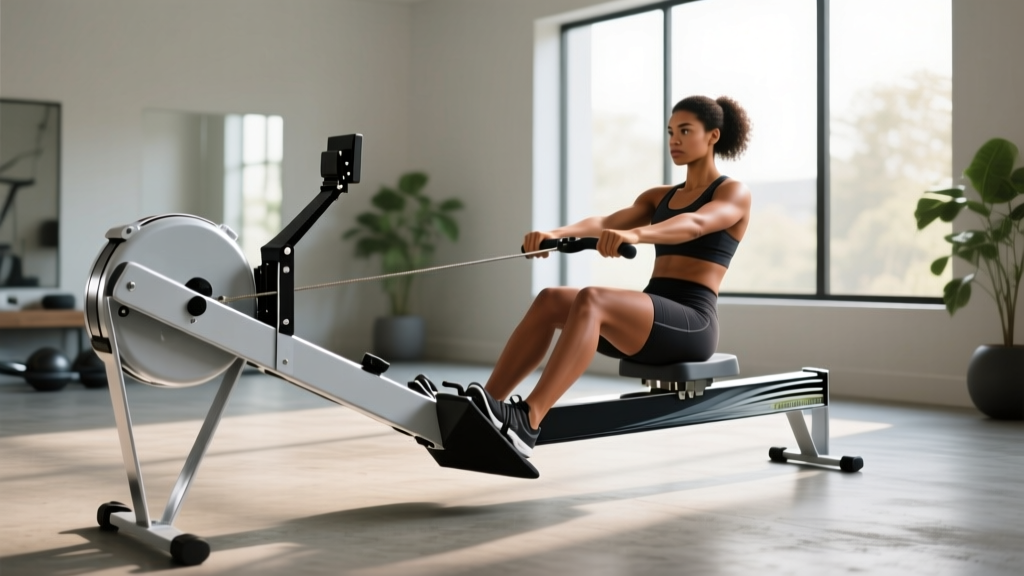
Rowing Machine Guide: Technique vs Manual Treadmill Curve Cardio
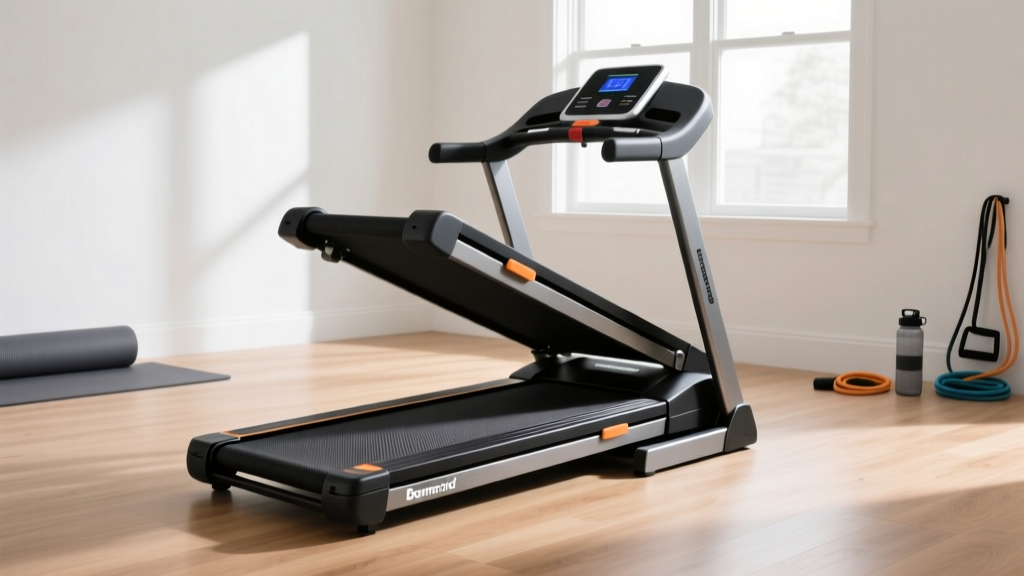
2026 Review: Folding Treadmills From Commercial Treadmill Brands

Treadmill Invention Evolution: Top Compact Portable Cardio in 2026