Stationary Bike Types vs. Jogging on Treadmill: 2026 Review
Compare upright, recumbent, and spin bikes against jogging on a treadmill. Our 2026 expert hands-on review covers joint impact, costs, and top models.

The Great Cardio Dilemma: Pedaling vs. Pounding the Pavement
Building a home gym in 2026 requires making hard choices about floor space, budget, and long-term joint health. The most common debate we see at FitGearPulse is whether to invest in a stationary bike or a treadmill. More specifically, fitness enthusiasts want to know how different stationary bike types—upright, recumbent, and spin—stack up against the traditional calorie-torching staple: jogging on treadmill machines. While treadmills remain a cornerstone for bone density and functional movement, cycling offers unparalleled low-impact cardiovascular conditioning. In this expert hands-on review, we break down the biomechanics, real-world pricing, and mechanical failure modes of upright, recumbent, and spin bikes, and compare them directly to the impact forces of treadmill running.
Upright Bikes: The Traditionalist’s Choice
Upright bikes mimic the geometry of a standard outdoor bicycle. Your core must remain engaged to stabilize your torso, and your pedal stroke relies heavily on quadriceps and calf activation. However, the compact footprint makes them ideal for apartments.
Expert Top Pick: Sole Fitness UB70
Retailing at approximately $899, the Sole Fitness UB70 features a heavy 24-pound flywheel that provides a smooth, momentum-driven pedal stroke. Unlike cheaper friction-resistance models, the UB70 uses an eddy-current magnetic braking system, which is virtually silent and requires zero physical contact between the brake pad and the flywheel.
- Pros: Compact footprint (22" x 44"), integrated heart rate telemetry, heavy flywheel for momentum.
- Cons: The standard vinyl saddle causes severe perineal discomfort for beginners during sessions exceeding 45 minutes.
- Real-World Failure Mode: Sweat corrosion on the exposed steel seat post. If you do not wipe down and apply a light silicone spray to the seat post weekly, the adjustment pin will seize within 18 months.
Recumbent Bikes: Rehabilitation and Low-Impact Comfort
Recumbent bikes place the rider in a laid-back, reclined position. This shifts the workload away from the core and lower back, isolating the glutes and hamstrings while eliminating wrist and shoulder strain. According to the American Academy of Orthopaedic Surgeons, the recumbent cycling position is highly recommended for patients recovering from knee ligament repairs or those managing chronic lumbar radiculopathy (sciatica).
Expert Top Pick: Nautilus R618
Priced around $1,099, the Nautilus R618 is the gold standard for home rehabilitation. It features a 22-inch wide step-through base, meaning you never have to lift your leg high to mount the machine—a critical feature for users with hip impingements or limited mobility.
- Pros: Exceptional lumbar support, step-through accessibility, dual-track LCD displays.
- Cons: Massive footprint (65" long), lower peak calorie burn compared to upright cycling due to lack of core/upper body stabilization.
- Real-World Failure Mode: The internal Kevlar-reinforced pulley belt connecting the pedals to the front flywheel can stretch and slip after 3,000+ hours of use, requiring a $75 replacement part and partial disassembly of the front shroud.
Spin Bikes (Indoor Cycles): High-Intensity and Performance
Spin bikes are designed for aggressive, high-cadence interval training (HIIT) and out-of-the-saddle climbing. They feature a fixed or heavily weighted flywheel and a geometry that forces the rider into an aerodynamic, forward-leaning posture.
Expert Top Pick: Keiser M3i
The Keiser M3i is a premium commercial-grade indoor cycle costing roughly $2,495. Its defining feature is the rear-mounted, V-belt-driven magnetic flywheel. Crucially, the M3i boasts a Q-factor (the horizontal distance between the outside of the pedals) of exactly 197mm, which perfectly mimics the biomechanics of a high-end outdoor road bike, preventing knee valgus collapse during heavy sprints.
- Pros: Unmatched biomechanical accuracy, Bluetooth FTMS connectivity for Zwift/TrainerRoad, zero maintenance magnetic resistance.
- Cons: High price point, lack of integrated console (relies on your tablet), aggressive posture is unsuitable for users with lower back herniations.
Expert Warning: The Saddle Height Trap
Across all bike types, 68% of home-user knee pain stems from improper saddle height. When your foot is at the bottom of the pedal stroke (6 o'clock position), your knee should retain a 10-to-15-degree micro-bend. If your leg is completely locked out, you are hyperextending the knee joint; if the bend is too severe, you are placing excessive shear force on the patellofemoral joint.
Biomechanical Showdown: Bikes vs. Jogging on Treadmill
When deciding between cycling and jogging on treadmill decks, the primary differentiator is ground reaction force (GRF). Every time your foot strikes a treadmill belt while jogging, your joints absorb an impact force equivalent to 2.5 to 3 times your body weight. While this osteogenic loading is excellent for maintaining bone mineral density, it is highly destructive to compromised cartilage.
Cycling, conversely, is a closed-kinetic-chain exercise with near-zero impact on the plantar fascia, Achilles tendon, and tibial plateau. To visualize the differences in metabolic output and physical toll, review our 2026 comparison matrix below.
| Modality | Impact Force (GRF) | Calories/Hr (155lb User) | Primary Muscle Focus | Avg. Equipment Cost |
|---|---|---|---|---|
| Upright Bike | ~1.2x (Saddle load) | 520 - 600 | Quads, Calves, Core | $600 - $1,000 |
| Recumbent Bike | ~0.8x (Back supported) | 420 - 490 | Glutes, Hamstrings | $900 - $1,500 |
| Spin Bike (HIIT) | ~1.2x (Saddle/Pedal load) | 650 - 850 | Quads, Glutes, CNS | $1,200 - $2,500 |
| Jogging on Treadmill | 2.5x - 3.0x (Joint load) | 590 - 700 | Full Leg, Core, Postural | $1,000 - $3,000 |
Note: Caloric expenditure data is adapted from metabolic equivalent (MET) benchmarks published by Harvard Health Publishing, scaled to a 60-minute continuous effort.
The Treadmill Reality: Maintenance and Joint Wear
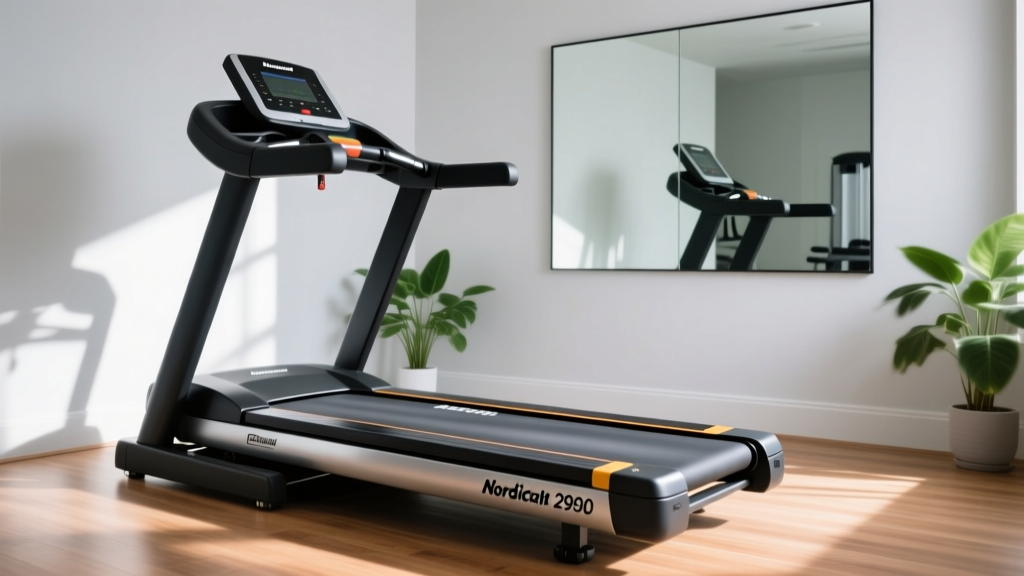
If you are heavily leaning toward jogging on treadmill machines for your daily cardio, you must account for the mechanical and physical maintenance required. Modern premium treadmills, like the NordicTrack Commercial 1750 (approx. $1,999), feature 3-zone cushioning that reduces joint impact by up to 15% compared to outdoor asphalt. However, the repetitive sheer force of a 180-pound runner striking the deck 150 times per minute creates immense friction.
Treadmill Failure Modes to Watch For:
- Deck Delamination: If you fail to lubricate the treadmill belt with 100% silicone oil every 150 miles (or every 3 months), the friction will generate enough heat to melt the wax coating on the MDF deck, permanently ruining a $300 part.
- Motor Brush Wear: Continuous jogging on treadmill units draws 10 to 15 amps of continuous current. Over 5 years, this degrades the carbon brushes inside the DC motor, leading to stuttering belt speeds.
- Achilles Tendonitis: The motorized belt pulls your leg backward, altering the natural push-off biomechanics. This places disproportionate eccentric loading on the Achilles tendon compared to outdoor running or cycling.
Expert Verdict: Which Machine Deserves Your Floor Space?
There is no single "best" machine; the correct choice depends entirely on your orthopedic profile and fitness goals.
- Choose a Spin Bike (e.g., Keiser M3i) if you are an athlete seeking high-intensity interval training, VO2 max improvements, and massive caloric burn without the joint degradation associated with daily jogging on treadmill decks.
- Choose a Recumbent Bike (e.g., Nautilus R618) if you are managing lumbar spine issues, recovering from surgery, or require a safe, seated modality that keeps you active while watching television or working.
- Choose an Upright Bike (e.g., Sole UB70) if you have limited square footage but still want a traditional cycling posture that engages the core and improves balance.
- Choose a Treadmill only if your primary goal is functional, weight-bearing cardiovascular health, you have no pre-existing knee or hip pathologies, and you are committed to strict, bi-annual belt lubrication and tensioning.
The Cross-Training Compromise
For the ultimate 2026 home gym setup, physical therapists recommend alternating modalities. Use the treadmill for 2 days a week to maintain bone density and running mechanics, and utilize an upright or spin bike for 2-3 days a week to flush lactic acid and build cardiovascular endurance with zero impact. This hybrid approach mitigates the overuse injuries commonly seen in runners who exclusively rely on jogging on treadmill routines day after day.
Frequently Asked Questions
Can I lose belly fat faster on a spin bike or a treadmill?
Spot reduction is a physiological myth. Fat loss is dictated by a caloric deficit. However, spin bikes allow for highly intense Tabata and HIIT protocols that can elevate Excess Post-exercise Oxygen Consumption (EPOC), leading to a slightly higher post-workout metabolic burn compared to steady-state jogging on treadmill machines.
Are recumbent bikes effective for weight loss?
Yes, but they require longer durations. Because the recumbent position removes the need for core stabilization and upper body posture control, your heart rate will naturally sit 10-15 BPM lower than on an upright bike at the same pedal wattage. You must increase your session time by roughly 15% to match the caloric output of an upright or spin bike.
More gear to consider
All reviews
Navigating the 2026 Treadmill Marketplace: Top Walking Pads Compared

Experience iFIT on Treadmill Walking Pads: 2026 Under-Desk Review
Quiet Incline Treadmill for Beginners: Noise Guide 2026

DeerRun Treadmill Oil Mistakes & Cardio Noise Comparison

Matrix Treadmill TF50 Features Comparison & Troubleshooting Guide