Beginner Guide: Reebok Jet 100z Treadmill Motor HP
Learn how treadmill motor size impacts your workouts. We break down the Reebok Jet 100z treadmill motor HP and provide a beginner-friendly buying guide.

Introduction: Why Your Treadmill's Motor Actually Matters
When shopping for your first home cardio machine, it is easy to get distracted by flashy touchscreen displays, built-in speakers, and folding mechanisms. However, the true heart of any cardio machine is its motor. If you are researching entry-level options, you have likely encountered the Reebok Jet 100z treadmill. It is a popular, budget-friendly choice in 2026, but understanding its motor specifications is critical to ensuring it matches your fitness goals.
A treadmill motor dictates the smoothness of your stride, the machine's longevity, and whether it will abruptly shut off in the middle of a jogging session. According to the CDC's physical activity guidelines, adults should aim for at least 150 minutes of moderate-intensity aerobic activity per week. To hit those metrics consistently at home, your equipment must be reliable. This beginner-friendly, step-by-step guide will demystify treadmill horsepower (HP) and help you decide if the Reebok Jet 100z is the right fit for your home gym.
Step 1: Decoding Motor Jargon (CHP vs. HP)
Manufacturers often use marketing jargon to make entry-level motors sound more powerful than they are. As a beginner, you must learn to differentiate between the two primary metrics:
💡 The Golden Rule of Treadmill Motors:Always look for CHP (Continuous Horsepower), not just HP (Peak Horsepower). Peak HP measures the absolute maximum output the motor can achieve for a few seconds before burning out. CHP measures the power the motor can sustain indefinitely during a normal workout.
Understanding the Electrical Draw
Most home treadmills, including the Reebok Jet series, operate on standard 120-volt residential outlets. A 1.75 CHP motor typically draws between 10 to 15 amps under load. If you plug your treadmill into a shared 15-amp circuit (e.g., the same circuit as your microwave or space heater), you risk tripping your home's breaker. Always dedicate a 15-amp or 20-amp circuit exclusively to your cardio equipment.
Step 2: Matching Motor Size to Your Biomechanics
Motor requirements are not one-size-fits-all. The strain placed on a treadmill motor is a direct mathematical product of the user's body weight and the friction generated by their stride. Certified personal trainers via the American Council on Exercise (ACE) often emphasize that heavier users or those with a heavy 'heel-strike' running gait require significantly more continuous torque to maintain belt speed.
The CHP Requirement Matrix
Use the table below to determine the minimum Continuous Horsepower (CHP) you need based on your weight and primary workout style.
| User Weight | Walking (3-4 mph) | Jogging (5-6 mph) | Running (7+ mph) |
|---|---|---|---|
| Under 150 lbs | 1.5 CHP | 1.75 CHP | 2.0 CHP |
| 150 - 200 lbs | 1.75 CHP | 2.0 CHP | 2.5 CHP |
| 200 - 250 lbs | 2.0 CHP | 2.5 CHP | 3.0 CHP |
| Over 250 lbs | 2.5 CHP | 3.0 CHP | 3.5+ CHP (Commercial) |
Step 3: Case Study: The Reebok Jet 100z Treadmill Motor
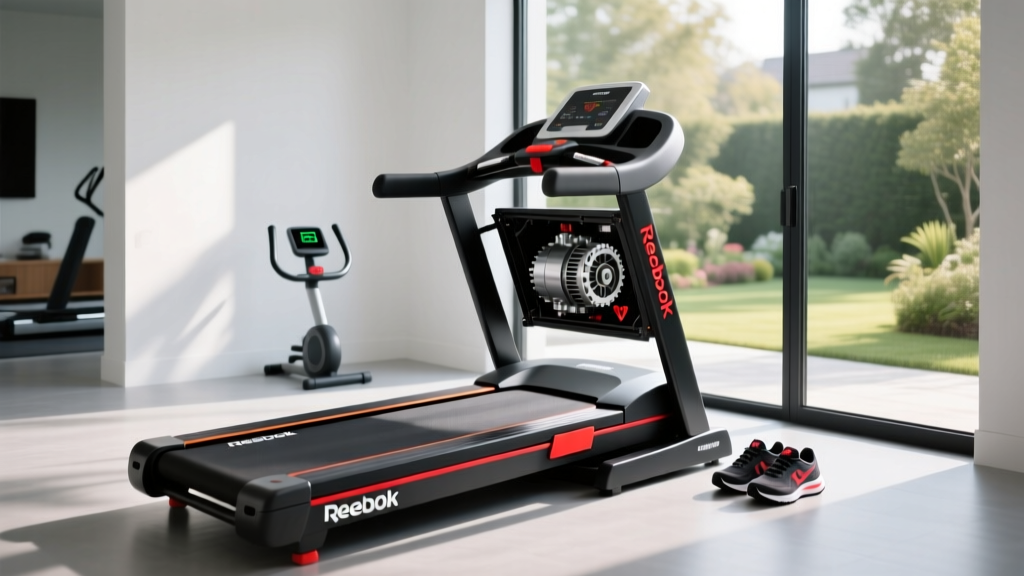
Let us apply this framework to our target machine. The Reebok Jet 100z treadmill is equipped with a 1.75 HP motor. In the 2026 market, where it typically retails between $450 and $550, this motor size is standard for the entry-level category. But what does 1.75 HP actually mean for your daily workouts?
Who is the Jet 100z Motor Built For?
- The Daily Walker: If you weigh under 200 lbs and primarily walk at 3.0 to 4.0 mph, the 1.75 HP motor will run cool, quiet, and efficiently. It is perfectly matched for low-impact, steady-state cardio.
- The Light Jogger: For users under 150 lbs who want to incorporate light jogging (up to 6 mph) into their routine, the motor provides adequate continuous torque without bogging down.
Where the Jet 100z Motor Reaches Its Limits
Every motor has a thermal threshold. The Reebok Jet 100z features a compact motor housing designed for space-saving home gyms, which inherently limits active airflow and cooling. If a 220 lb user attempts to run at 8 mph on this machine, the motor will draw maximum amperage to overcome the kinetic resistance. This generates excess heat. Eventually, the internal thermal cutoff switch will trip, abruptly stopping the belt to prevent the copper windings from melting. Furthermore, the Jet 100z tops out at a max speed of roughly 10 mph (16 km/h), which physically caps high-intensity sprint training regardless of your weight.
Expert Insight: 'When evaluating budget treadmills like the Jet 100z, pay close attention to the flywheel weight and belt roller diameter. A smaller motor paired with 1.5-inch rollers creates more friction, forcing the motor to work 20% harder than it would on a machine with 2.5-inch rollers, drastically reducing the lifespan of the drive belt.'
Step 4: Spotting Red Flags and Real-World Failure Modes
As a beginner, knowing how a motor fails is just as important as knowing its specs. Here are the most common failure modes associated with pushing a 1.75 HP entry-level motor beyond its limits:
- PWM Controller Burnout: The Pulse Width Modulation (PWM) board regulates power to the motor. If you frequently stomp heavily on the belt at low speeds, the sudden spikes in torque demand can blow the capacitors on the PWM board. Solution: Always start the belt before stepping on it.
- Drive Belt Slipping: When a motor struggles to turn the front roller under heavy user weight, the rubber drive belt connecting the motor to the roller can slip, creating a burning rubber smell and a 'hesitation' or 'stutter' in the belt beneath your feet.
- Carbon Brush Wear: Entry-level DC motors use carbon brushes that physically press against the commutator. Over 3 to 5 years of heavy use, these brushes wear down to nubs, causing the motor to spark internally and eventually fail to start.
Step 5: Essential Maintenance to Prevent Motor Burnout
You can extend the life of the Reebok Jet 100z's 1.75 HP motor by reducing the friction it has to fight against. The number one cause of premature motor death is a dry, high-friction walking deck.
🛠️ The 15-Minute Bi-Annual Maintenance Routine
- Test Belt Tension: Lift the walking belt from the center of the deck. It should lift exactly 2 to 3 inches. If it is tighter, it is strangling the motor; if looser, it will slip.
- Apply 100% Silicone Lubricant: Never use WD-40 or petroleum-based products, which will destroy the PVC belt. Apply 1 oz of 100% pure liquid silicone under the belt on both the left and right sides.
- Distribute the Lube: Turn the treadmill on to 2 mph and let it run for 3 minutes to spread the silicone evenly across the deck.
- Vacuum the Motor Hood: Unplug the machine, remove the plastic motor hood, and use a soft brush vacuum attachment to remove dust and pet hair from the motor's cooling fan and circuit board.
Final Verdict: Is the Reebok Jet 100z Right for You?
The Reebok Jet 100z treadmill offers excellent value for its price point, provided you respect the physical limitations of its 1.75 HP motor. If you are a beginner looking to establish a daily walking habit, or a lighter user wanting to incorporate light jogging while watching TV, this machine will serve you reliably for years. However, if your household includes users over 220 lbs, or if your goal is high-intensity interval training (HIIT) and sprinting, you must look at machines with a minimum of 2.5 to 3.0 CHP to avoid motor strain and frustrating mid-workout shutoffs.
By understanding the difference between Peak HP and CHP, matching the motor to your biomechanics, and committing to basic silicone lubrication, you can make a confident, data-driven decision for your home gym in 2026 and beyond.
More gear to consider
All reviews
Rowing Buying Guide & Technique: ProForm Carbon T7 Treadmill Reviews
Elliptical vs Treadmill: Is a Self-Moving Treadmill Better?

12 30 Treadmill vs Stationary Bike Types: Budget Breakdown

Is 5 Incline on Treadmill Good? Folding Model Care Guide

Treadmill Exercises to Lose Weight: Belt Care & Space Layouts