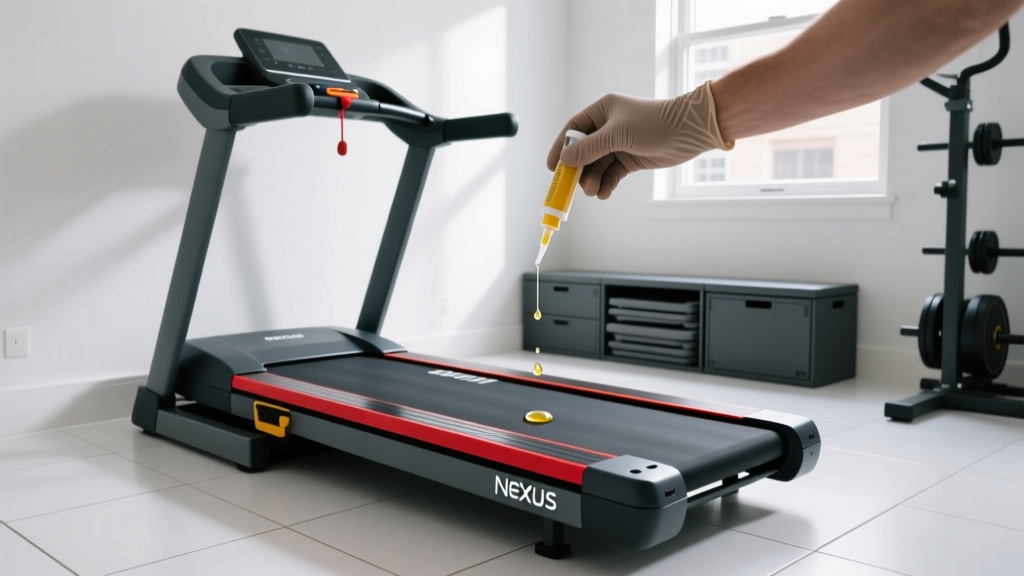
Nexus Treadmill Belt Maintenance in Small Space Layouts
Learn how to lubricate and maintain your Nexus treadmill belt in tight spaces. Expert tips on clearances, folding access, and reducing friction heat.

The Spatial Mechanics of Treadmill Friction and Heat
In the modern 2026 home gym, spatial efficiency is paramount. Closet conversions, Murphy-bed integrations, and under-desk alcoves have become the standard for urban fitness layouts. The Nexus treadmill, celebrated for its compact 20x55-inch running surface and hydraulic folding mechanism, is a staple in these micro-gyms. However, space optimization introduces a hidden mechanical hazard: restricted airflow and accelerated belt degradation.
When a treadmill is pushed into a tight layout, the spatial dynamics of belt friction change dramatically. According to guidelines from the American Council on Exercise (ACE), proper equipment ventilation is critical for both user safety and machine longevity. In a flush-wall alcove with less than 12 inches of rear clearance, the Nexus treadmill’s 2.5 HP motor exhaust recirculates. This trapped heat raises the deck temperature well above the optimal 95°F threshold, causing the factory-applied silicone lubricant to vaporize and the PVC belt backing to glaze. Understanding how to maintain your belt within these spatial constraints is essential for protecting your investment and ensuring a smooth, quiet stride.
Clearance Requirements: Operation vs. Maintenance
One of the most common mistakes in space-optimized gym design is planning only for operational clearance while ignoring maintenance clearance. While you only need a few inches of side space to run on a Nexus treadmill, performing belt lubrication and rear-roller tensioning requires specific spatial allowances. Failing to account for this forces you to drag the 160-pound machine out of its designated footprint every three months.
| Layout Zone | Operational Clearance | Maintenance Clearance | Primary Maintenance Task |
|---|---|---|---|
| Left Side | 18 inches (arm swing) | 12 inches | Belt edge inspection, deck cleaning |
| Right Side | 18 inches (arm swing) | 24 inches | Motor hood access, belt lubrication, drive belt tensioning |
| Rear | 24 inches (safety fall zone) | 36 inches | Rear roller adjustment, power cord access, folding hinge servicing |
| Front | 12 inches (wall buffer) | 18 inches | Incline motor calibration, front roller leveling |
Step-by-Step Belt Lubrication in Confined Spaces
Maintaining the belt on a space-saving treadmill requires a methodical approach to avoid disturbing the surrounding layout. The Nexus treadmill utilizes a standard multi-ply PVC belt with a urethane backing. Here is how to properly lubricate it without dismantling your micro-gym.
1. Secure the Hydraulic Fold Mechanism
Before touching the belt, ensure the treadmill is unplugged. If your Nexus model is currently in the upright, folded position to save space, lower it completely. The hydraulic gas shock exerts over 40 pounds of upward force; attempting to adjust belt tension while the deck is elevated will warp the rear roller bearings and misalign the tracking.
2. The "Clock Face" Silicone Application
Because you may not have the 36 inches of rear clearance required to easily remove the motor hood, you must use the lateral application method. Using a 100% pure silicone treadmill lubricant (avoid any products containing petroleum distillates or PTFE, which will destroy the urethane backing), apply exactly 0.5 ounces of fluid under the center of the belt. Imagine the belt is a clock face; apply a zigzag pattern from the 3 o'clock to the 9 o'clock position on the underside of the running surface.
3. Manual Belt Distribution
Do not turn the machine on to distribute the lubricant. The sudden torque of the motor in a high-friction, heat-trapped layout can cause the belt to slip and stretch unevenly. Instead, stand on the side rails, grasp the belt edges, and manually "walk" the belt forward with your hands for three full rotations. This evenly distributes the silicone across the entire MDF deck.
4. Re-Tensioning for Compact Footprints
Lubrication reduces friction, which can sometimes make a previously tight belt feel slightly loose. Using a 6mm Allen wrench, adjust the rear roller bolts at the back of the machine. Turn both the left and right bolts exactly one-quarter turn clockwise. Test the tension using the "finger lift" method: you should be able to lift the center of the belt exactly 2 to 2.5 inches off the deck. Any more, and the belt will slip during high-speed intervals; any less, and you will overwork the motor, compounding the heat issues inherent to your compact layout.
Troubleshooting Edge Cases in Micro-Gyms
Space optimization creates unique environmental conditions that lead to specific treadmill failure modes. As detailed in Consumer Reports' treadmill maintenance guides, environmental factors are a leading cause of premature deck wear. Here are the edge cases specific to tight layouts and how to resolve them.
The Carpeted Closet Static Shock
Many space-optimized treadmills are placed in carpeted bedrooms or converted closets. The combination of a dry PVC belt rubbing against an MDF deck in a low-humidity, enclosed room generates massive static electricity. Users often experience sharp shocks when touching the Nexus treadmill's handrails. The fix: Never spray anti-static chemicals directly on the belt or deck. Instead, treat the surrounding carpet with a fabric softener and water solution, and place a dedicated anti-static grounding mat under the treadmill's footprint. Furthermore, maintaining a strict 3-month silicone lubrication schedule reduces the friction coefficient that generates the static charge.
Glazing from Alcove Heat Traps
If your Nexus treadmill is pushed flush against a wall with zero rear clearance, the motor's cooling fan will pull in its own exhaust air. Over six months, the internal deck temperature can routinely exceed 130°F. This bakes the silicone out of the belt, leaving a hard, glossy "glaze" on the urethane backing. If you run your fingernail across the underside of the belt and it feels slick like glass rather than slightly tacky, the belt is glazed. No amount of new lubricant will penetrate a glazed surface. You must remove the belt and lightly sand the backing with 220-grit sandpaper to restore its porosity, or replace the belt entirely (typically costing between $60 and $95 for OEM Nexus replacement parts).
Folding Torque and Belt Drift
In studio apartments, the Nexus treadmill is often folded and unfolded daily. This repetitive pivoting motion places lateral torque on the rear roller. If the belt begins to drift to the left or right immediately after unfolding the deck, the folding hinge may be slightly asymmetrical, or the belt tension is uneven. Use a digital level across the rear roller to ensure it is perfectly parallel to the front roller. Adjust the 6mm tension bolts until the belt tracks dead-center for at least 60 seconds at a 3.0 MPH walking pace.
Selecting the Right Lubricant for High-Friction Setups
Not all silicone lubricants are created equal, especially when dealing with the elevated ambient temperatures of a space-restricted layout. When shopping for maintenance supplies, look for these specific parameters:
- Purity: Must be 100% medical-grade or food-grade silicone oil. Avoid "silicone sprays" that use butane or hexane as propellants, as these solvents will melt the adhesive holding the belt seams together.
- Viscosity: A medium-viscosity silicone (around 1000 centistokes) is ideal for the Nexus treadmill. It is thick enough to resist being squeezed out to the edges of the deck during heavy foot strikes, but thin enough to wick into the microscopic pores of the urethane backing.
- Application Mechanism: In tight spaces where you cannot easily lift the belt, a lubricant bottle with an extended, rigid wand (at least 14 inches long) is mandatory. Flexible tubes tend to bend and spill silicone onto the top of the belt, creating a dangerous slip hazard.
High-quality 100% silicone treadmill lubricants typically range from $12 to $18 for a 4-ounce bottle, which is enough for four to five maintenance cycles.
Frequently Asked Questions
How often should I lubricate my Nexus treadmill in a small room?
In a well-ventilated room, every 6 months or 150 miles is standard. However, in a compact, poorly ventilated alcove where heat builds up, you should inspect and lubricate the belt every 3 months or 75 miles to prevent heat-induced glazing.
Can I use a vacuum to clean under the belt without moving the machine?
Yes, but with caution. Use a flat, plastic crevice tool (not metal, which can scratch the deck) to gently vacuum dust from the edges. Dust acts as an abrasive paste when mixed with silicone. For deep cleaning in tight spaces, use a can of compressed air to blow debris out the opposite side before vacuuming.
Does the incline motor require separate lubrication?
No. The Nexus treadmill's incline motor and lift gears are sealed and lubricated at the factory. Attempting to open these housings in a cramped space will void your warranty and introduce dust into the gears. Focus your maintenance strictly on the running belt, deck, and drive belt.
Final Layout Takeaway: A space-optimized home gym is only effective if the equipment within it remains serviceable. By designing your layout with maintenance clearances in mind and adhering to a strict, heat-aware lubrication schedule, your Nexus treadmill will deliver years of reliable, quiet cardio without dominating your living space.
More gear to consider
All reviews
Treadmill Belt Care: Layout Space & Treadmill Speed Miles Per Hour

Reebok Treadmill Belt Maintenance: Optimizing Room Layout

Walking Pad vs Treadmill Setup & ProForm Treadmill Belt Lube Guide

Are Treadmills Bad for Your Knees? The Motor Size Mistake

Quiet Cardio Guide: Elliptical Treadmills and Machine Noise Compared
